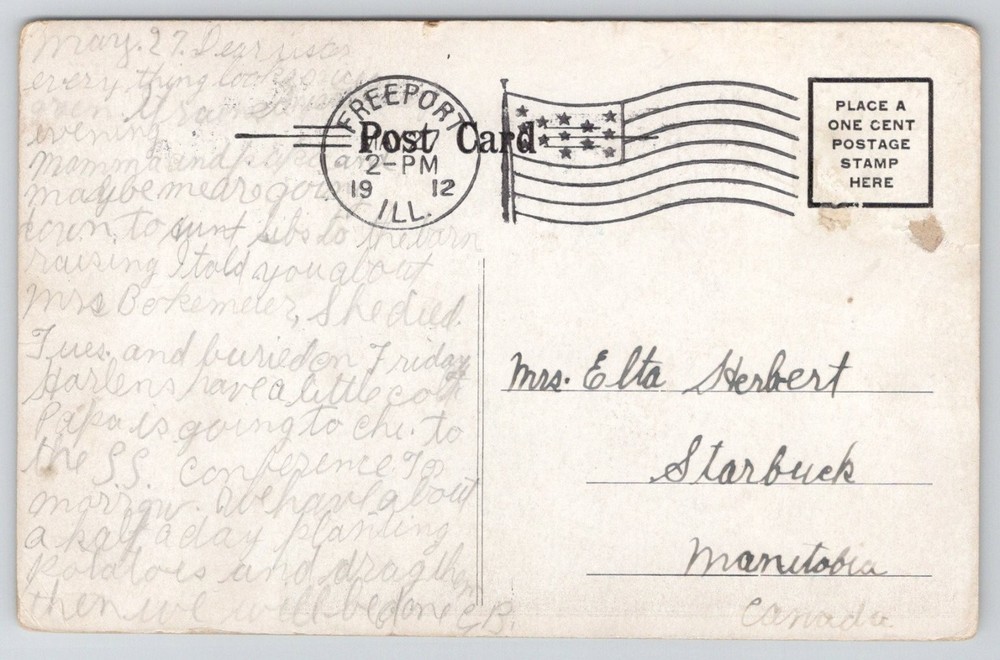
1912 Freeport, IL Second Presbyterian Church Postcard, Posted to Canada
$ 5.28
Description
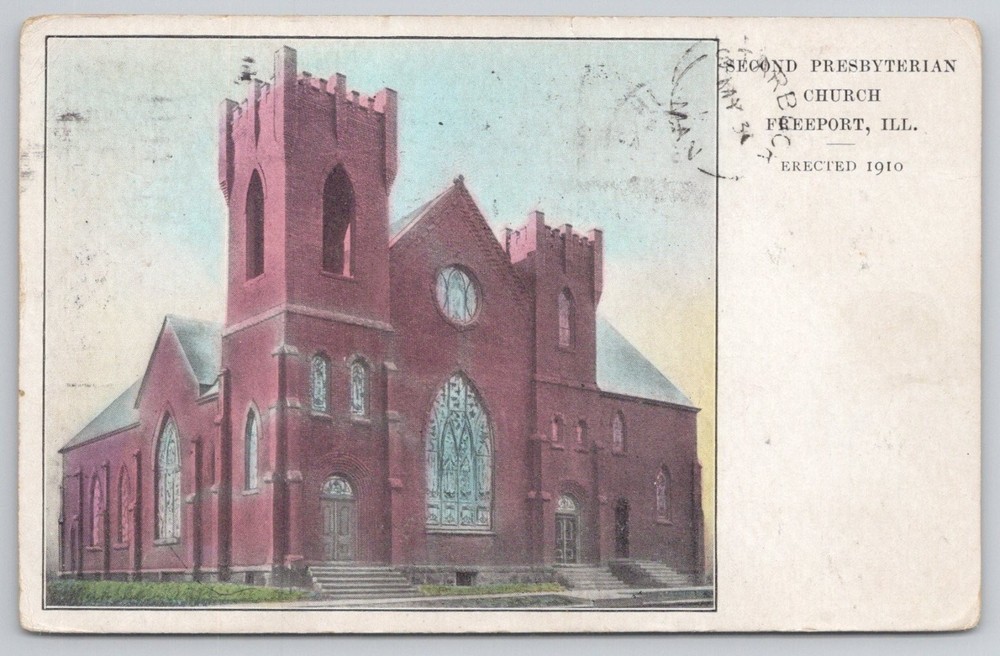
1912 Freeport, IL Second Presbyterian Church Postcard, Posted to Canada. Thank you for visiting! This item is in stock and usually ships within 1 business day of your purchase. It will be shipped via ebay Standard Envelope which provides tracking information when it passes through the sorting machines for First Class mail. USPS workers have no way of scanning the barcode on the label. When it marks it as "out for delivery or delivered" it means it has arrived at your local sorting center, not your home address. Depending on your local postal route, it may take several days yet to arrive at your home. Also, consider possible weather delays in the actual time the service takes. Feel free to write if you have any questions. Discover a piece of early 20th-century Americana with this captivating vintage postcard featuring the Second Presbyterian Church in Freeport, Illinois. Erected in 1910, the majestic brick edifice is beautifully rendered, showcasing its distinctive twin towers with crenellated tops and elegant arched windows that suggest intricate stained glass designs. This chromolithograph postcard offers a vibrant, hand-colored appearance, capturing the architectural grandeur of this historic Illinois landmark from a bygone era. It's an exceptional collectible for enthusiasts of local history, religious architecture, or vintage Illinois memorabilia. This particular postcard was mailed on May 27, 1912, as evidenced by the clear Freeport, Illinois postmark. Its journey extended internationally, carrying a personal message to Starbuck, Manitoba, Canada, adding a unique dimension to its historical narrative. The reverse features a classic divided back design, common for postcards of this period, and bears the handwritten correspondence, offering a glimpse into early 20th-century communication. This postcard serves as a wonderful historical document, preserving both the visual legacy of a significant church and a personal connection across borders.