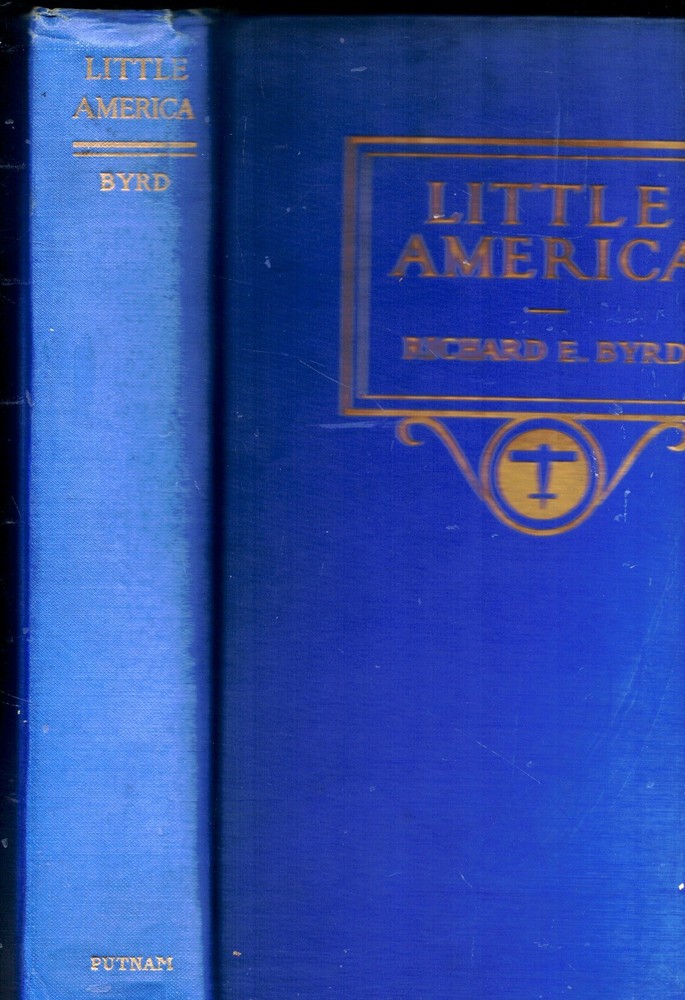
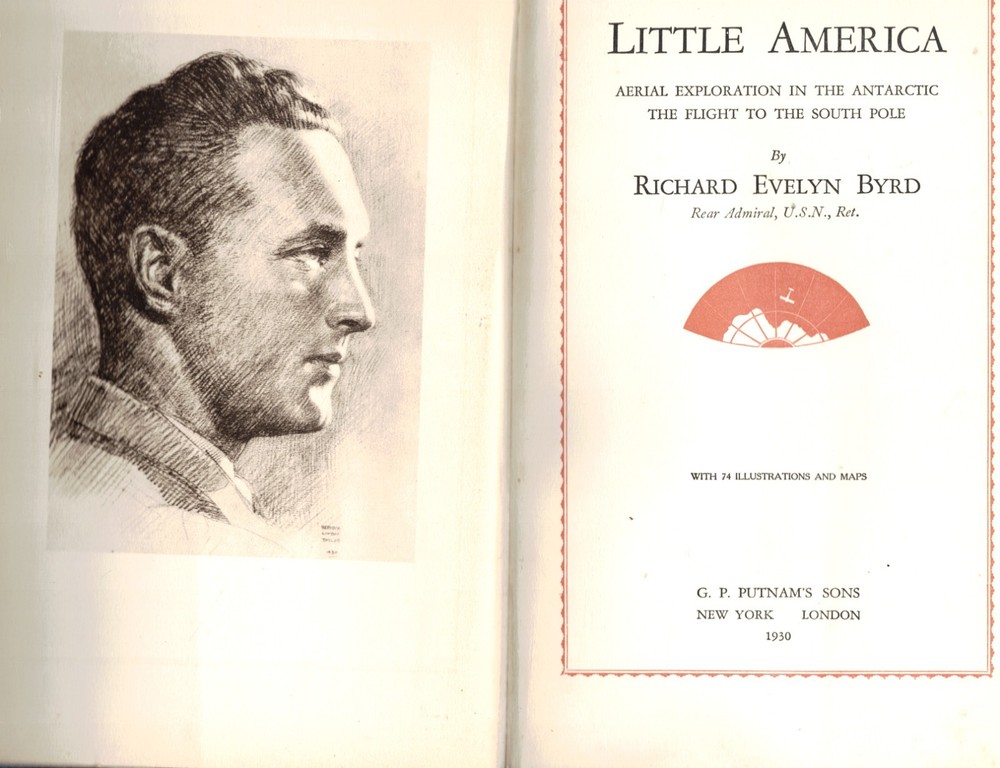
1930 Aerial Expedition Antarctica And South Pole Richard Evelyn Byrd First Maps
$ 10.56
Description
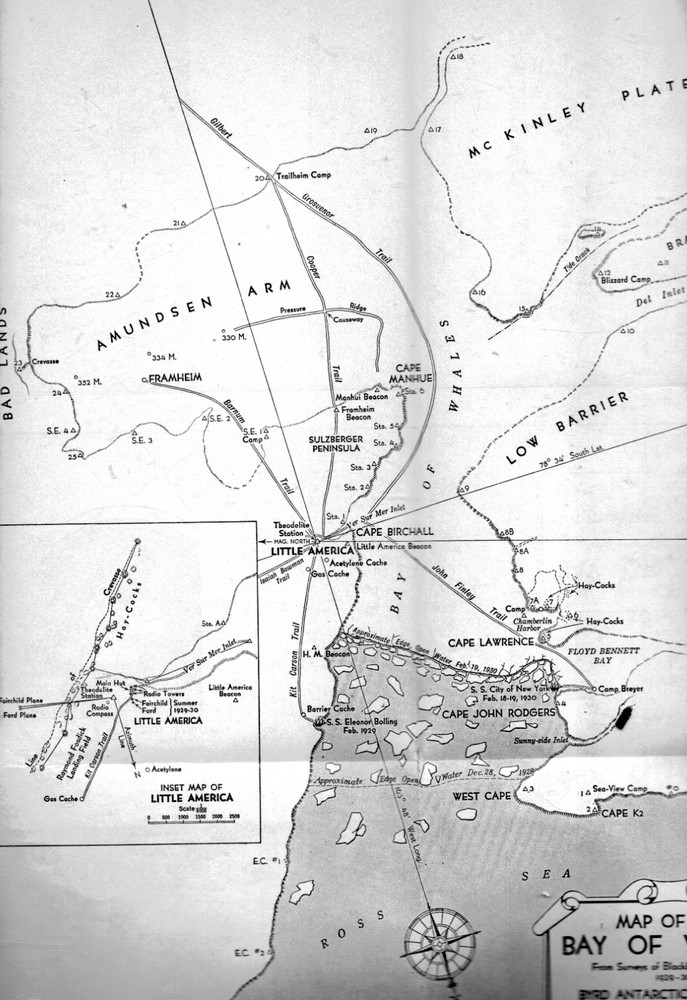
1930 AERIAL EXPEDITION ANTARCTICA AND SOUTH POLE RICHARD EVELYN BYRD FIRST MAPS. Bound in blue cloth. He is also known for discovering Mount Sidley, the largest dormant volcano in Antarctica. In addition to Ford contributions, John D. Rockefeller also notably provided funding for the expedition. OFFERED HERE is a 1930 first edition, Little America, Aerial Exploration in the Antarctic and the Flight to the South Pole, by Richard Evelyn Byrd, Rear Admiral, USN, Retired. With 24 illustrations and 4 maps. Bound in blue decorated cloth, 9x6 inches, 416 pages. Bound in blue cloth. First Edition on the copyright page. Richard Evelyn Byrd Jr. (October 25, 1888 – March 11, 1957) was an American naval officer and pioneering aviator, polar explorer, and organizer of polar logistics. Aircraft flights in which he served as a navigator and expedition leader crossed the Atlantic Ocean, a segment of the Arctic Ocean, and a segment of the Antarctic Plateau. He is also known for discovering Mount Sidley, the largest dormant volcano in Antarctica. Byrd claimed to be the first to reach both the North and South Poles by air. However, there is some controversy as to whether he was actually the first person to reach the North Pole. It is generally believed that the distance he claimed to have flown was longer than the possible fuel range of his airplane. He was a recipient of the Medal of Honor, the United States Armed Forces' highest military decoration, and the Navy Cross, the second highest honor for valor given by the U.S. Navy. On May 9, 1926, Byrd and Navy Chief Aviation Pilot Floyd Bennett attempted a flight over the North Pole in a Fokker F.VIIa/3m tri-motor monoplane named Josephine Ford after the daughter of Ford Motor Company president Edsel Ford, who helped finance the expedition. In addition to Ford contributions, John D. Rockefeller also notably provided funding for the expedition. The flight left from Spitsbergen (Svalbard) and returned to its takeoff airfield, lasting 15 hours and 57 minutes, including 13 minutes spent circling at their Farthest North. Byrd and Bennett said they reached the North Pole, a distance of 1,535 miles (1,335 nautical miles). When he returned to the United States from the Arctic, Byrd became a national hero. He was thrown a parade in New York City, and Congress passed a special act on December 21, 1926, promoting him to the rank of commander and awarding both Floyd Bennett and him the Medal of Honor. The Josephine Ford was flown around the country in celebration. Bennett was promoted to the warrant officer rank of machinist. Byrd and Bennett were presented with Tiffany Cross versions of the Medal of Honor on March 5, 1927, at the White House by President Calvin Coolidge.