
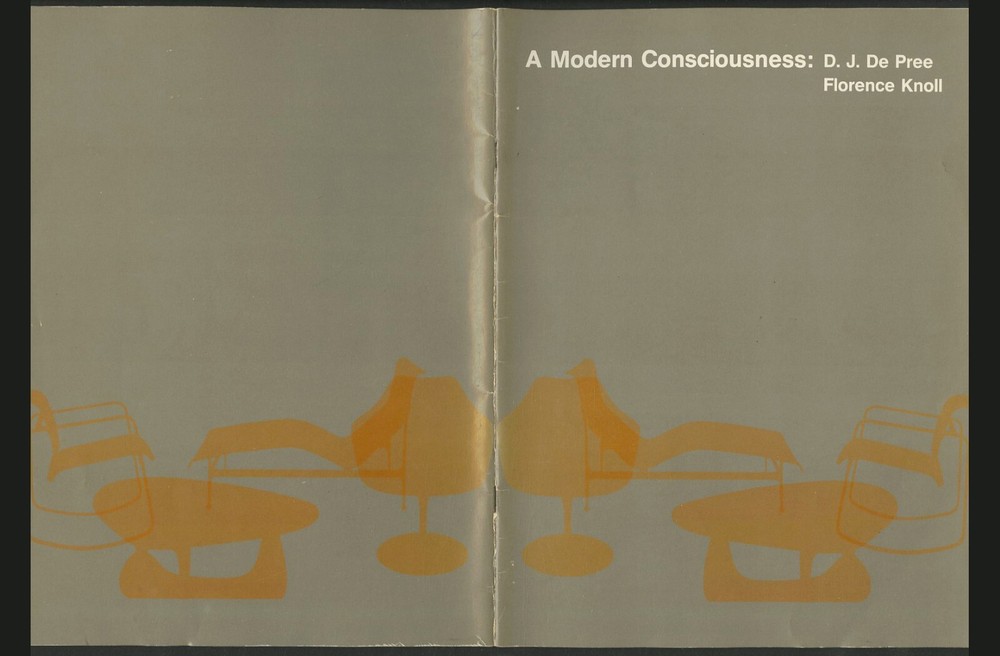
1975 Smithsonian MODERN CONSCIOUSNESS D J DePree Florence KNOLL Herman MILLER
$ 26.4
Description
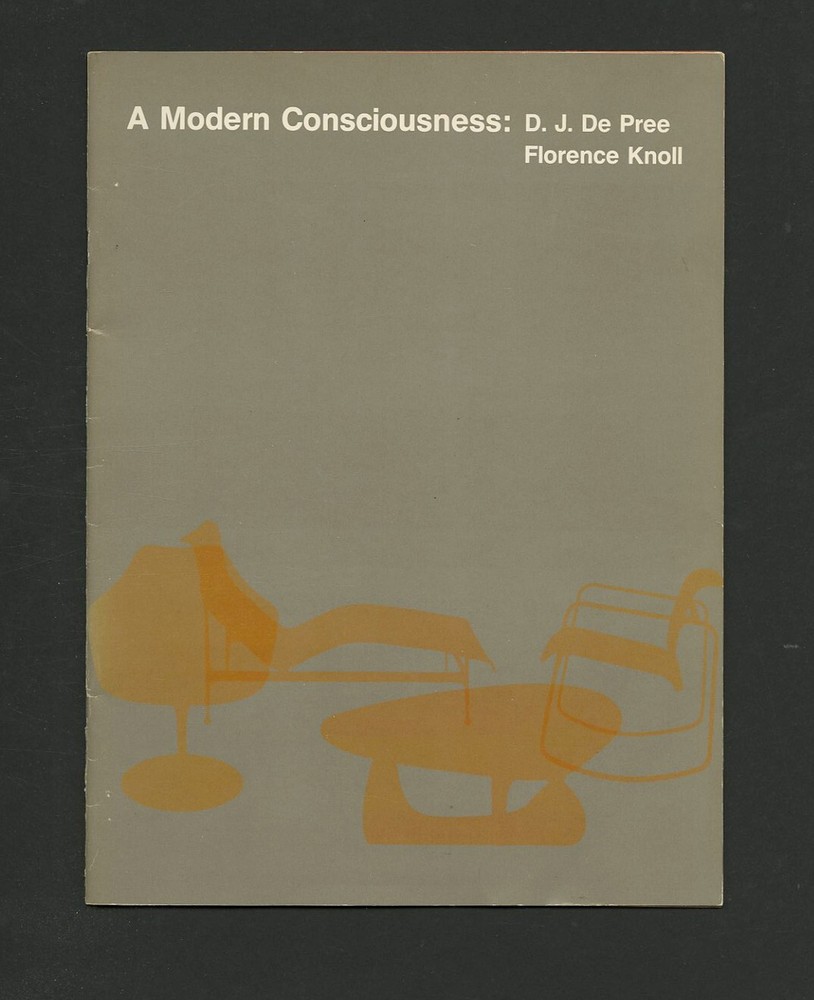
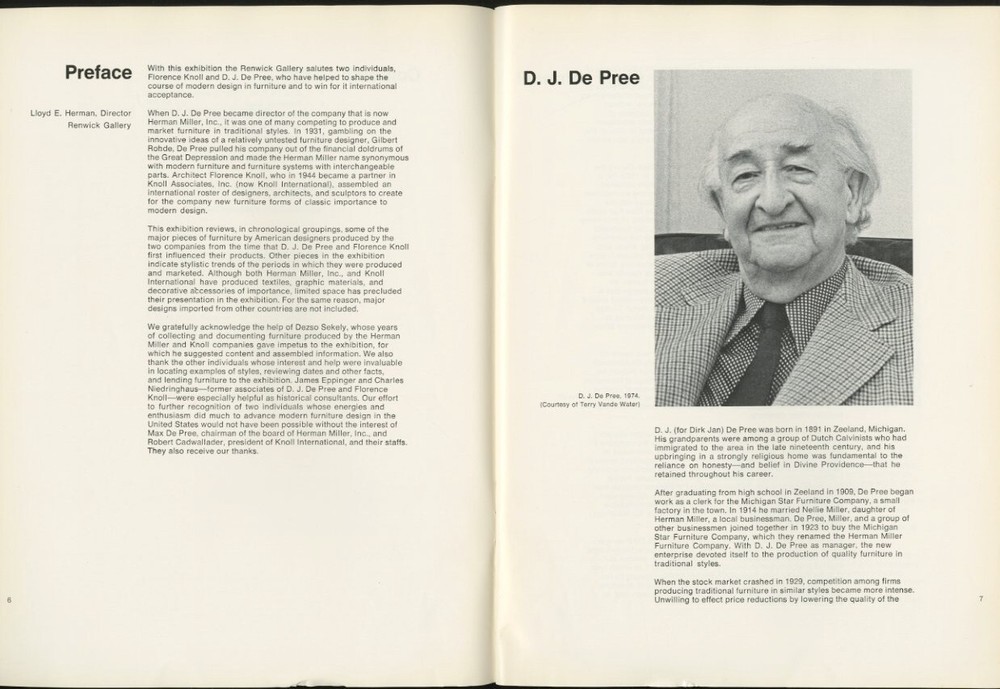
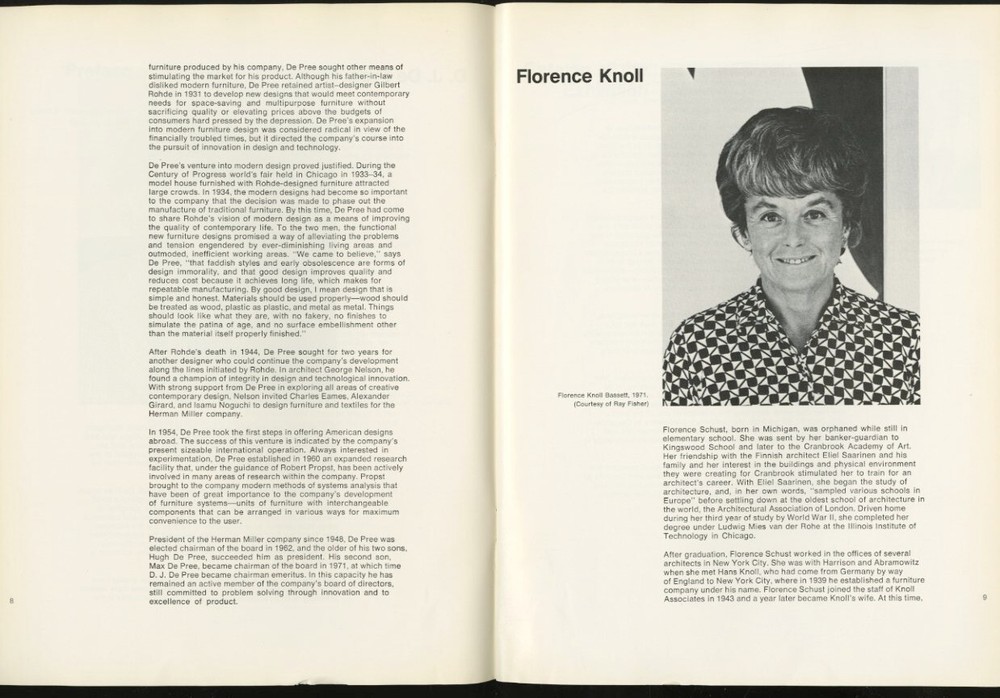
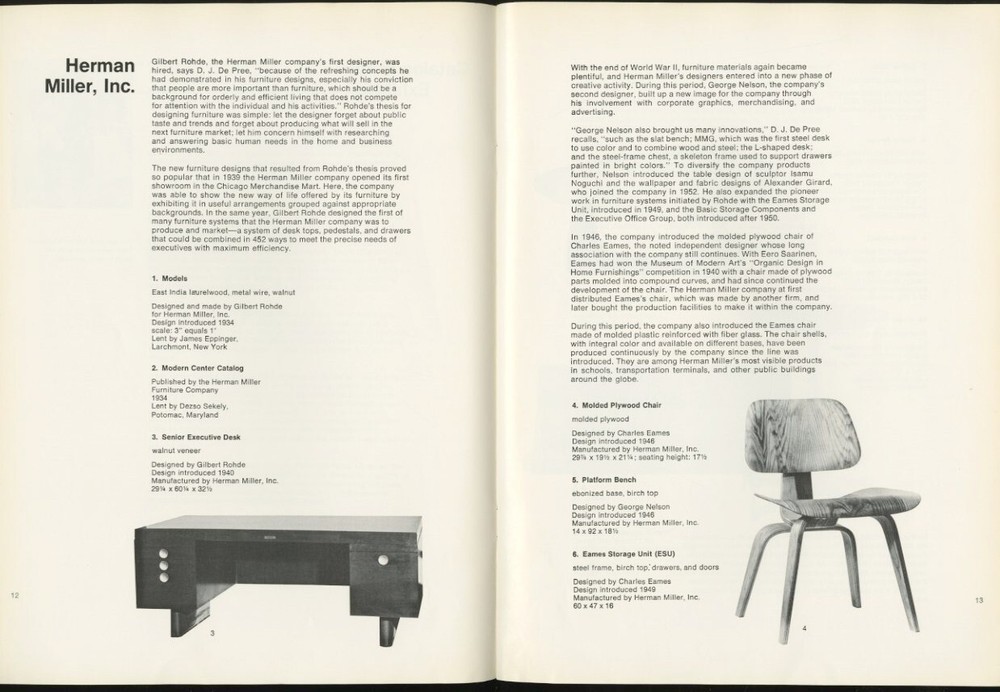
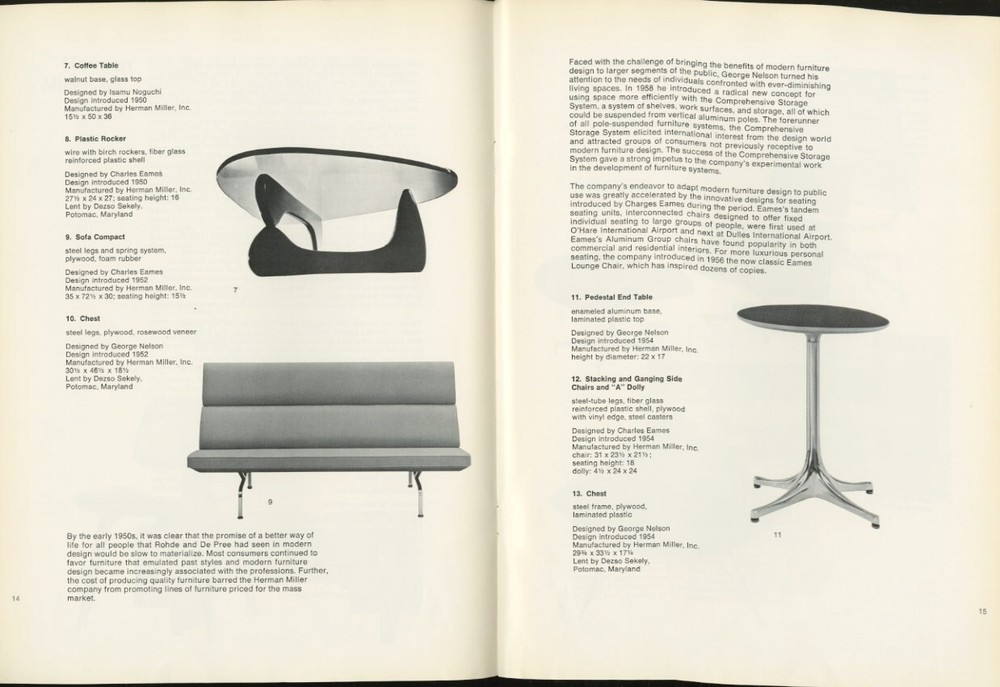
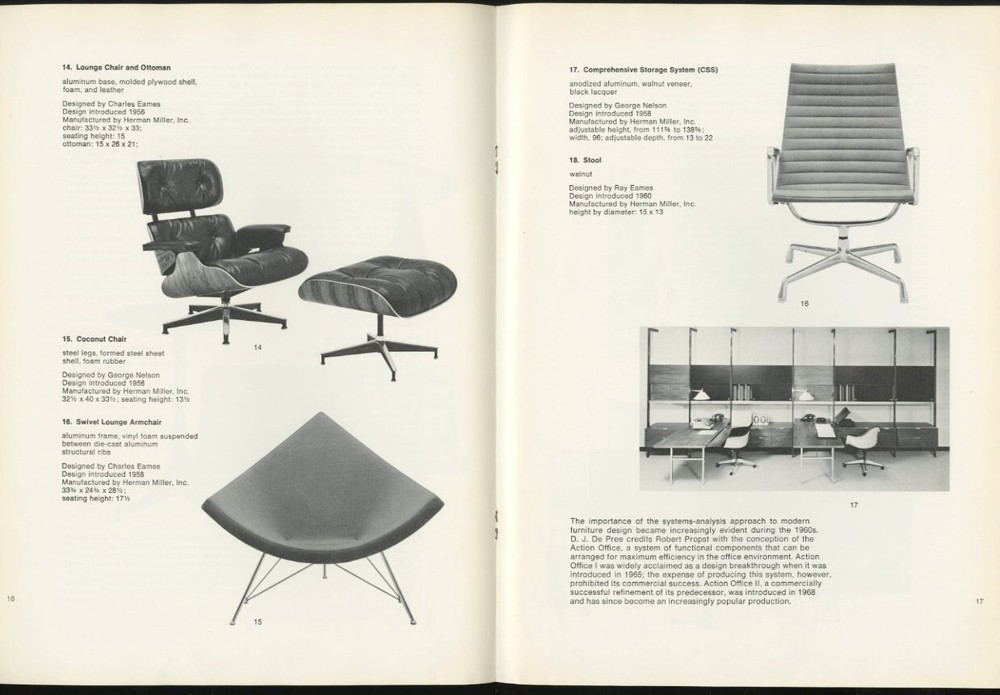
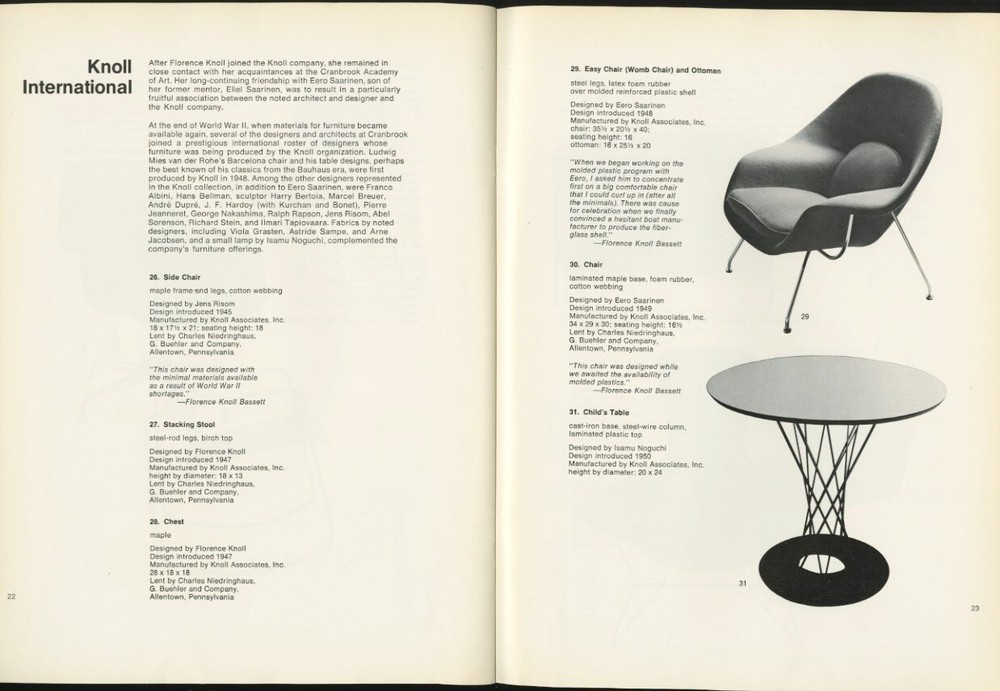
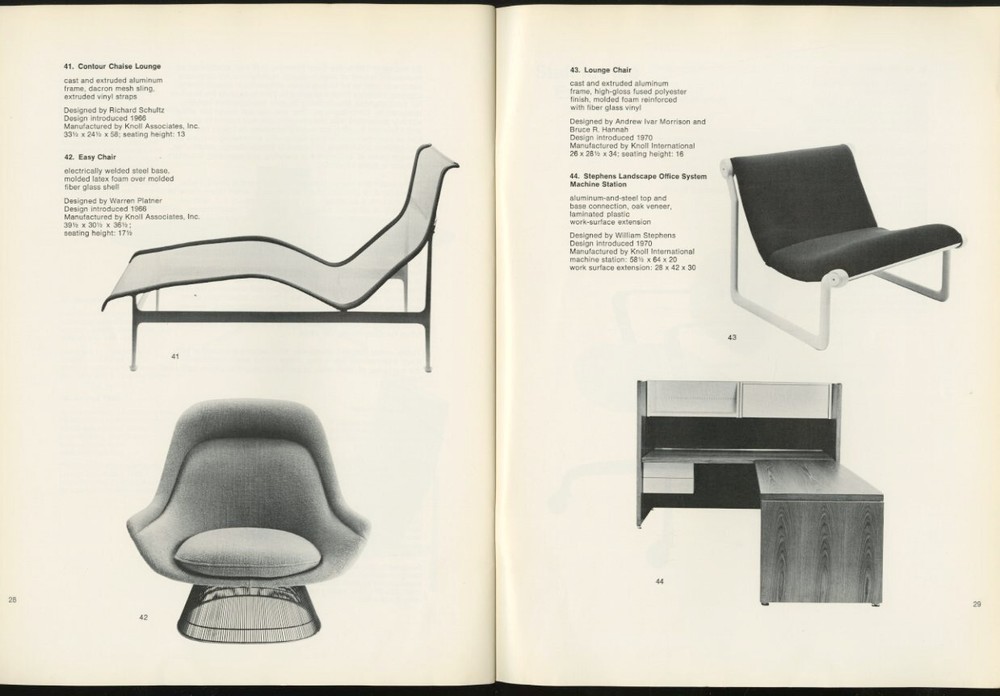
1975 Smithsonian MODERN CONSCIOUSNESS D J DePree Florence KNOLL Herman MILLER. A MODERN CONSCIOUSNESS: D. J. DEPREE, FLORENCE KNOLL. Lloyd E. Herman [preface]: A MODERN CONSCIOUSNESS: D. J. DEPREE, FLORENCE KNOLL. Washington, D. C.: National Collection of Fine Arts by the Smithsonian Institution Press, 1975. A MODERN CONSCIOUSNESS: D. J. DEPREE, FLORENCE KNOLL 1975 National Collection of Fine Arts, Smithsonian Institution Exhibition Catalog The Herman Miller Furniture Company and Knoll International Lloyd E. Herman [preface]: A MODERN CONSCIOUSNESS: D. J. DEPREE, FLORENCE KNOLL. Washington, D. C.: National Collection of Fine Arts by the Smithsonian Institution Press, 1975. First edition. Slim Quarto. Printed saddle stitched wrappers. 32 pp. 30 black and white illustrations. Exhibition catalog with 47 items listed. Glossy wrappers and textblock thumbed, but a very good copy. 8.5 x 11 softcover book with 32 pages and 30 black and white illustrations of furniture designed by Gilbert Rohde, Charles & Ray Eames, Isamu Noguchi, George Nelson, Robert Propst, Peter Protzmann, Eero Saarinen, Florence Knoll, Harry Bertoia, Richard Schultz, Warren Platner, Andrew Ivar Morrison, Bruce R. Hannah, and William Stephens. Exhibition catalog for a show that originated at the Renwick Gallery of the National Collection of Fine Arts, Smithsonian Institution in 1975 that travelled to the Cranbrook Academy of Art Museum in 1976. For those of you wondering what the fuss is all about, here's a brief history of Knoll: Hans Knoll founded his eponymous company in New York in 1938, just one year after immigrating from Germany. He must already have had big dreams, for he posted a sign saying "Factory No. 1" outside the single second-story room he rented on East 72nd Street. Hans's father was the pioneering German manufacturer of modern furniture, Walter. Establishing the H.G. Knoll Furniture Company was Hans's declaration of independence. Hans Knoll, born and raised in Stuttgart, had been educated in England and Switzerland during an era of aesthetic and social revolution. An admirer of the Bauhaus, he was familiar with its giants of design and architecture, including Walter Gropius, Marcel Breuer, and Ludwig Mies van der Rohe. Stuttgart, one of the breeding grounds for the crop of new ideas generated in during the 1920s, hosted many exhibitions of the Deutscher Werkbund, a government organization that promoted German design and architecture. Such were the influences on young Hans Knoll. By the time he crossed the Atlantic at age 24, he had formulated the credo that would distinguish his company: Modern architects need modern furniture for their modern buildings. Many of those modern architects had left Germany before Knoll. In 1933, the Nazis had shut down the Bauhaus, a hothouse of ideas that nurtured some of the 20th century's greatest architects, designers, and artists. Mies Van der Rohe, Breuer, and Gropius, among others, fled to the United States, transplanting the philosophies of architecture that have evolved into American design culture as we know it. In 1932, the year before the Nazis sparked the exodus of many of Germany's great young designers, George W. Booth established the Academy of Art at Cranbrook, in Bloomfield Hills, Michigan. He selected Eliel Saarinen, a Finnish èmigrè and noted modern architect, as president. Cranbrook, as the academy came to be known, had much in common with the Bauhaus. Both were schools and residential communities for practicing artists, founded on the utopian ideal that aesthetic values would tame the chaos of industrial society. Each was committed to an underlying competence in craft and craftsmanship. Cranbrook's faculty and graduates, like those of the Bauhaus, had a major impact on 20th century art, design and architecture, and many later became associated with the Knoll company. America's isolation from the modern movement began to dissipate in 1940 when two young American instructors from Cranbrook - Eero Saarinen, Eliel's son, and Charles Eames-won an international competition for furniture design conducted by New York's Museum of Modern Art. Since it was unprecedented for Americans to achieve honors in the field of furniture design, Eames and Saarinen and their furniture prototypes began to change the perception that only Europe produced superior designers. When the postwar building boom erupted in an explosion of homes and office buildings, it was the architects of the Bauhaus who were selected to design corporate America. In the second half of the 20th century the faculty and graduates of both the Bauhaus and Cranbrook helped set the standard for contemporary architecture and design around the world. During the early 1940s, Knoll had begun to think about developing a base for manufacturing outside New York City. An excellent business manager, he began investigating eastern Pennsylvania because of its concentrated population of German-Americans and Pennsylvania Dutch. The community had a tradition of meticulous craftsmanship and a potential supply of healthy young laborers returning from the war who no longer wanted to farm. Knoll made his first major investment: a former planing mill in Pennsburg, near Quakertown. During the war, Knoll had met and hired Florence Schust, a young space planner and designer who later helped Knoll achieve his vision of modern furniture and interiors for modern buildings. As a student at Cranbrook, Schust, had became friends with the Saarinen family and spent summers with them at their home in Hvitrask, Finland. She also toured Europe, visiting the great architectural sites. She later studied at the Architectural Association in London at the suggestion of the great Finnish architect Alvar Aalto, and spent two years there under the influence of Le Corbusier. At the outbreak of the war, Schust returned to the U.S., apprenticing with Gropius and Breuer until she entered the Armour Institute (subsequently the Illinois Institute of Technology) to complete her degree. There, Mies van der Rohe, the head of the school of architecture, had a profound effect on her design approach. Schust moved to New York after graduation and worked in several architectural offices where, as the only female, she was assigned the few interiors projects that came along. When Schust joined Knoll's company, she considered herself an interior designer with "opinions" about furniture-not, strictly speaking, a furniture designer. The two had a difficult time finding work involving contemporary design; when they did, production proved problematic because materials were limited by wartime shortages. Nevertheless, they persisted. Knoll and Schust married in 1946. They also formalized their business partnership, which became Knoll Associates Inc. Florence's keen eye for design, Hans's knowledge of furniture manufacturing and marketing, and their limitless energy proved to be a winning combination. Florence played a critical role in the company's development. She championed the Bauhaus approach to furniture design: to offer objects that reflected design excellence, technological innovation and mass production. Together, the Knolls searched out and nurtured talented designers. They believed strongly that designers should be credited by name and paid royalties for their designs. Knoll continues that tradition today. After the death of Hans Knoll in 1955, Florence Knoll took over as president and continued to exert her influence on all aspects of design, while leaving business matters to others. In 1958, she married Harry Hood Bassett, and began dividing her time between New York and Florida. In 1965, she resigned from the company, withdrawing from the industry completely but leaving the company in the hands of those she had trained and inspired. "What you make is important. Design is an integral part of business. The product must be honest. You decide what you want to make. There is a market for good design." -- George Nelson George Nelson had great things in mind when he set out to produce the first Herman Miller Collection catalogue in 1947—much to the dismay of CEO D.J. De Pree, who rejected the design based on the projected costs. But instead of downgrading, Nelson upped the ante, adding a hardcover and an unheard of three-dollar price tag. The gambit paid off (literally), and the 1948 catalog set a new standard for the industry. By 1952, Nelson had further honed his approach to honest, problem-solving design. The catalogue’s two chapters dedicated to work further refine his call for furniture that works for both the home or office, noting a contemporary shift toward “workmanlike” residential spaces that are easier to keep up, and the “warmth and informality of the well-appointed home living room” creeping into the office. In a characteristically wry 1944 correspondence with Herman Miller founder, DJ De Pree, George Nelson wrote that “your reservations on my suitability as a designer for Herman Miller Co., impressed me very much for they seem to be well founded… the question of lack of experience in the commercial furniture field is also important, but here, I am afraid, you and your associates will have to make the decision on your own.” Fast forward four years later, and Nelson once again found himself reflecting on the integrity of the Herman Miller Co., but this time, not as a potential hire but rather as Herman Miller’s founding creative director. In the 1948 introduction to the catalogue for his first ever collection for the company, he writes, “From the viewpoint of the designer, which is the only viewpoint I can assume with any degree of propriety, the Herman Miller Furniture Company is a rather remarkable institution.” Whatever leap of faith was required of De Pree to hire Nelson, the affinity and mutual respect shared between the two was undeniably fruitful. Nelson credits Herman Miller’s singularity as a result of a “philosophy” or “attitude” compounded of a set of principles—that what you make is important; that design is integral to business; that products must be honest; that only we can decide what we make, and that there is a market for good design—that allow for a degree of autonomy and innovation unavailable to companies driven by the shallow demands of the market or sales. “There is no attempt to conform to the so-called norms of ‘public taste,’ nor any special faith in the methods used to evaluate the ‘buying public.’ The reason many people are struck by the freshness of Herman Miller designs is that the company is not playing follow-the-leader.” Please visit my Ebay store for an excellent and ever-changing selection of rare and out-of-print design books and periodicals covering all aspects of 20th-century visual culture. I offer shipping discounts for multiple purchases. Please contact me for details. Payment due within 3 days of purchase.