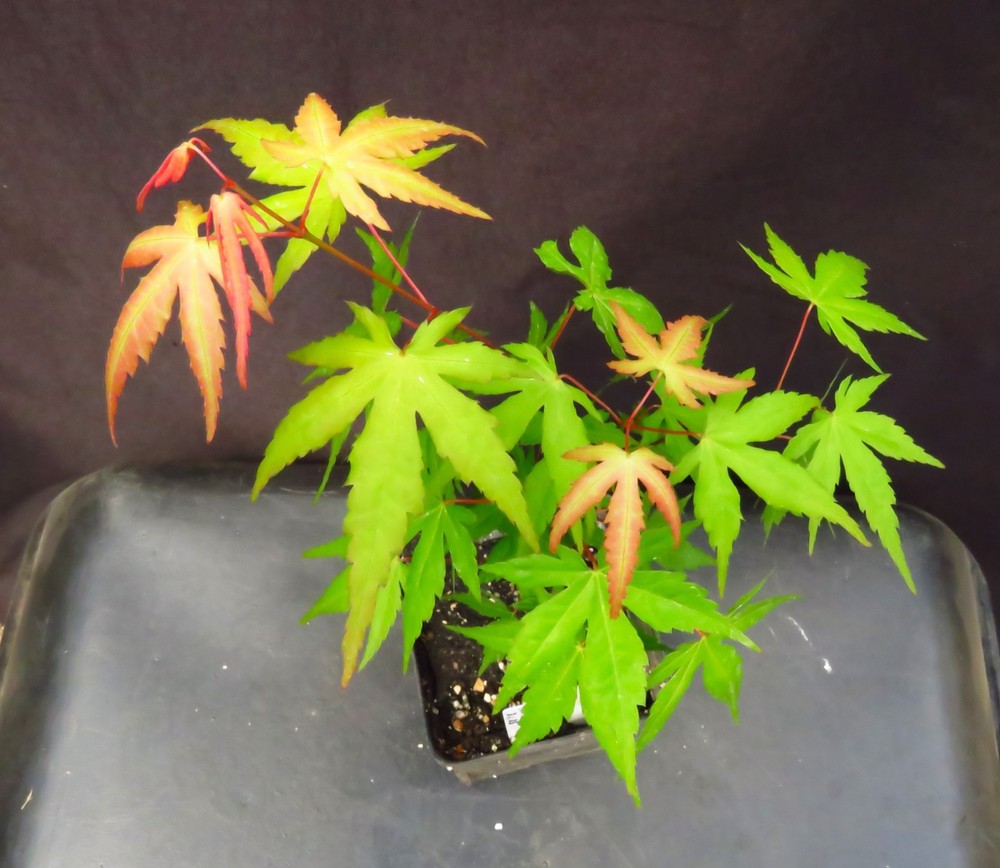
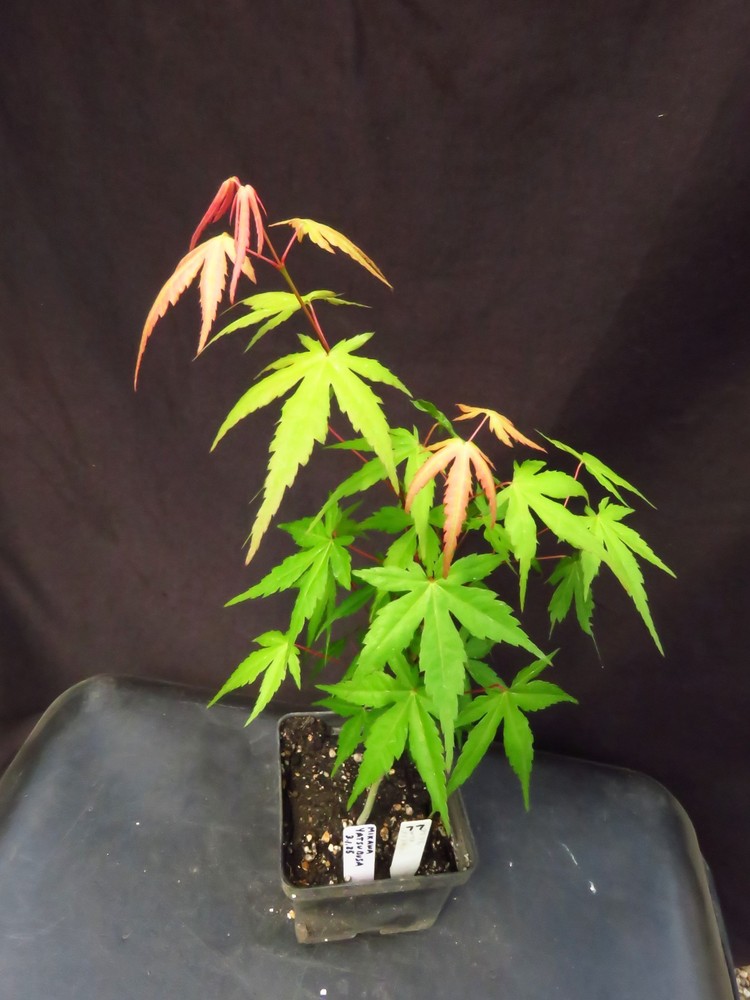
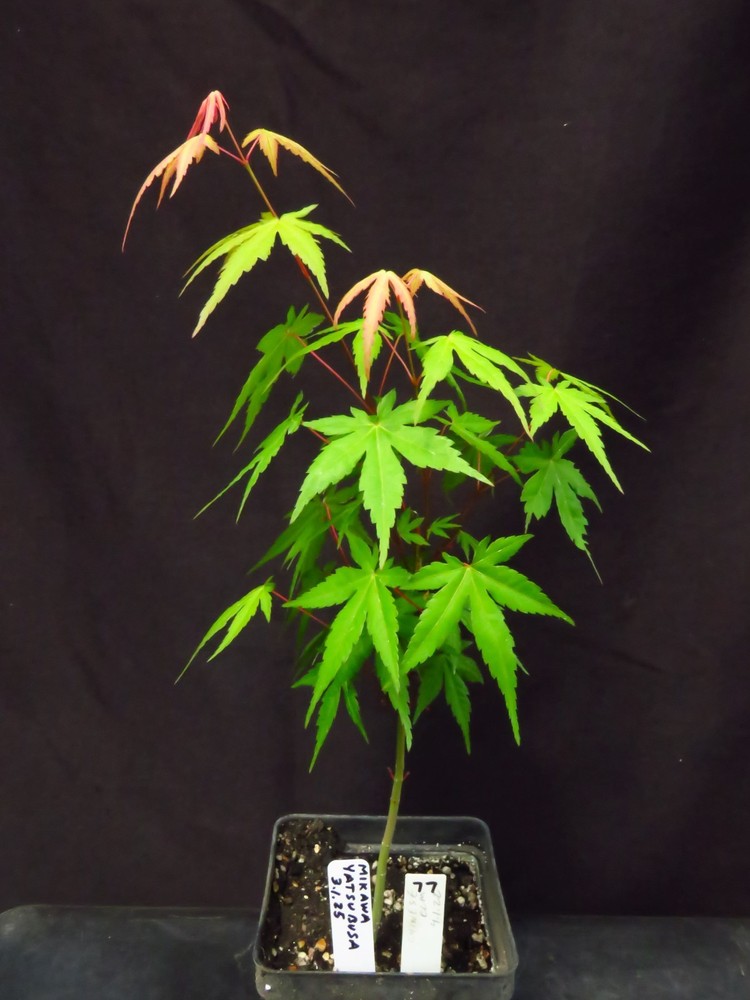
Acer Palmatum 'Mikawa Yatsubusa' Japanese Maple Tree 15" Tall
$ 4.76
Description
Acer Palmatum 'Mikawa Yatsubusa' Japanese Maple Tree 15" Tall. It was grown from Acer palmatum ssp. amoenum 'Mikawa Yatsubusa' Japanese maple tree seeds. This is one of the atypical trees from the 'Mikawa' group. This one is tall, fast-growing and lacks the dense branching structure of typical 'Mikawas'. Up for sale is a 15-inch-tall Japanese maple tree. It was grown from Acer palmatum ssp. amoenum 'Mikawa Yatsubusa' Japanese maple tree seeds. This is one of the atypical trees from the 'Mikawa' group. The basic leaf shape and spring colors are the same as the short, slow-growing trees. This one is tall, fast-growing and lacks the dense branching structure of typical 'Mikawas'. It'll be interesting to see how these develop over the years. The 'Mikawa' seedlings were the most consistently similar of all the many cultivar seedlings I grow. They were almost identical. There were a few atypical ones that grew tall and fast and lacked the typical branching patterns. This leads me to believe the 'Mikawa' trees either self-pollinated, or more likely were grown in a grove of other 'Mikawas'. The seedlings are short, slow-growing and densely branched. Seeds grown from named varieties will not, with a few exceptions, look exactly like the parent tree. Some will closely resemble the parents, others will show more variety in color, leaf shape and growth rate. Usually the seedlings will inherit some qualities from the mother trees. Similarities and differences between parent trees and offspring is determined by whether the tree self-pollinated, was pollinated by trees of the same variety, or was cross pollinated with Japanese maples of a different cultivar. Each seed-grown Japanese Maple tree is a unique genetic individual. No two are exactly alike. Named cultivars come from seedlings. Every now and then, you will see an outstanding genetic "sport" tree which is the result of a spontaneous random mutation. These special trees are then propagated by cloning. The Japanese Maples are growing fast in the greenhouse. Some varieties will change color one or more times throughout the growing season and in the fall. Some stay mostly the same color until autumn. Others will transition from red to green or vice versa. Others may go to yellow and orange hues. Sometimes the color will change along the leaf edges. You never know with these trees. Trees and plants are shipped with moist root balls wrapped in plastic. Shipping is $14 by UPS or USPS.