Chinese Woman Opium Water Pipe San Francisco Stereoview Carleton Watkins Jj Cook
$ 298.62
Description
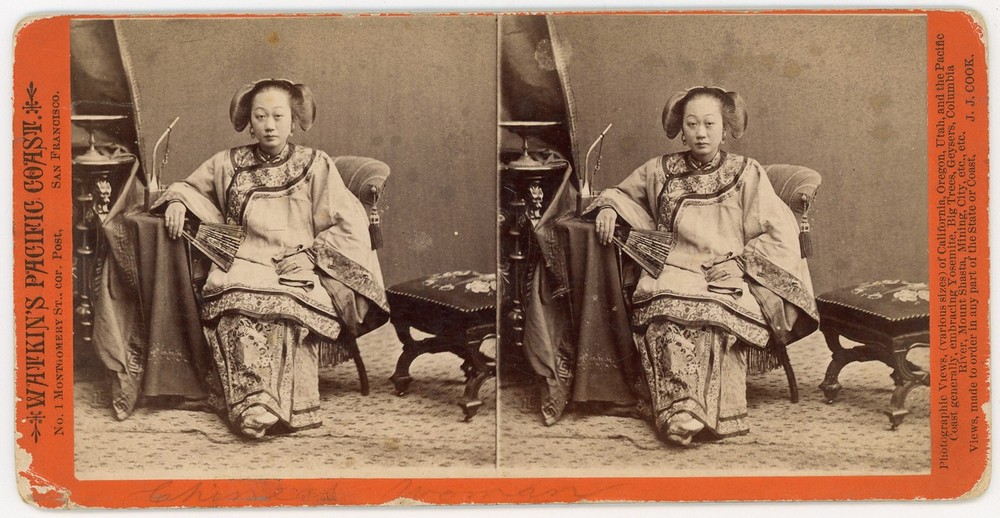
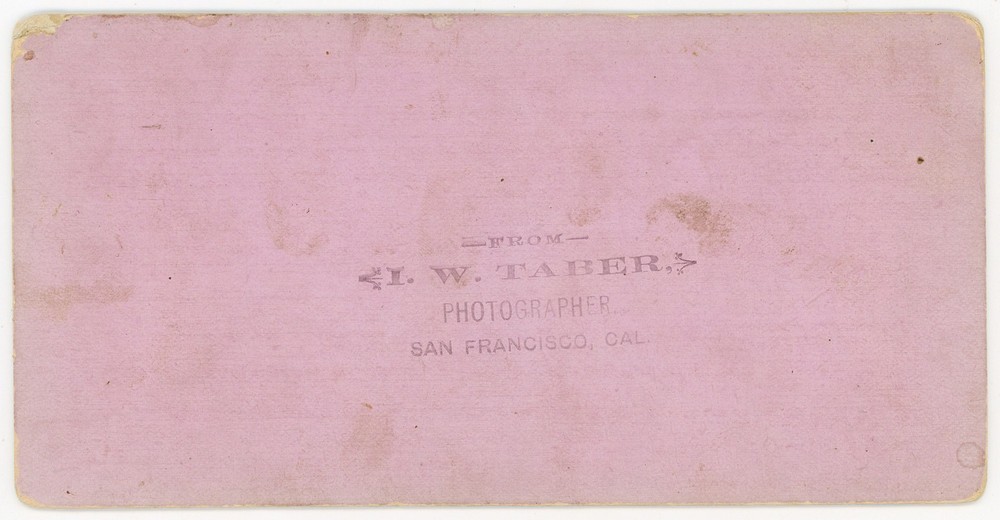
CHINESE WOMAN OPIUM WATER PIPE SAN FRANCISCO STEREOVIEW CARLETON WATKINS JJ COOK. Cook at first sold under the 'Watkins Pacific Coast' label, and later Taber incorporated the images under his own label. This is why a number of photographs that seem to be attributed to Taber are actually Watkins images. STEREOVIEW with pencil caption at bottom of mount: "Chinese Woman". She wears traditional attire, holds a folding fan in one hand, and a textile in the other. There is a water pipe on the table. On front of mount, at left side: "WATKIN'S PACIFIC COAST. No. 1 MONTGOMERY ST., cor. Post, SAN FRANCISCO." On front of mount, at right side: "Photographic Views, (various sizes) of California, Oregon, Utah, and the Pacific Coast generally, embracing Yosemite, Big Trees, Geysers, Columbia River, Mount Shasta, Mining, City, etc., etc. Views, made to order in any part of the State or Coast. J. J. COOK." SIZE. Approximately 3 7/16 x 6 7/8 inches. CONDITION. Both sides: Discoloration, spots, and splotches. This is mostly on the background. Mount: Heavy wear around edges and at corners. The lower left corner is creased, chipped, separating, and almost torn off. Some soiling on front, heavy soiling on back. APPEARANCE. Excellent lighting. Rich tones. Beautiful details. A gorgeous portrait. PLEASE NOTE. We do our best to accurately represent the tones and colors in all our images. However, minor variations may occur due to differences in monitor settings and/or lighting conditions. CARLETON WATKINS. "Watkins began his photographic career in San Francisco in 1854 by working for Robert Vance, who produced daguerreotypes. There he learned and then perfected his own techniques. By 1858 he was working on his own. He used a specially made mammoth camera that used 18" x 22" glass plates, and a smaller stereoscopic camera. His mammoth plates made him famous. No one else was producing such large photographs at that time, since all photos were contact prints - there were no 'enlargers'. Watkins gained international reknown for his photographs of Yosemite, taken in 1861 and as a result he opened 'The Yosemite Art Gallery' in San Francisco to sell copies of his work and to take on commissions. Although a great photographer, Watkins was evidently a poor businessman and he lost his studio and all of his negatives to a creditor by the name of J.J. Cook during the financial panic of 1875. Cook in partnership with I.W. Taber took over his studio and both began marketing Watkins' work, particularly the stereoviews, along with Taber's photos. Cook at first sold under the 'Watkins Pacific Coast' label, and later Taber incorporated the images under his own label. This is why a number of photographs that seem to be attributed to Taber are actually Watkins images. Watkins continued to create photographs under the 'Watkins New Series' label, but the images were not marketed nearly as well as those by the Taber operation." (source: Cliff House Project website)