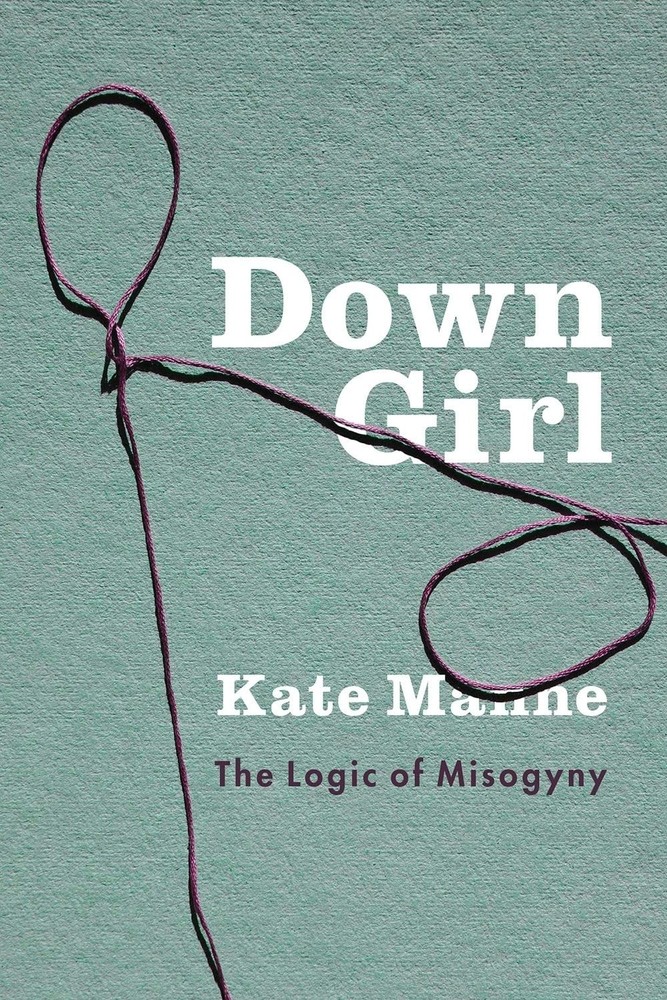
Down Girl: The Logic of Misogyny by Kate Manne – 2017 Hardcover

$ 5.06

Author: Kate Manne Intended Audience: Trade Item Length: 8.4 in Topic: Social, Women's Studies, Political, Human Sexuality (See Also Social Science / Human Sexuality) Book Title: Down Girl : the Logic of Misogyny Item Weight: 19.2 Oz Item Width: 5.9 in gtin13: 9780190604981 brand: Oxford University Press, Incorporated Language: English Number of Pages: 368 Pages LCCN: 2017-289379 Publication Year: 2017 Genre: Philosophy, Social Science, Psychology LC Classification Number: HQ1233 Table Of Content: Preface: Wronging Him Introduction: (Eating) Her Words Chapter 1: Threatening Women Chapter 2: Ameliorating Misogyny Chapter 3: Discriminating Sexism Chapter 4: Taking His (Out) Chapter 5: Humanizing Hatred Chapter 6: Exonerating Men Chapter 7: Suspecting Victims Chapter 8: Losing (To) Misogynists Conclusion: The Giving She Publisher: Oxford University Press, Incorporated ISBN-13: 9780190604981 Format: Hardcover Dewey Edition: 23 Item Height: 1.3 in Synopsis: Misogyny is a hot topic, yet it's often misunderstood. What is misogyny, exactly? Who deserves to be called a misogynist? How does misogyny contrast with sexism, and why is it prone to persist - or increase - even when sexist gender roles are waning? This book is an exploration of misogyny in public life and politics by the moral philosopher and writer Kate Manne. It argues that misogyny should not be understood primarily in terms of the hatred or hostility some men feel toward all or most women. Rather, it's primarily about controlling, policing, punishing, and exiling the "bad" women who challenge male dominance. And it's compatible with rewarding "the good ones," and singling out other women to serve as warnings to those who are out of order. It's also common for women to serve as scapegoats, be burned as witches, and treated as pariahs. Manne examines recent and current events such as the Isla Vista killings by Elliot Rodger, the case of the convicted serial rapist Daniel Holtzclaw, who preyed on African-American women as a police officer in Oklahoma City, Rush Limbaugh's diatribe against Sandra Fluke, and the "misogyny speech" of Julia Gillard, then Prime Minister of Australia, which went viral on YouTube. The book shows how these events, among others, set the stage for the 2016 US presidential election. Not only was the misogyny leveled against Hillary Clinton predictable in both quantity and quality, Manne argues it was predictable that many people would be prepared to forgive and forget regarding Donald Trump's history of sexual assault and harassment. For this, Manne argues, is misogyny's oft-overlooked and equally pernicious underbelly: exonerating or showing "himpathy" for the comparatively privileged men who dominate, threaten, and silence women., Down Girl is a broad, original, and far ranging analysis of what misogyny really is, how it works, its purpose, and how to fight it. The philosopher Kate Manne argues that modern society's failure to recognize women's full humanity and autonomy is not actually the problem. She argues instead that it is women's manifestations of human capacities -- autonomy, agency, political engagement -- is what engenders misogynist hostility., Misogyny is a hot topic, yet it's often misunderstood. What is misogyny, exactly? Who deserves to be called a misogynist? How does misogyny contrast with sexism, and why is it prone to persist - or increase - even when sexist gender roles are waning? This book is an exploration of misogyny in public life and politics, by the moral philosopher and writer Kate Manne. It argues that misogyny should not be understood primarily in terms of the hatred or hostility some men feel toward all or most women. Rather, it's primarily about controlling, policing, punishing, and exiling the "bad" women who challenge male dominance. And it's compatible with rewarding "the good ones," and singling out other women to serve as warnings to those who are out of order. It's also common for women to serve as scapegoats, be burned as witches, and treated as pariahs.Manne examines recent and current events such as the Isla Vista killings by Elliot Rodger, the case of the convicted serial rapist Daniel Holtzclaw, who preyed on African-American women as a police officer in Oklahoma City, Rush Limbaugh's diatribe against Sandra Fluke, and the "misogyny speech" of Julia Gillard, then Prime Minister of Australia, which went viral on YouTube. The book shows how these events, among others, set the stage for the 2016 US presidential election. Not only was the misogyny leveled against Hillary Clinton predictable in both quantity and quality, Manne argues it was predictable that many people would be prepared to forgive and forget regarding Donald Trump's history of sexual assault and harassment. For this, Manne argues, is misogyny's oft-overlooked and equally pernicious underbelly: exonerating or showing "himpathy" for the comparatively privileged men who dominate, threaten, and silence women., Misogyny is a hot topic, yet it's often misunderstood. What is misogyny, exactly? Who deserves to be called a misogynist? How does misogyny contrast with sexism, and why is it prone to persist - or increase - even when sexist gender roles are waning? This book is an exploration of misogyny in public life and politics by the moral philosopher and writer Kate Manne. It argues that misogyny should not be understood primarily in terms of the hatred or hostility some men feel toward all or most women. Rather, it's primarily about controlling, policing, punishing, and exiling the "bad" women who challenge male dominance. And it's compatible with rewarding "the good ones," and singling out other women to serve as warnings to those who are out of order. It's also common for women to serve as scapegoats, be burned as witches, and treated as pariahs. Manne examines recent and current events such as the Isla Vista killings by Elliot Rodger, the case of the convicted serial rapist Daniel Holtzclaw, who preyed on African-American women as a police officer in Oklahoma City, Rush Limbaugh's diatribe against Sandra Fluke, and the "misogyny speech" of Julia Gillard, then Prime Minister of Australia, which went viral on YouTube. The book shows how these events, among others, set the stage for the 2016 US presidential election. Not only was the misogyny leveled against Hillary Clinton predictable in both quantity and quality, Manne argues it was predictable that many people would be prepared to forgive and forget regarding Donald Trump's history of sexual assault and harassment. For this, Manne argues, is misogyny's oft-overlooked and equally pernicious underbelly: exonerating or showing "himpathy" for the comparatively privileged men who dominate, threaten, and silence women. l Dewey Decimal: 305.42 ISBN-10: 0190604980 Reviews: "Despite its somber topic, Kate Manne's Down Girl made me very happy, exhilarated indeed by its insight, analytical clarity, and committed engagement with a major issue of justice. I've been thinking and teaching about sexism and misogyny for a long time, but this book opened up fresh perspectives, for example in its convincing distinction between sexism as a set of beliefs and misogyny as an enforcement strategy. Each thoughtful person will have her own sense of where to locate the root of injustice to women, but Manne's cogent argument that misogyny is primarily about the demand that women give support, service, and care is surely at least one big part of the story of our turbulent times." Martha C. Nussbaum, School of Law and Department of Philosophy, University of Chicago "Persuasively defining 'misogyny' as hostile, demeaning, shaming, and punitive treatment of women, Down Girl brings out the misogynist logic of contemporary culture with wit and urgency. In this book 'misogyny' emerges as the law enforcement branch of patriarchy, and thus as a concept that fully deserves a place alongside 'patriarchy' and 'sexism' as a fundamental tool for feminist analysis. Combining conceptual clarity with passionate commitment, Down Girl is indispensable reading for anyone who wishes to understand the ugly strand of hostility to women that has surfaced in recent years in our so-called advanced Western societies." Toril Moi, Duke University "Kate Manne's brilliant Down Girl is a welcome antidote to the view that philosophy is--or should be--detached and otherworldly. In it, philosophy meets reality and the stakes are nothing less than life and death. Drawing on literature, television, film, social media, current events, and scientific research, Manne's unflinching and bracingly original account defines misogyny in terms of what it does: it polices and punishes women for not fulfilling their time-honored role of catering to men's needs and desires. Among its many other virtues, her analysis explains why, even as women are achieving greater equality, misogyny's stranglehold doesn't show signs of loosening anytime soon. A must-read for all who struggle to make sense of contemporary culture and politics." Susan J. Brison, Dartmouth College "Kate Manne has written a deeply moving and powerful book. It is politically engaged philosophical analysis at its best." Sarah Song, University of California, Berkeley "Manne's important new book deploys the tools of analytic moral philosophy to construct an arresting account of the logic of misogyny. It is sure to become a key reference point for future discussions of this vital, but hitherto sadly neglected, topic." John Tasioulas, King's College London "Manne offers us a deep, insightful, and thought-provoking --if depressing-- account of misogyny in America. This is a path-breaking book. It couldn't come at a more auspicious time." Ruth Chang, Rutgers University, "Despite its somber topic, Kate Manne's Down Girl made me very happy, exhilarated indeed by its insight, analytical clarity, and committed engagement with a major issue of justice. I've been thinking and teaching about sexism and misogyny for a long time, but this book opened up fresh perspectives, for example in its convincing distinction between sexism as a set of beliefs and misogyny as an enforcement strategy. Each thoughtful person will have her own sense of where to locate the root of injustice to women, but Manne's cogent argument that misogyny is primarily about the demand that women give support, service, and care is surely at least one big part of the story of our turbulent times." Martha C. Nussbaum, University of Chicago "Persuasively defining 'misogyny' as hostile, demeaning, shaming, and punitive treatment of women, Down Girl brings out the misogynist logic of contemporary culture with wit and urgency. In this book 'misogyny' emerges as the law enforcement branch of patriarchy, and thus as a concept that fully deserves a place alongside 'patriarchy' and 'sexism' as a fundamental tool for feminist analysis. Combining conceptual clarity with passionate commitment, Down Girl is indispensable reading for anyone who wishes to understand the ugly strand of hostility to women that has surfaced in recent years in our so-called advanced Western societies." Toril Moi, Duke University "Kate Manne's brilliant Down Girl is a welcome antidote to the view that philosophy isor should bedetached and otherworldly. In it, philosophy meets reality and the stakes are nothing less than life and death. Drawing on literature, television, film, social media, current events, and scientific research, Manne's unflinching and bracingly original account defines misogyny in terms of what it does: it polices and punishes women for not fulfilling their time-honored role of catering to men's needs and desires. Among its many other virtues, her analysis explains why, even as women are achieving greater equality, misogyny's stranglehold doesn't show signs of loosening anytime soon. A must-read for all who struggle to make sense of contemporary culture and politics." Susan J. Brison, Dartmouth College "Kate Manne has written a deeply moving and powerful book. It is politically engaged philosophical analysis at its best." Sarah Song, University of California, Berkeley "Manne's important new book deploys the tools of analytic moral philosophy to construct an arresting account of the logic of misogyny. It is sure to become a key reference point for future discussions of this vital, but hitherto sadly neglected, topic." John Tasioulas, King's College London "Manne offers us a deep, insightful, and thought-provokingif depressingaccount of misogyny in America. This is a path-breaking book. It couldn't come at a more auspicious time." Ruth Chang, Rutgers University, "Despite its somber topic, Kate Manne's Down Girl made me very happy, exhilarated indeed by its insight, analytical clarity, and committed engagement with a major issue of justice. I've been thinking and teaching about sexism and misogyny for a long time, but this book opened up fresh perspectives, for example in its convincing distinction between sexism as a set of beliefs and misogyny as an enforcement strategy. Each thoughtful person will have her own sense of where to locate the root of injustice to women, but Manne's cogent argument that misogyny is primarily about the demand that women give support, service, and care is surely at least one big part of the story of our turbulent times." Martha C. Nussbaum, School of Law and Department of Philosophy, University of Chicago "Persuasively defining 'misogyny' as hostile, demeaning, shaming, and punitive treatment of women, Down Girl brings out the misogynist logic of contemporary culture with wit and urgency. In this book 'misogyny' emerges as the law enforcement branch of patriarchy, and thus as a concept that fully deserves a place alongside 'patriarchy' and 'sexism' as a fundamental tool for feminist analysis. Combining conceptual clarity with passionate commitment, Down Girl is indispensable reading for anyone who wishes to understand the ugly strand of hostility to women that has surfaced in recent years in our so-called advanced Western societies." Toril Moi, Duke University "Kate Manne's brilliant Down Girl is a welcome antidote to the view that philosophy is--or should be--detached and otherworldly. In it, philosophy meets reality and the stakes are nothing less than life and death. Drawing on literature, television, film, social media, current events, and scientific research, Manne's unflinching and bracingly original account defines misogyny in terms of what it does: it polices and punishes women for not fulfilling their time-honored role of catering to men's needs and desires. Among its many other virtues, her analysis explains why, even as women are achieving greater equality, misogyny's stranglehold doesn't show signs of loosening anytime soon. A must-read for all who struggle to make sense of contemporary culture and politics." Susan J. Brison, Dartmouth College "Kate Manne has written a deeply moving and powerful book. It is politically engaged philosophical analysis at its best." Sarah Song, University of California, Berkeley "Manne's important new book deploys the tools of analytic moral philosophy to construct an arresting account of the logic of misogyny. It is sure to become a key reference point for future discussions of this vital, but hitherto sadly neglected, topic." John Tasioulas, King's College London "Manne offers us a deep, insightful, and thought-provoking--if depressing--account of misogyny in America. This is a path-breaking book. It couldn't come at a more auspicious time." Ruth Chang, Rutgers University, "Despite its somber topic, Kate Manne's Down Girl made me very happy, exhilarated indeed by its insight, analytical clarity, and committed engagement with a major issue of justice. I've been thinking and teaching about sexism and misogyny for a long time, but this book opened up fresh perspectives, for example in its convincing distinction between sexism as a set of beliefs and misogyny as an enforcement strategy. Each thoughtful person will have her own sense of where to locate the root of injustice to women, but Manne's cogent argument that misogyny is primarily about the demand that women give support, service, and care is surely at least one big part of the story of our turbulent times." --Martha C. Nussbaum, Kyoto Prize Laureate in philosophy (2016) and Ernst Freund Distinguished Service Professor of Law and Ethics, the University of Chicago "Persuasively defining "misogyny" as hostile, demeaning, shaming, and punitive treatment of women, Down Girl brings out the misogynist logic of contemporary culture with wit and urgency. In this book misogyny emerges as the law enforcement branch of patriarchy, and thus as a concept that fully deserves a place alongside "patriarchy" and "sexism" as a fundamental tool for feminist analysis. Combining conceptual clarity with passionate commitment, Down Girl is indispensable reading for anyone who wishes to understand the ugly strand of hostility to women that has surfaced in recent years in our so-called advanced Western societies." --Toril Moi, James B. Duke Professor of Literature and Romance Studies, Professor of English, Philosophy and Theatre Studies, and Director of the Center for Philosophy, Arts, and Literature (PAL), Duke University "Kate Manne has written a deeply moving and powerful book. It is politically engaged philosophical analysis at its best." --Sarah Song, Professor of Law, Associate Professor of Political Science, Faculty Director of the Kadish Center for Morality, Law, and Public Affairs, University of California, Berkeley, "Despite its somber topic, Kate Manne's Down Girl made me very happy, exhilarated indeed by its insight, analytical clarity, and committed engagement with a major issue of justice. I've been thinking and teaching about sexism and misogyny for a long time, but this book opened up fresh perspectives, for example in its convincing distinction between sexism as a set of beliefs and misogyny as an enforcement strategy. Each thoughtful person will have her own sense of where to locate the root of injustice to women, but Manne's cogent argument that misogyny is primarily about the demand that women give support, service, and care is surely at least one big part of the story of our turbulent times." Martha C. Nussbaum, School of Law and Department of Philosophy, University of Chicago "Persuasively defining 'misogyny' as hostile, demeaning, shaming, and punitive treatment of women, Down Girl brings out the misogynist logic of contemporary culture with wit and urgency. In this book 'misogyny' emerges as the law enforcement branch of patriarchy, and thus as a concept that fully deserves a place alongside 'patriarchy' and 'sexism' as a fundamental tool for feminist analysis. Combining conceptual clarity with passionate commitment, Down Girl is indispensable reading for anyone who wishes to understand the ugly strand of hostility to women that has surfaced in recent years in our so-called advanced Western societies." Toril Moi, Duke University "Kate Manne's brilliant Down Girl is a welcome antidote to the view that philosophy is--or should be--detached and otherworldly. In it, philosophy meets reality and the stakes are nothing less than life and death. Drawing on literature, television, film, social media, current events, and scientific research, Manne's unflinching and bracingly original account defines misogyny in terms of what it does: it polices and punishes women for not fulfilling their time-honored role of catering to men's needs and desires. Among its many other virtues, her analysis explains why, even as women are achieving greater equality, misogyny's stranglehold doesn't show signs of loosening anytime soon. A must-read for all who struggle to make sense of contemporary culture and politics." Susan J. Brison, Dartmouth College "Kate Manne has written a deeply moving and powerful book. It is politically engaged philosophical analysis at its best." Sarah Song, University of California, Berkeley "Manne's important new book deploys the tools of analytic moral philosophy to construct an arresting account of the logic of misogyny. It is sure to become a key reference point for future discussions of this vital, but hitherto sadly neglected, topic." John Tasioulas, King's College London "Manne offers us a deep, insightful, and thought-provoking --if depressing-- account of misogyny in America. This is a path-breaking book. It couldn't come at a more auspicious time." Ruth Chang, Rutgers University "This is an exquisitely timed study....this book still forces a rethinking." --The Washington Post "Manne brings a fresh analysis to our assumed understanding of misogyny and the related term sexism." --Society for US Intellectual History "...fiercely argued and timely..." --The New Yorker, "Despite its somber topic, Kate Manne's Down Girl made me very happy, exhilarated indeed by its insight, analytical clarity, and committed engagement with a major issue of justice. I've been thinking and teaching about sexism and misogyny for a long time, but this book opened up fresh perspectives, for example in its convincing distinction between sexism as a set of beliefs and misogyny as an enforcement strategy. Each thoughtful person will have her own sense of where to locate the root of injustice to women, but Manne's cogent argument that misogyny is primarily about the demand that women give support, service, and care is surely at least one big part of the story of our turbulent times." Martha C. Nussbaum, Kyoto Prize Laureate in philosophy (2016) and Ernst Freund Distinguished Service Professor of Law and Ethics, the University of Chicago "Persuasively defining "misogyny" as hostile, demeaning, shaming, and punitive treatment of women, Down Girl brings out the misogynist logic of contemporary culture with wit and urgency. In this book misogyny emerges as the law enforcement branch of patriarchy, and thus as a concept that fully deserves a place alongside "patriarchy" and "sexism" as a fundamental tool for feminist analysis. Combining conceptual clarity with passionate commitment, Down Girl is indispensable reading for anyone who wishes to understand the ugly strand of hostility to women that has surfaced in recent years in our so-called advanced Western societies." Toril Moi, James B. Duke Professor of Literature and Romance Studies, Professor of English, Philosophy and Theatre Studies, and Director of the Center for Philosophy, Arts, and Literature (PAL), Duke University "Kate Manne has written a deeply moving and powerful book. It is politically engaged philosophical analysis at its best." Sarah Song, Professor of Law, Associate Professor of Political Science, Faculty Director of the Kadish Center for Morality, Law, and Public Affairs, University of California, Berkeley, "Despite its somber topic, Kate Manne's Down Girl made me very happy, exhilarated indeed by its insight, analytical clarity, and committed engagement with a major issue of justice. I've been thinking and teaching about sexism and misogyny for a long time, but this book opened up fresh perspectives, for example in its convincing distinction between sexism as a set of beliefs and misogyny as an enforcement strategy. Each thoughtful person will have her own sense of where to locate the root of injustice to women, but Manne's cogent argument that misogyny is primarily about the demand that women give support, service, and care is surely at least one big part of the story of our turbulent times." Martha C. Nussbaum, University of Chicago "Persuasively defining 'misogyny' as hostile, demeaning, shaming, and punitive treatment of women, Down Girl brings out the misogynist logic of contemporary culture with wit and urgency. In this book 'misogyny' emerges as the law enforcement branch of patriarchy, and thus as a concept that fully deserves a place alongside 'patriarchy' and 'sexism' as a fundamental tool for feminist analysis. Combining conceptual clarity with passionate commitment, Down Girl is indispensable reading for anyone who wishes to understand the ugly strand of hostility to women that has surfaced in recent years in our so-called advanced Western societies." Toril Moi, Duke University "Kate Manne's brilliant Down Girl is a welcome antidote to the view that philosophy is--or should be--detached and otherworldly. In it, philosophy meets reality and the stakes are nothing less than life and death. Drawing on literature, television, film, social media, current events, and scientific research, Manne's unflinching and bracingly original account defines misogyny in terms of what it does: it polices and punishes women for not fulfilling their time-honored role of catering to men's needs and desires. Among its many other virtues, her analysis explains why, even as women are achieving greater equality, misogyny's stranglehold doesn't show signs of loosening anytime soon. A must-read for all who struggle to make sense of contemporary culture and politics." Susan J. Brison, Dartmouth College "Kate Manne has written a deeply moving and powerful book. It is politically engaged philosophical analysis at its best." Sarah Song, University of California, Berkeley "Manne's important new book deploys the tools of analytic moral philosophy to construct an arresting account of the logic of misogyny. It is sure to become a key reference point for future discussions of this vital, but hitherto sadly neglected, topic." John Tasioulas, King's College London "Manne offers us a deep, insightful, and thought-provokingif depressingaccount of misogyny in America. This is a path-breaking book. It couldn't come at a more auspicious time." Ruth Chang, Rutgers University, "Despite its somber topic, Kate Manne's Down Girl made me very happy, exhilarated indeed by its insight, analytical clarity, and committed engagement with a major issue of justice. I've been thinking and teaching about sexism and misogyny for a long time, but this book opened up fresh perspectives, for example in its convincing distinction between sexism as a set of beliefs and misogyny as an enforcement strategy. Each thoughtful person will have her own sense of where to locate the root of injustice to women, but Manne's cogent argument that misogyny is primarily about the demand that women give support, service, and care is surely at least one big part of the story of our turbulent times." Martha C. Nussbaum, School of Law and Department of Philosophy, University of Chicago "Persuasively defining 'misogyny' as hostile, demeaning, shaming, and punitive treatment of women, Down Girl brings out the misogynist logic of contemporary culture with wit and urgency. In this book 'misogyny' emerges as the law enforcement branch of patriarchy, and thus as a concept that fully deserves a place alongside 'patriarchy' and 'sexism' as a fundamental tool for feminist analysis. Combining conceptual clarity with passionate commitment, Down Girl is indispensable reading for anyone who wishes to understand the ugly strand of hostility to women that has surfaced in recent years in our so-called advanced Western societies." Toril Moi, Duke University "Kate Manne's brilliant Down Girl is a welcome antidote to the view that philosophy is--or should be--detached and otherworldly. In it, philosophy meets reality and the stakes are nothing less than life and death. Drawing on literature, television, film, social media, current events, and scientific research, Manne's unflinching and bracingly original account defines misogyny in terms of what it does: it polices and punishes women for not fulfilling their time-honored role of catering to men's needs and desires. Among its many other virtues, her analysis explains why, even as women are achieving greater equality, misogyny's stranglehold doesn't show signs of loosening anytime soon. A must-read for all who struggle to make sense of contemporary culture and politics." Susan J. Brison, Dartmouth College "Kate Manne has written a deeply moving and powerful book. It is politically engaged philosophical analysis at its best." Sarah Song, University of California, Berkeley "Manne's important new book deploys the tools of analytic moral philosophy to construct an arresting account of the logic of misogyny. It is sure to become a key reference point for future discussions of this vital, but hitherto sadly neglected, topic." John Tasioulas, King's College London "Manne offers us a deep, insightful, and thought-provoking --if depressing-- account of misogyny in America. This is a path-breaking book. It couldn't come at a more auspicious time." Ruth Chang, Rutgers University "This is an exquisitely timed study....this book still forces a rethinking." --The Washington Post "Manne brings a fresh analysis to our assumed understanding of misogyny and the related term sexism." --Society for US Intellectual History, Despite its somber topic, Kate Manne's Down Girl made me very happy, exhilarated indeed by its insight, analytical clarity, and committed engagement with a major issue of justice. I've been thinking and teaching about sexism and misogyny for a long time, but this book opened up fresh perspectives, for example in its convincing distinction between sexism as a set of beliefs and misogyny as an enforcement strategy. Each thoughtful person will have her own sense of where to locate the root of injustice to women, but Manne's cogent argument that misogyny is primarily about the demand that women give support, service, and care is surely at least one big part of the story of our turbulent times." Martha C. Nussbaum, The University of Chicago, Despite its somber topic, Kate Manne's Down Girl made me very happy, exhilarated indeed by its insight, analytical clarity, and committed engagement with a major issue of justice. I've been thinking and teaching about sexism and misogyny for a long time, but this book opened up fresh perspectives, for example in its convincing distinction between sexism as a set of beliefs and misogyny as an enforcement strategy. Each thoughtful person will have her own sense of where to locate the root of injustice to women, but Manne's cogent argument that misogyny is primarily about the demand that women give support, service, and care is surely at least one big part of the story of our turbulent times." Martha C. Nussbaum, The University of Chicago "Persuasively defining 'misogny' as hostile, demeaning, shaming, and punitive treatment of women, Down Girl brings out the misogynist logic of contemporary culture with wit and urgency. In this book 'misogyny' emerges as the law enforcement branch of patrarchy, and thus as a concept that fully deserves a place alongside 'patriarchy' and 'sexism' as a fundamental tool for feminist analysis. Combining conceptual clarity with passionate commitment, Down Girl is indispensable reading for anyone who wishes to understand the ugly strand of hostility to women that has surfaced in recent years in our so-called advanced Western societies." Toril Moi, Duke University

Description

  1. This book is a brilliant and eye-opening exploration of misogyny's hidden mechanisms. Manne's sharp analysis breaks down how patriarchal systems operate, making complex ideas accessible without oversimplifying. A must-read for anyone wanting to understand gender dynamics on a deeper level—thought-provoking and incredibly relevant.

    WhereIsMySnake