Flame Tree Flower Postcard US Naval Base Guantanamo Bay Cuba Chrome
$ 5.28
Description
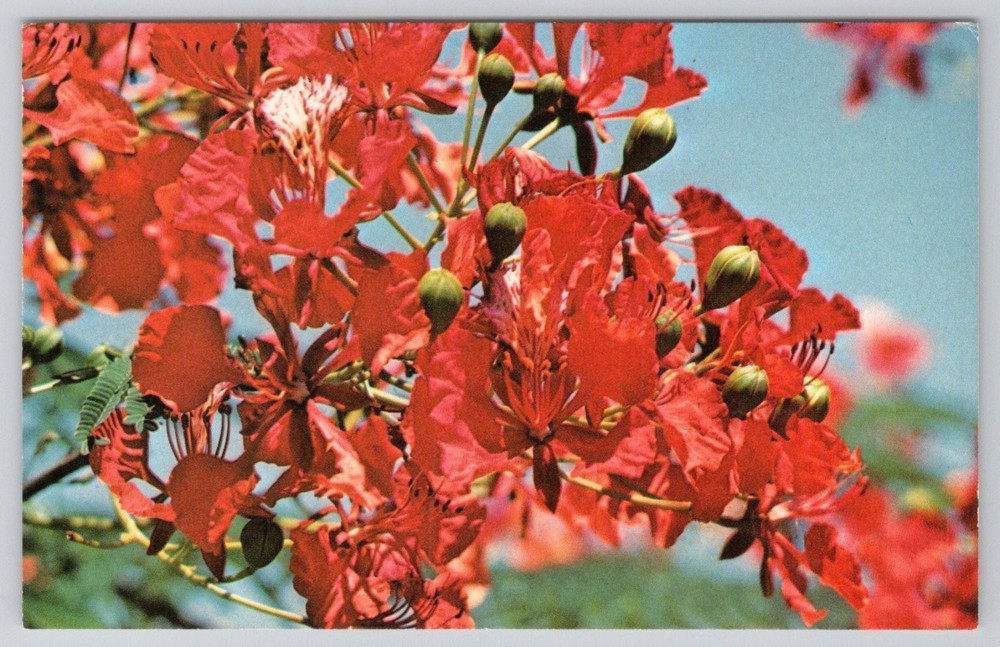
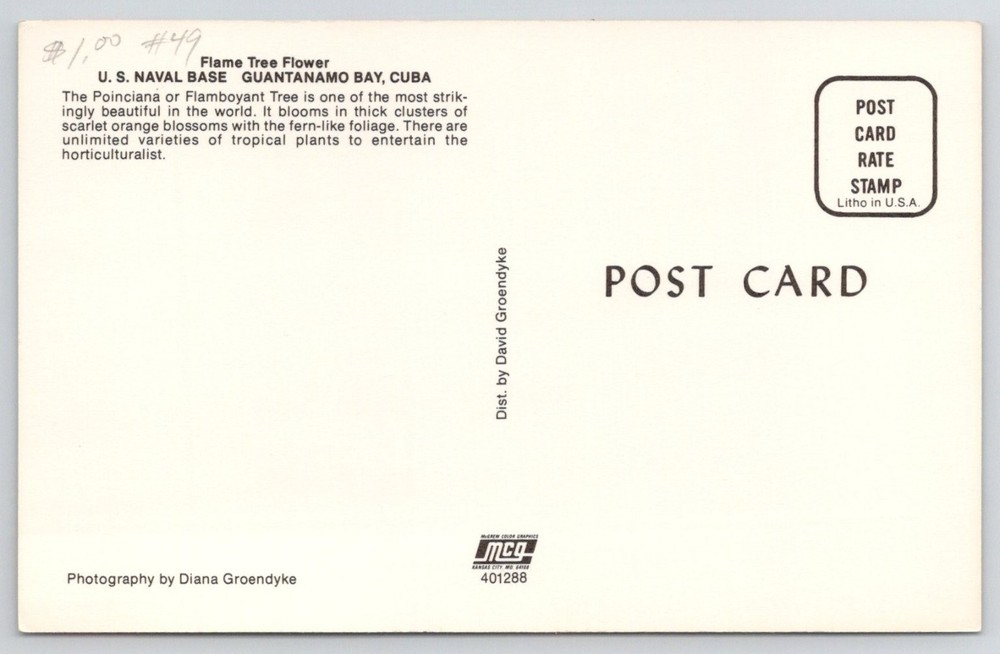
Flame Tree Flower Postcard US Naval Base Guantanamo Bay Cuba Chrome. The reverse side identifies the scene as U.S. Naval Base, Guantanamo Bay, Cuba, providing a unique geographical and historical context. The close-up view reveals clusters of scarlet-orange blossoms alongside green buds, set against a clear blue sky, showcasing the tropical splendor of the region. Thank you for visiting! This item is in stock and usually ships within 1 business day of your purchase. It will be shipped via ebay Standard Envelope which provides tracking information when it passes through the sorting machines for First Class mail. USPS workers have no way of scanning the barcode on the label. When it marks it as "out for delivery or delivered" it means it has arrived at your local sorting center, not your home address. Depending on your local postal route, it may take several days yet to arrive at your home. Also, consider possible weather delays in the actual time the service takes. Feel free to write if you have any questions. This vibrant postcard captures the striking beauty of the Flame Tree Flower, also known as the Poinciana or Flamboyant Tree, in full bloom. The close-up view reveals clusters of scarlet-orange blossoms alongside green buds, set against a clear blue sky, showcasing the tropical splendor of the region. The vivid colors and sharp detail are characteristic of chrome-era postcards, highlighting the natural allure of this magnificent tree. The reverse side identifies the scene as U.S. Naval Base, Guantanamo Bay, Cuba, providing a unique geographical and historical context. The card features photography by Diana Groendyke and was distributed by David Groendyke, with printing by Modern Color Graphics (MCG) in Kansas City, MO, noted as "Litho in U.S.A." This collectible piece offers a glimpse into the flora of a significant global location, making it a wonderful addition for collectors of botanical postcards, military base memorabilia, or Cuban historical items. Its detailed depiction and identified location enhance its appeal as a memento of tropical horticulture and a notable American military presence abroad.