Fort Ticonderoga Museum, Uniforms & Artifacts, Interior, NY 1960s VTG Postcard
$ 4.22
Description
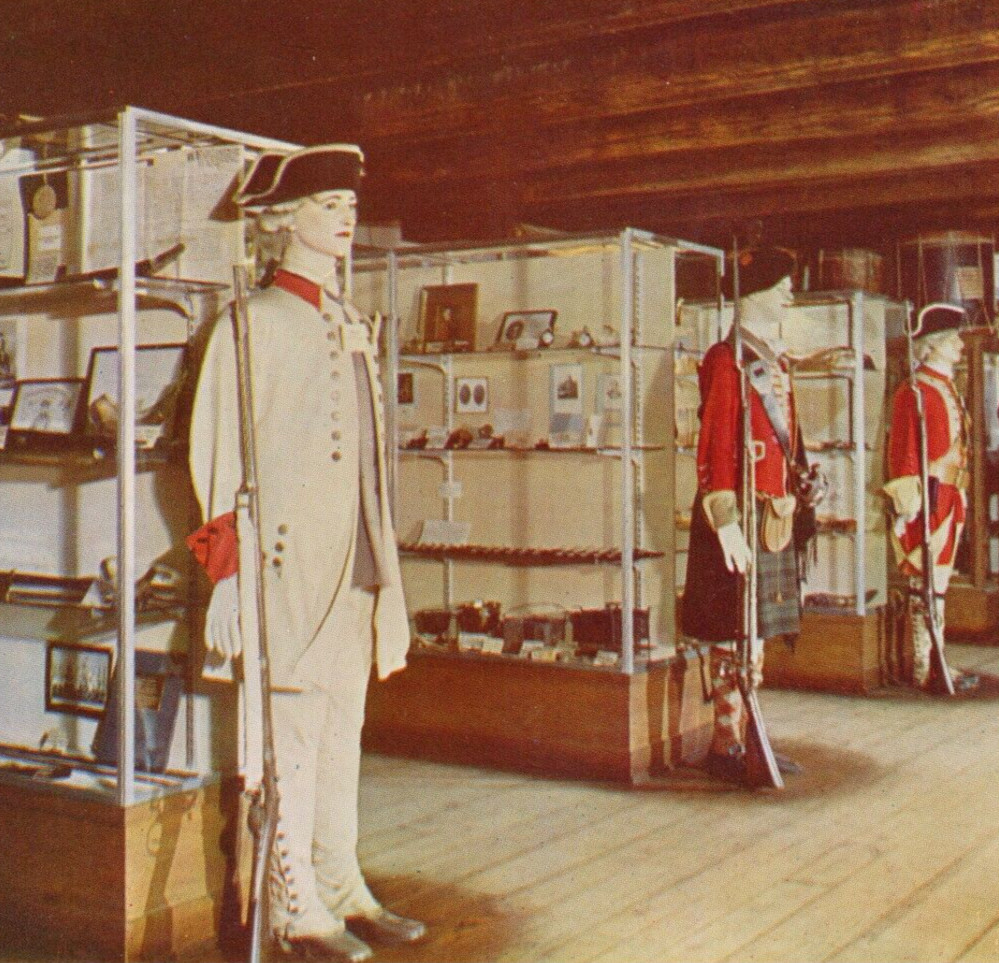
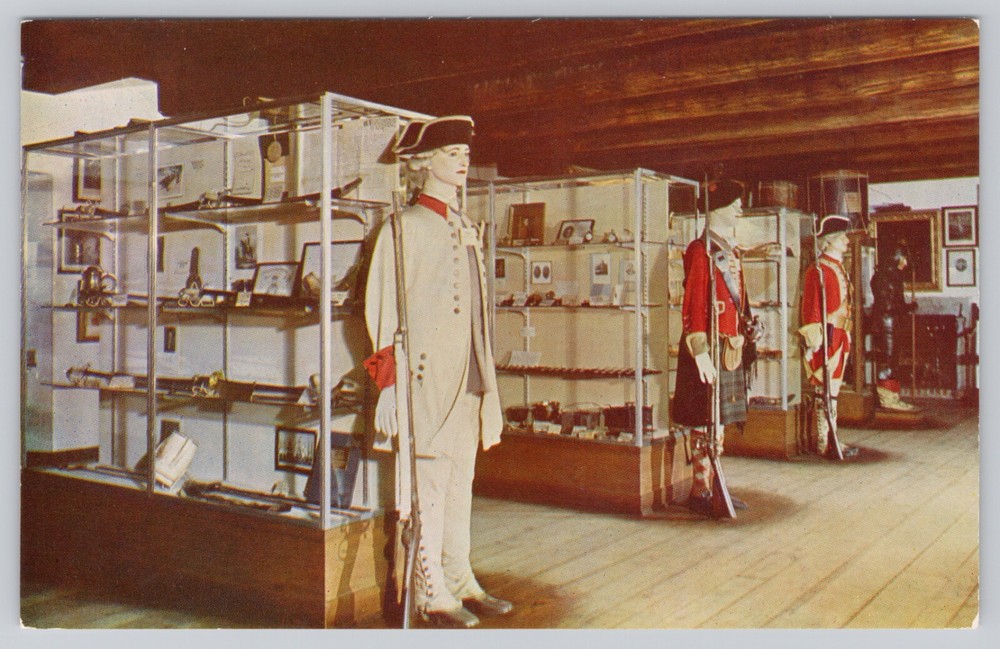
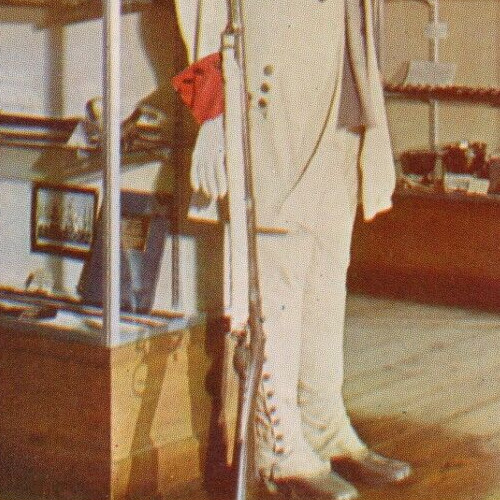
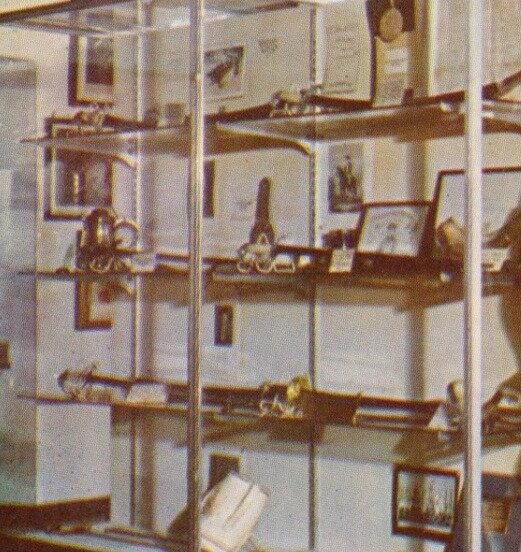
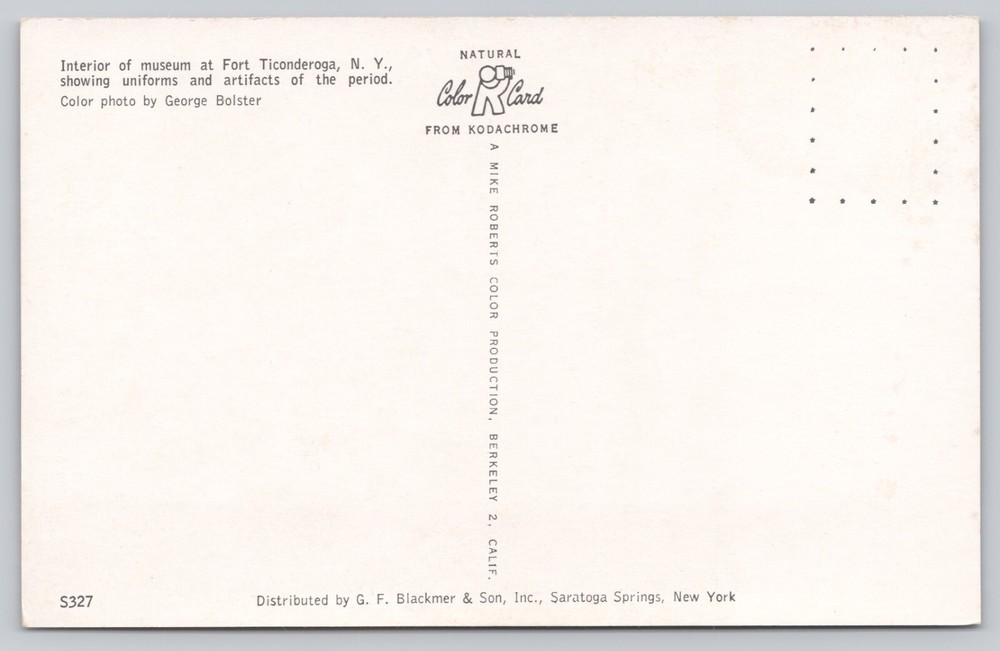
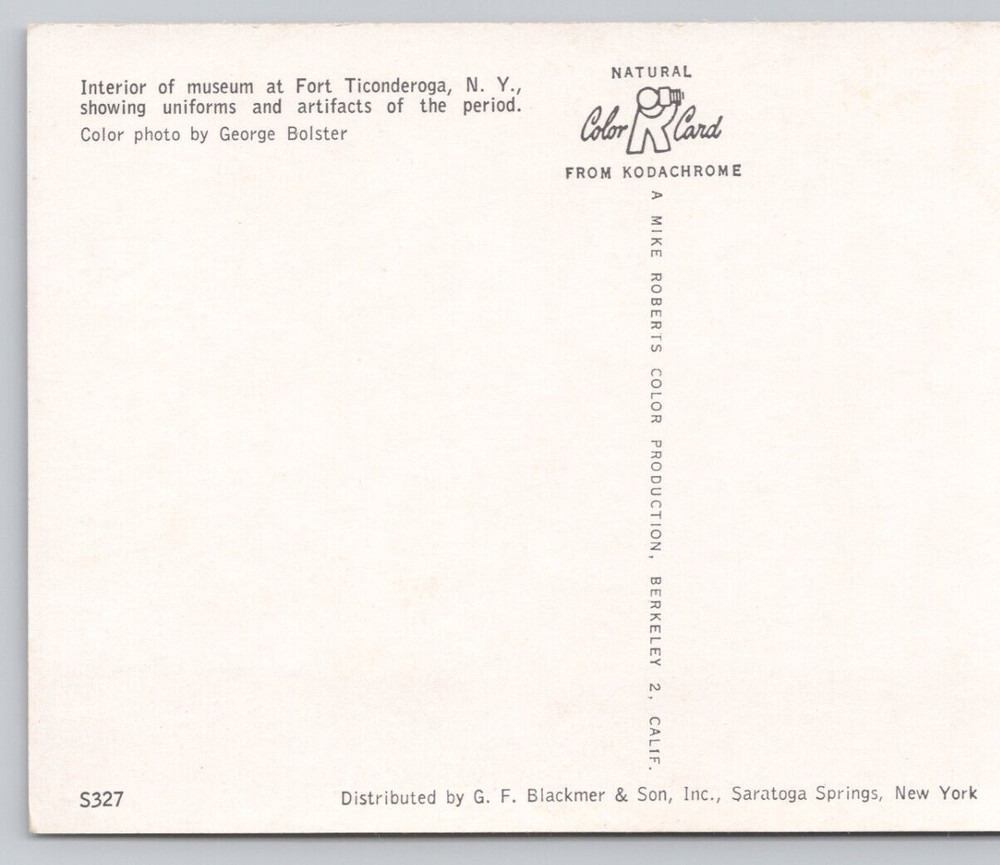
Fort Ticonderoga Museum, Uniforms & Artifacts, Interior, NY 1960s VTG Postcard. 102 Fort Ticonderoga Rd, Ticonderoga, Essex County, New York 12883. Interior of museum at Fort Ticonderoga, Essex County, New York. Room in Fort Ticonderoga Museum. Cannons taken from the fort were transported to Boston to lift its siege by the British, who evacuated the city in March 1776. Interior of museum at Fort Ticonderoga, Essex County, New York. Uniforms and weaponry, artifacts from 1755-1757 Room in Fort Ticonderoga Museum Color Photo by George Bolster Manufactured Color by Mike Roberts Studio, Berkeley, California Distributed by G.F. Blackmer & Son, Inc., Saratoga Springs, New York 102 Fort Ticonderoga Rd, Ticonderoga, Essex County, New York 12883 "Daily Visitation: May 4-Oct. 27, 2024 | Tues-Sun | 9:30am-5pm Experience the blend of history and natural beauty like nowhere else when you visit Fort Ticonderoga! Explore 2000 acres of America’s most historic landscape located on the shores of Lake Champlain and nestled between New York’s Adirondack and Vermont’s Green Mountains. Create lasting memories as you embark on an adventure that spans centuries, defined a continent, and helped forge a nation." - fortticonderoga d o t o r g "Fort Ticonderoga (/taɪkɒndəˈroʊɡə/), formerly Fort Carillon, is a large 18th-century star fort built by the French at a narrows near the south end of Lake Champlain, in northern New York, in the United States. It was constructed by Canadian-born French military engineer Michel Chartier de Lotbinière, Marquis de Lotbinière between October 1755 and 1757, during the action in the "North American theater" of the Seven Years' War, often referred to in the US as the French and Indian War. The fort was of strategic importance during the 18th-century colonial conflicts between Great Britain and France, and again played an important role during the Revolutionary War. The site controlled a river portage alongside the mouth of the rapids-infested La Chute River, in the 3.5 miles (5.6 km) between Lake Champlain and Lake George. It was thus strategically placed for the competition over trade routes between the British-controlled Hudson River Valley and the French-controlled Saint Lawrence River Valley. The terrain amplified the importance of the site. Both lakes were long and narrow and oriented north–south, as were the many ridge lines of the Appalachian Mountains, which extended as far south as Georgia. The mountains created nearly impassable terrains to the east and west of the Great Appalachian Valley that the site commanded. The name "Ticonderoga" comes from the Iroquois word tekontaró:ken, meaning "it is at the junction of two waterways". During the 1758 Battle of Carillon, 4,000 French defenders were able to repel an attack by 16,000 British troops near the fort. In 1759, the British returned and drove a token French garrison from the fort. During the Revolutionary War, when the British controlled the fort, it was attacked on May 10, 1775, in the Capture of Fort Ticonderoga by the Green Mountain Boys and other state militia under the command of Ethan Allen and Benedict Arnold, who captured it in the surprise attack. Cannons taken from the fort were transported to Boston to lift its siege by the British, who evacuated the city in March 1776. The Americans held the fort until June 1777, when British forces under General John Burgoyne occupied high ground above it; the threat resulted in the Continental Army troops being withdrawn from the fort and its surrounding defenses. The only direct attack on the fort during the Revolution took place in September 1777, when John Brown led 500 Americans in an unsuccessful attempt to capture the fort from about 100 British defenders. The British abandoned the fort after the failure of the Saratoga campaign, and it ceased to be of military value after 1781. After gaining independence, the United States allowed the fort to fall into ruin; local residents stripped it of much of its usable materials. Purchased by a private family in 1820, it became a stop on tourist routes of the area. Early in the 20th century, its private owners restored the fort. A foundation, the Fort Ticonderoga Association, now operates the fort as a tourist attraction, museum, and research center. Geography and early history Lake Champlain, which forms part of the border between New York and Vermont, and the Hudson River together formed an important travel route that was used by Native Americans long before the arrival of European colonists. The route was relatively free of obstacles to navigation, with only a few portages. One strategically important place on the route lies at a narrows near the southern end of Lake Champlain, where Ticonderoga Creek, known in colonial times as La Chute River, because it was named by French colonists, enters the lake, carrying water from Lake George. Although the site provides commanding views of the southern extent of Lake Champlain, Mount Defiance, at 853 ft (260 m), and two other hills (Mount Hope and Mount Independence) overlook the area. Native Americans had occupied the area for centuries before French explorer Samuel de Champlain first arrived there in 1609. Champlain recounted that the Algonquins, with whom he was traveling, battled a group of Iroquois nearby. In 1642, French missionary Isaac Jogues was the first white man to traverse the portage at Ticonderoga while escaping a battle between the Iroquois and members of the Huron tribe. The French, who had colonized the Saint Lawrence River valley to the north, and the English, who had taken over the Dutch settlements that became the Province of New York to the south, began contesting the area as early as 1691, when Pieter Schuyler built a small wooden fort at the Ticonderoga point on the western shore of the lake. These colonial conflicts reached their height in the French and Indian War, which began in 1754 as the North American front of the Seven Years' War." - Wikipedia This vintage postcard features a stunning interior shot of the Fort Ticonderoga Museum in New York, showcasing the uniforms and artifacts of the famous American fort. The postcard is an original, distributed by G.F. Blackmer & Son, Inc., Saratoga Springs, NY in the 1960s. The postcard is a standard size (5.5 x 3.5 in) and made of cardboard and paper material. It is a printed lithograph with a chrome finish and a divided back. The postcard is unposted and comes as a single unit. This collectible item is perfect for those interested in tourism, Fort Ticonderoga Rd, Ticonderoga, Essex County, New York, patriotic themes, architecture, famous places, social history, exhibitions, militaria, roadside America, and corps & regiments.