Great Northern Railway Gn Guide To Freight & Passenger Equipment Hbdj Gn Empire
$ 12.66
Description
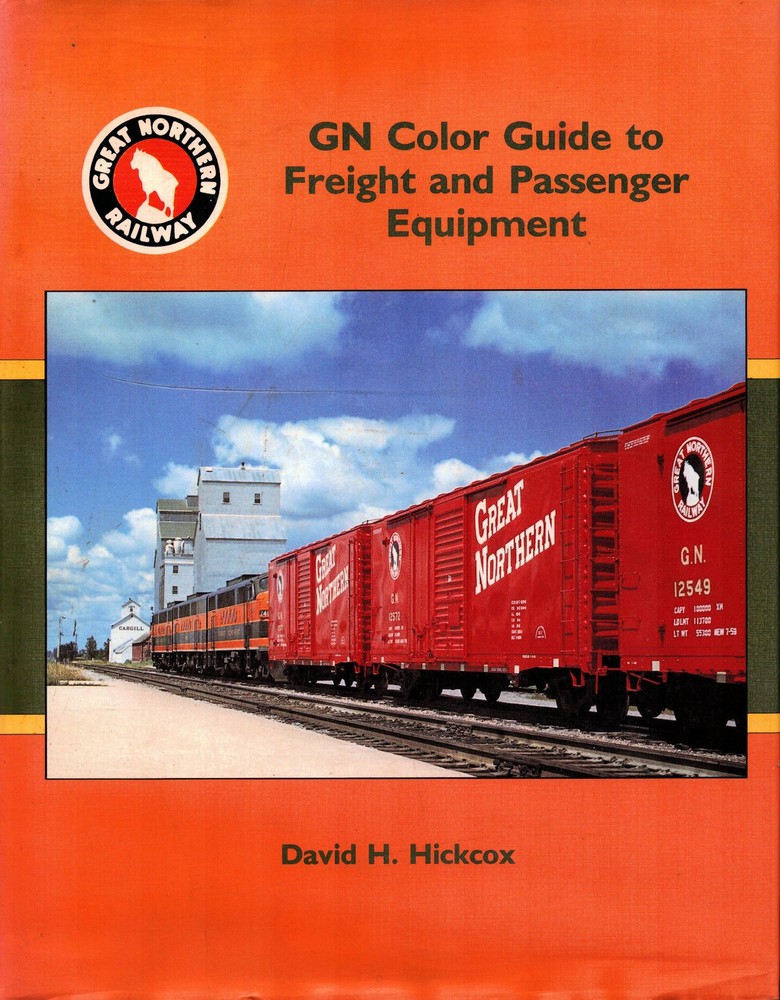
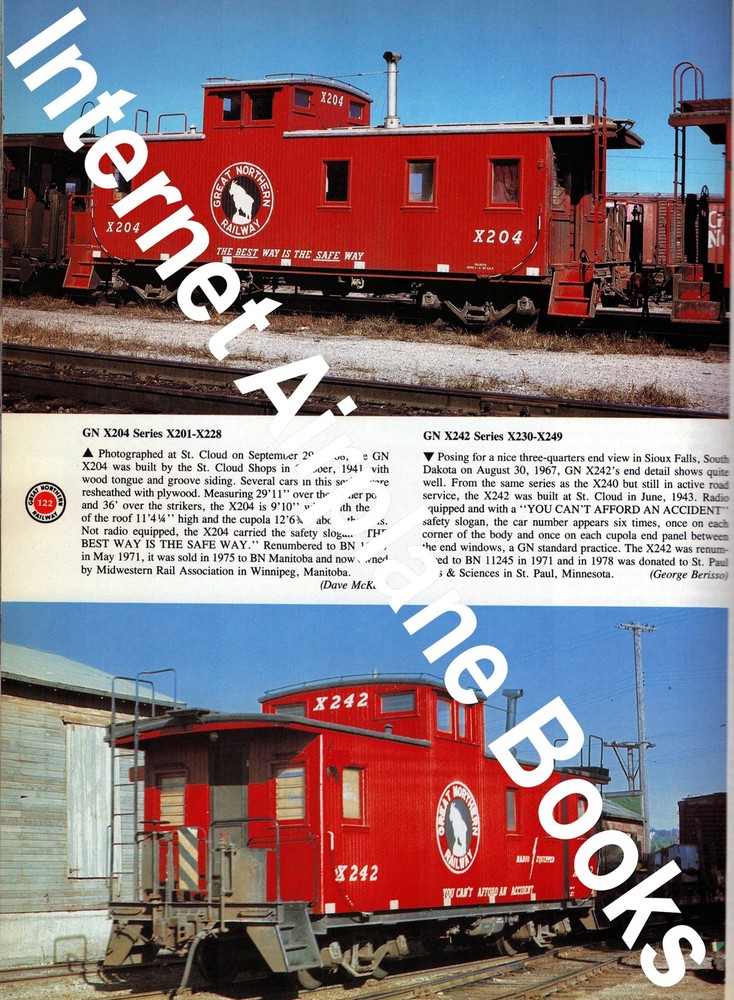
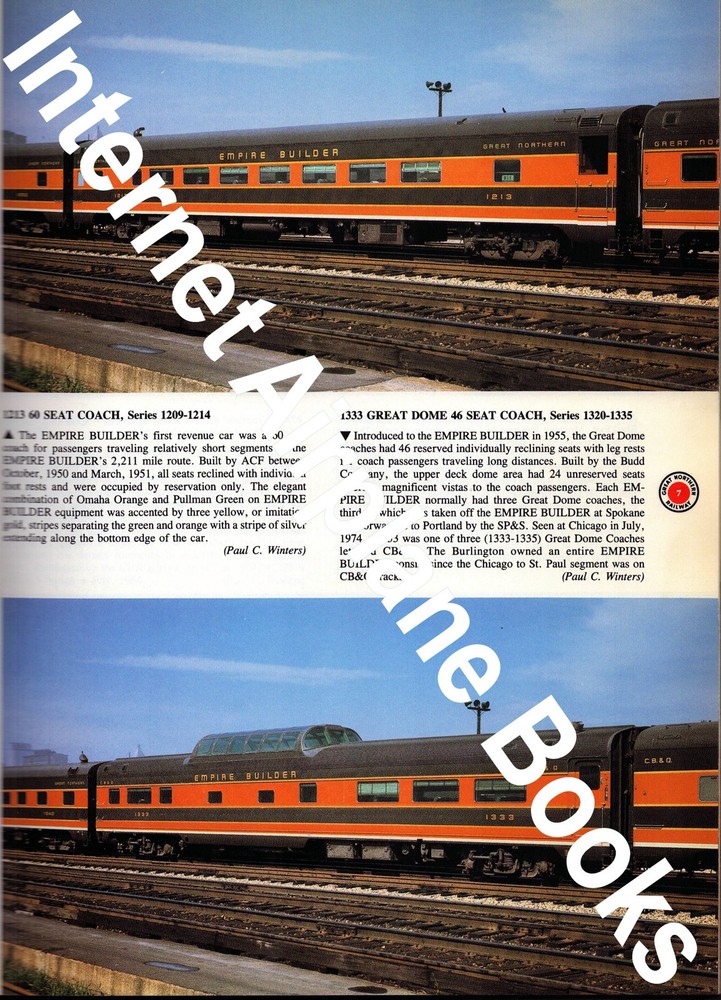
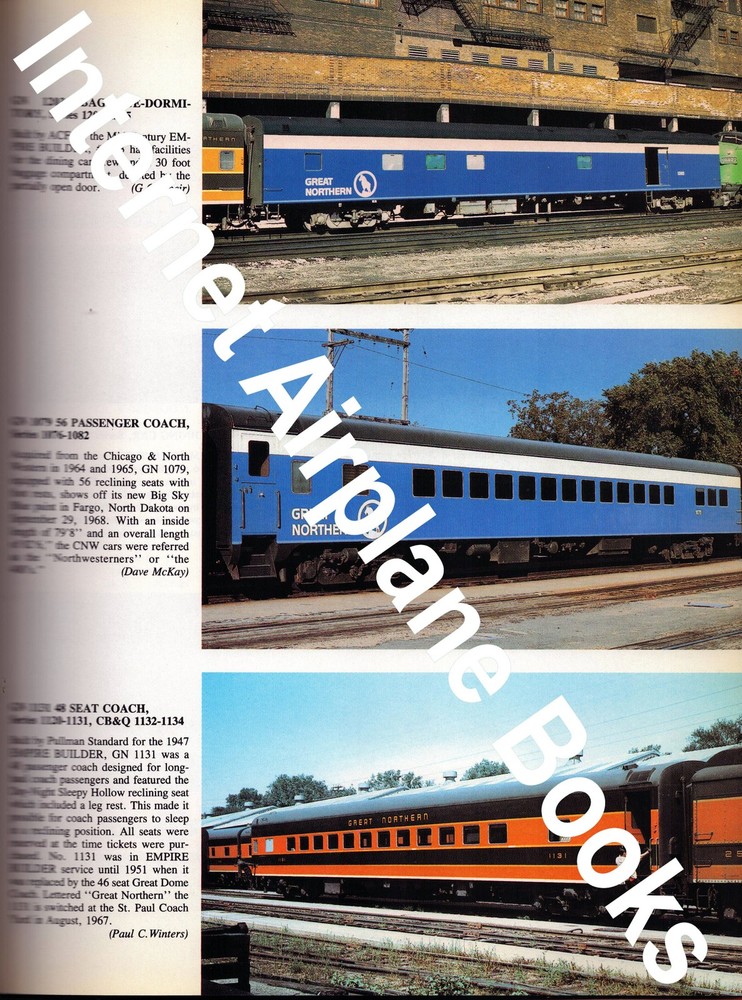
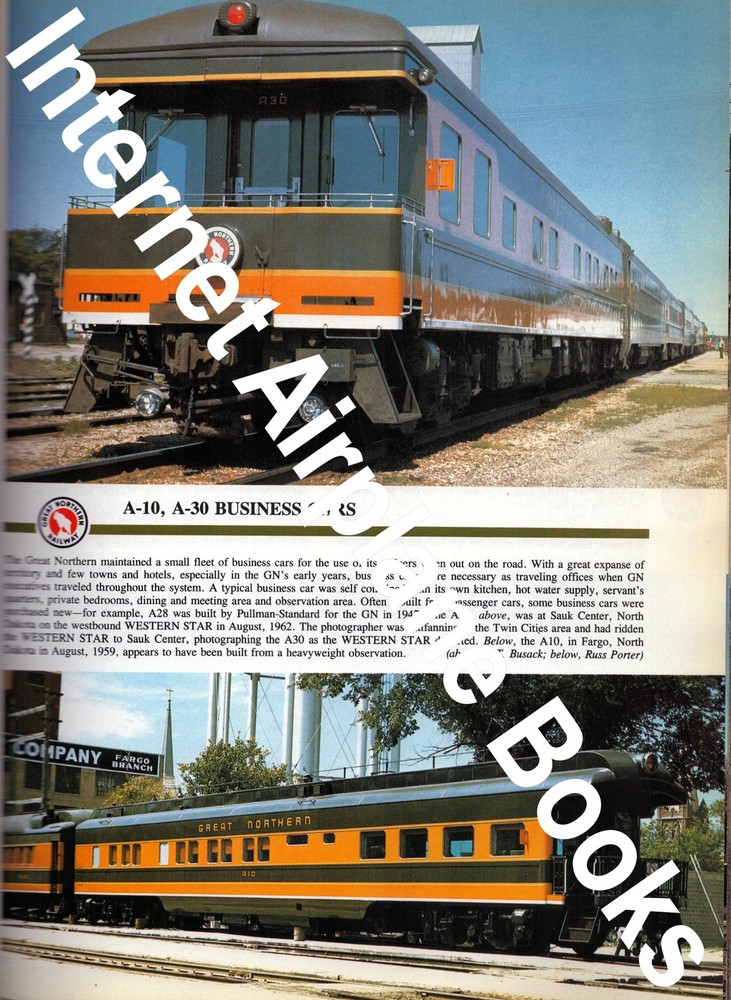
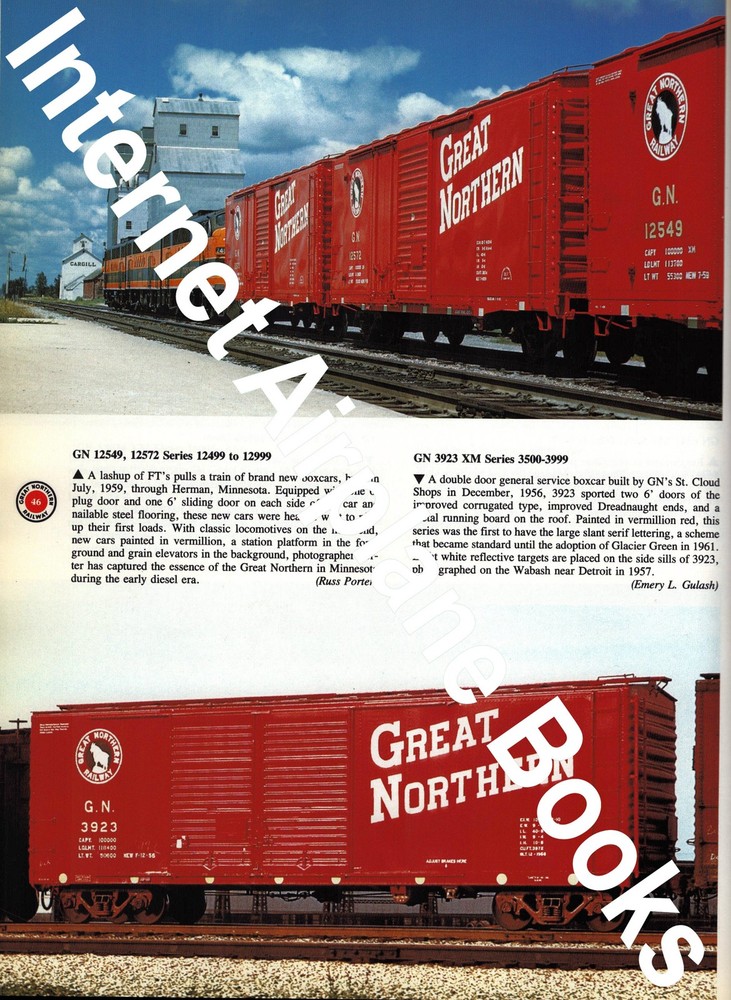
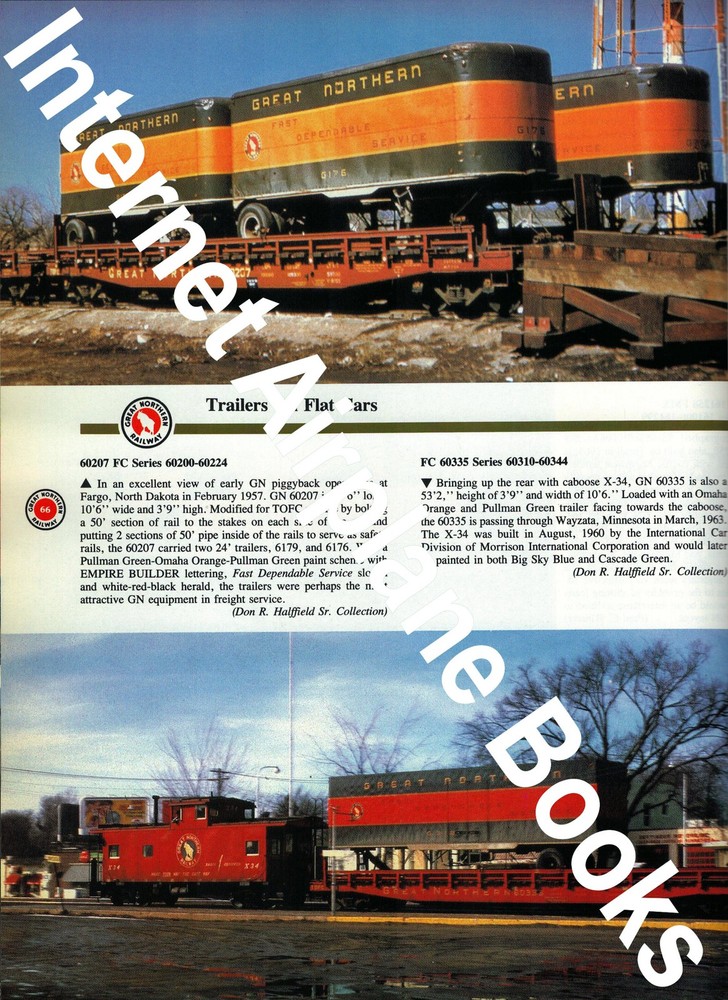
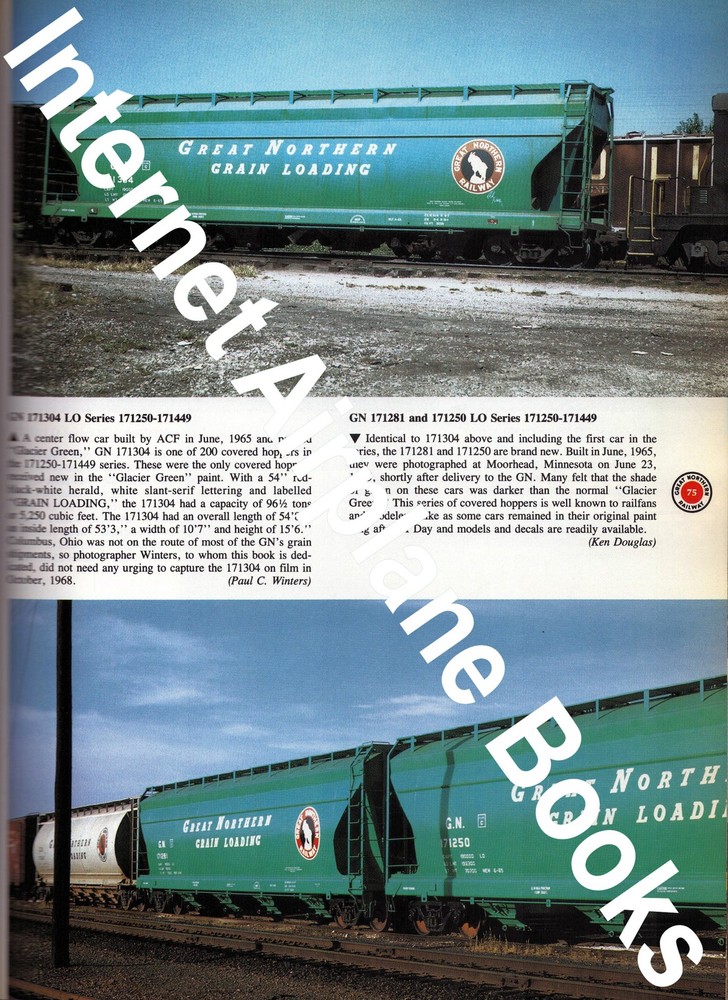
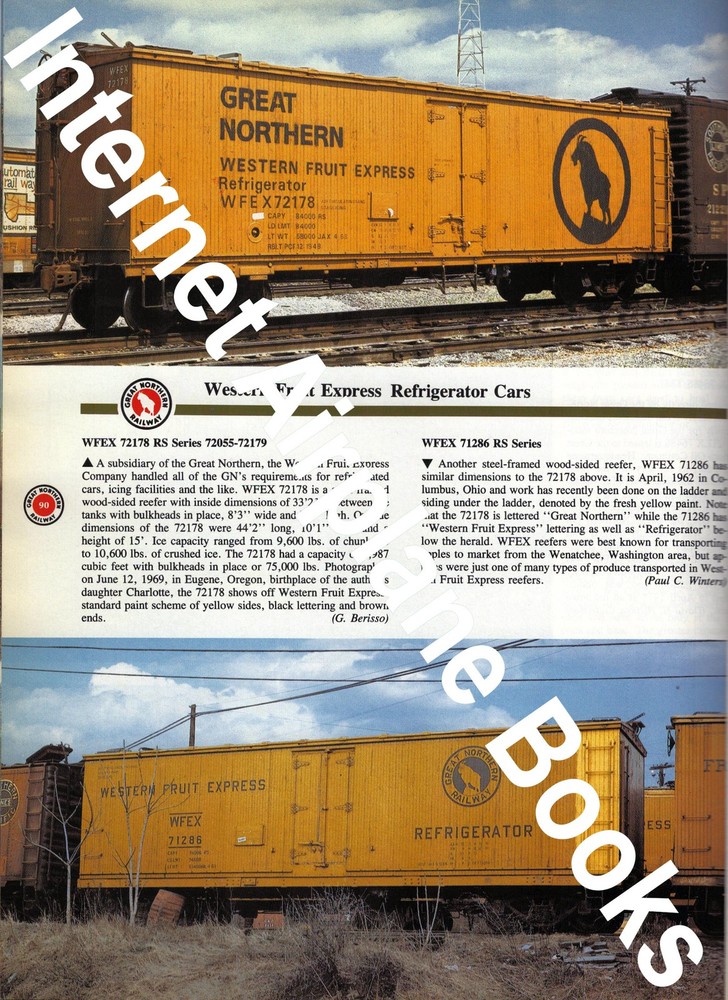
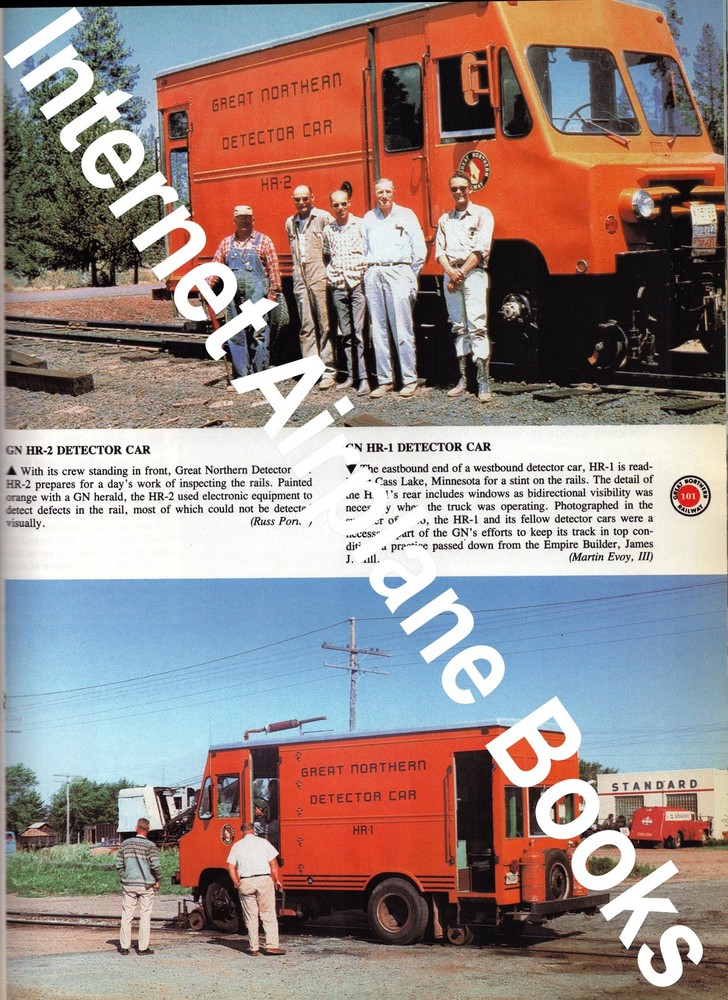
GREAT NORTHERN RAILWAY GN GUIDE TO FREIGHT & PASSENGER EQUIPMENT HBDJ GN EMPIRE. 128 pages. The Great Northern Railway inaugurated the Empire Builder on June 10, 1929. Following World War II, Great Northern placed new streamlined and diesel-powered trains in service that cut the scheduled 2,211-mile trip between Chicago and Seattle from 58.5 hours to 45 hours. GREAT NORTHERN RAILWAY GN GUIDE TO FREIGHT & PASSENGER EQUIPMENT HBDJ GN EMPIRE GREAT NORTHERN RAILWAY GN GUIDE TO FREIGHT & PASSENGER EQUIPMENT HBDJ GN MORNING SUN HARDBOUND BOOK with DUSJACKET in ENGLISH by DAVID H. HICKCOX Beautifully detailed full color guide to the rolling stock of the Great Northern Railway. Photos are in crisp, dazzling color and covers the Empire Builder cars as well the regular passenger and freight equipment, including cabooses. This is an invaluable reference work for both the rail fan or modeler as well as the rail historian. 128 pages. EMPIRE BUILDER (STORAGE MAIL BAGGAGE CAR, RAILWAY POST OFFICE RPO, BAGGAGE-DORMITORY, 60-SEAT COACH, GREAT DOME 46-SEAT COACH, “THE RANCH” COFFEE SHOP-LOUNGE CAR, PEND O’REILLE & SANTIAM PASS SLEEPING CARS, LAKE ELLEN WILSON DINING CAR, RIVER VIEW GREAT DOME LOUNGE CAR, CHOTEAU COULEE LOUNGE OBSERVATION CAR) HEAD END EQUIPMENT (HEATER CARS) PASSENGER EQUIPMENT (HEAVYWEIGHT DINERS, COACHES, BUFFET-PARLORS, DUPLEX ROOMETTE, GREAT DOME COACHES, LOUNGE CARS, BUSINESS CARS) BOXCARS (RED, GLACIER GREEN, BLUE & WHITE, GREEN & YELLOW STOCK CARS FLAT CARS TRAILERS ON FLAT CARS TOFC COVERED HOPPERS OPEN TOP HOPPERS ORE CARS GONDOLA CARS TANK CARS WESTERN FRUIT EXPRESS REFRIGERATOR CARS & INSULATED BOXCARS AUTORACK – AUTOMOBILE RACKS ST. CLOUD, MINNESOTA SHOPS FIRE PREVENTION INSTRUCTION CAR, SPEEDERS, DETECTOR CARS WOODCHIP CARS SNOWPLOWS (WEDGE, ROTARY, SNOW DOZER) CRANES & DERRICKS WORK TRAIN & MAINTENANCE OF WAY MOW CABOOSES --------------------------------------------- Additional Information from Internet Encyclopedia The Great Northern Railway (reporting mark GN) was an American Class I railroad. Running from Saint Paul, Minnesota, to Seattle, Washington, it was the creation of 19th-century Canadian-American railroad entrepreneur James J. Hill and was developed from the Saint Paul & Pacific Railroad. The Great Northern's route made it the northernmost transcontinental railroad in the U.S. In 1970, the Great Northern Railway merged with three other railroads to form the Burlington Northern Railroad, which merged in 1996 with the Atchison, Topeka and Santa Fe Railway to form the Burlington Northern and Santa Fe Railway. The Great Northern was built in stages, slowly creating profitable lines, before extending the road further into undeveloped Western territories. In a series of the earliest public relations campaigns, contests were held to promote interest in the railroad and the ranchlands along its route. Fred J. Adams used promotional incentives such as feed and seed donations to farmers getting started along the line. Contests were all-inclusive, from the largest farm animals to the largest freight carload capacity, and were promoted heavily to immigrants and newcomers from the East. The very first predecessor railroad to the company was the St. Paul and Pacific Railroad owned by William Crooks. He had gone bankrupt running a small line between St. Paul and Minneapolis. He named the locomotive he ran for himself and the William Crooks would be the first locomotive of the Great Northern Railway. J.J. Hill convinced New York banker John S. Kennedy, Norman Kittson (a wealthy fur trader friend), Donald Smith (a Hudson's Bay Company executive), George Stephen (Smith's cousin and president of the Bank of Montreal), and others to invest $5.5 million in purchasing the railroad. On March 13, 1878, the road's creditors formally signed an agreement transferring their bonds and control of the railroad to J.J. Hill's investment group. On September 18, 1889, Hill changed the name of the Minneapolis and St. Cloud Railway (a railroad which existed primarily on paper) to the Great Northern Railway. On February 1, 1890, he consolidated his ownership of the StPM&M, Montana Central Railway, and other rail lines to the Great Northern. The Great Northern had branches that ran north to the Canada–US border in Minnesota, North Dakota, and Montana. It also had branches that ran to Superior, Wisconsin, and Butte, Montana, connecting with the iron range of Minnesota and copper mines of Montana. In 1898 Hill purchased control of large parts of the Mesabi Iron Range in Minnesota and its rail lines. The Great Northern began large-scale shipment of ore to the steel mills of the Midwest. The railroad's best-known engineer was John Frank Stevens, who served from 1889 to 1903. Stevens was acclaimed for his 1889 exploration of Marias Pass in Montana and determined its practicability for a railroad. Stevens was an efficient administrator with remarkable technical skills and imagination. He discovered Stevens Pass through the Cascade Mountains, set railroad construction standards in the Mesabi Range, and supervised the construction of the Oregon Trunk Line. He then became the chief engineer of the Panama Canal. The logo of the railroad, a Rocky Mountain goat, was based on a goat William Kenney, one of the railroad's presidents, had used to haul newspapers as a boy. Locomotives and passenger cars were repaired and overhauled at the shops in St. Paul, Minnesota, while the shops at nearby St. Cloud were dedicated to freight cars beginning in 1890. In 1892, a new shop site was established five miles northeast of Spokane, Washington in Hillyard (named after James Hill) to serve the western half of the GN system. The Great Northern Railway inaugurated the Empire Builder on June 10, 1929. It was named in honor of the company's founder, James J. Hill, who had reorganized several failing railroads into the only successful attempt at a privately funded transcontinental railroad. It reached the Pacific Northwest in the late 19th century, and for this feat, he was nicknamed "The Empire Builder". Following World War II, Great Northern placed new streamlined and diesel-powered trains in service that cut the scheduled 2,211-mile trip between Chicago and Seattle from 58.5 hours to 45 hours. The schedule allowed riders views of the Cascade Mountains and Glacier National Park, a park established through the lobbying efforts of the Great Northern. Re-equipped with domes in 1955, the Empire Builder offered passengers sweeping views of the route through three dome coaches and one full-length Great Dome car for first class passengers. In March 1970, the Great Northern, along with three other closely affiliated railroads (Chicago, Burlington & Quincy (CB&Q), Northern Pacific and Spokane, Portland & Seattle) merged to form Burlington Northern. BN took over operations of both the Builder. and its companion train, the Western Star, as well as the North Coast Limited, which run between Twin Cities and Spokane on the parallel route of the former NP via Bismarck, Mandan, Billings, Bozeman, Missoula, and Helena. Amtrak took over operation of the Builder when it began operating most intercity routes in May 1971. To improve its farebox recovery ratio, Amtrak rerouted the Chicago–St. Paul leg to run through Milwaukee via the Milwaukee Road. Before 1971, the Chicago–St. Paul leg used the CB&Q's mainline along the Mississippi River through Wisconsin. The service also used to operate west from the Twin Cities before turning northwest in Willmar, to reach Fargo. When Amtrak assumed operation of the service, it also rerouted the Builder over the route between Fargo and Minot via Grand Forks, which until that time was covered by the Builder's companion service, the Western Star. While the Builder running through the direct route between Fargo and Minot, the Western Star continued from Fargo north to Grand Forks, where it turning west to reach Minot. In the summer of 1974, to coincide with the Expo '74 held in Spokane, Amtrak added a third service, the Expo '74, to complement the Builder and North Coast Hiawatha on the segment between Spokane and Seattle. This was the only time Amtrak provided a three-times-daily service on a long-distance route outside the Silver corridor (New York to Florida), the highest level seen since Amtrak's formation and unmatched since. Amtrak protested to BN about the long travel times between Spokane and Seattle, claiming that its three services could cover the route in 7.5 hours, compared to the 8.5 hours it took at the time. Privately, Amtrak engineers thought the trip could be done in less than 5 hours. Between June 1971 and October 1979, on the parallel route of the former Northern Pacific between Twin Cities and Spokane via Staples, Fargo, Bismarck, Missoula and Helena run the North Coast Hiawatha, descendant of NP's flagship service, the North Coast Limited, which also served stops such as St. Cloud, Staples and Detroit Lakes. Between Chicago and Minneapolis-St. Paul, and between Spokane and Seattle, the North Coast Hiawatha run combined with the Builder three days a week. The joint operation of the Builder and the North Coast Hiawatha was suspended on June 11, 1973, when Amtrak decided that both services should run separately again. This created two daily services between Spokane and Seattle. The North Coast Hiawatha remained on a tri-weekly schedule west of Twin Cities. When Amtrak cancelled the North Coast Hiawatha, it rerouted the Builder over the former NP mainline between Minneapolis-St. Paul and Fargo to continue to serve St. Cloud, Staples and Detroit Lakes, which otherwise would have lost service with the cancellation of the North Coast Hiawatha.[16] The realignment of the Builder from the former GN mainline to the NP mainline however resulted in the loss of the stops at Willmar, Breckenridge and Morris. In October 1979, the Builder was the first of Amtrak's western long-distance services to receive the new Superliner I cars built by Pullman-Standard. Due to the harsh winter weather of the Upper Midwest plains, and the mountainous areas of Montana, Idaho and Washington, with blizzards and cold temperatures, traditional steam-heated equipment frequently broke down, often forcing Amtrak to cancel service. The Superliners, with their electrical head-end power, were far better suited for the conditions. Amtrak's new national timetable depicted a Superliner coach on the front cover, and the listing for the Empire Builder carried a heading which read "Amtrak's Superliner is Somethin' Special." Amtrak added a Portland section in 1981, with the train splitting in Spokane. This restored service to the line previously operated by the Spokane, Portland and Seattle Railway. It was not the first time that the train had operated Seattle and Portland sections; Great Northern had split the Builder in Spokane for much of the 1940s and 1950s. In 2005, Amtrak upgraded service to include a wine and cheese tasting in the dining car for sleeping car passengers and free newspapers in the morning. Amtrak's inspector general eliminated some of these services in 2013 as part of a cost-saving measure. During summer months, on portions of the route, "Trails and Rails" volunteer tour guides in the lounge car give commentary on points of visual and historic interest that can be viewed from the train. After running daily for the better part of a century, the Empire Builder was cut back to tri-weekly operation along with most of Amtrak's other long-distance routes on October 12, 2020, as part of a round of service reductions due to the COVID-19 pandemic. For most of the fall and winter of 2020–21, trains departed Chicago on Mondays, Thursdays and Saturdays and departed Seattle or Portland on Tuesdays, Thursdays and Saturdays. However, in March 2021, Amtrak announced the train would return to its pre-pandemic daily schedule on May 24, 2021 FREE scheduling, supersized images and templates. Get Vendio Sales Manager. Make your listings stand out with FREE Vendio custom templates! FREE scheduling, supersized images and templates. Get Vendio Sales Manager. Over 100,000,000 served. Get FREE counters from Vendio today!