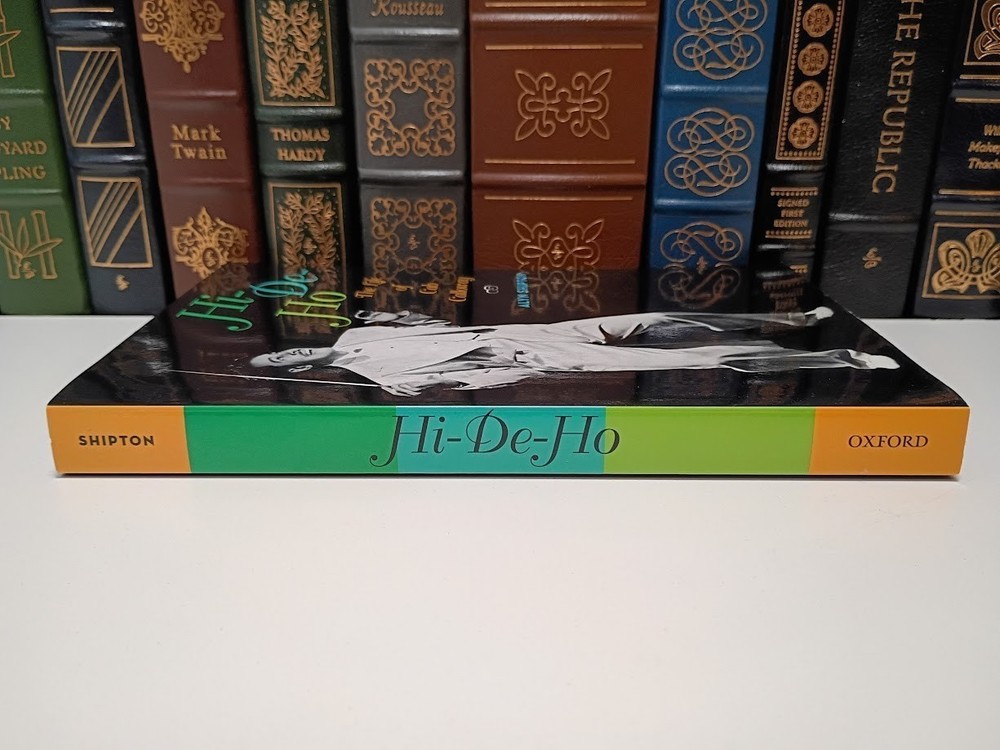
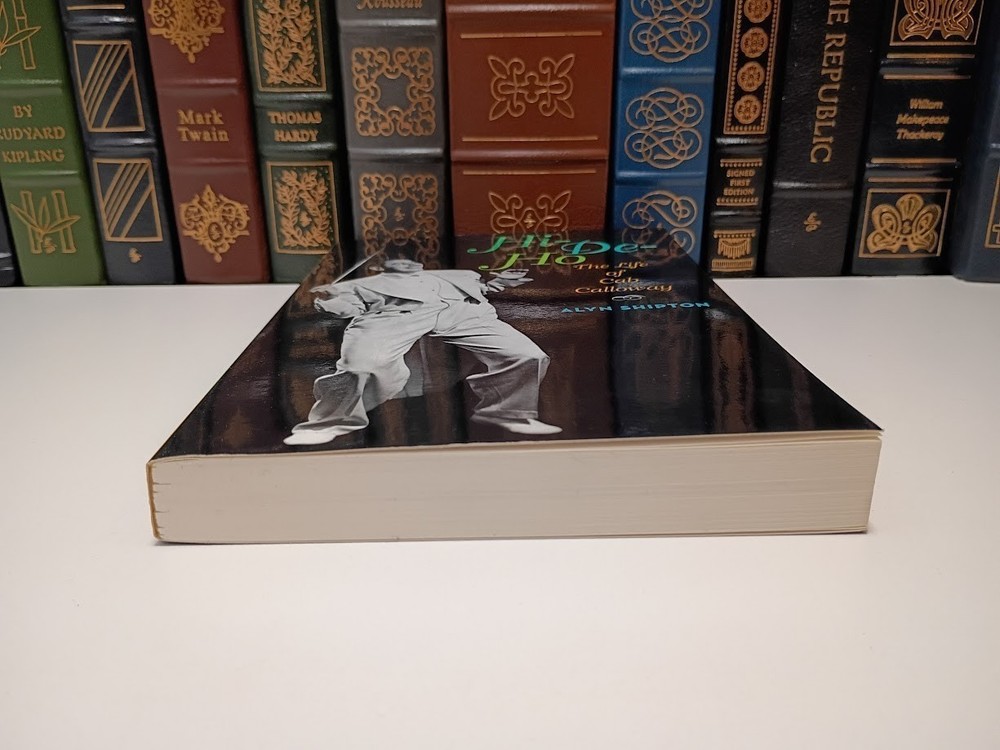
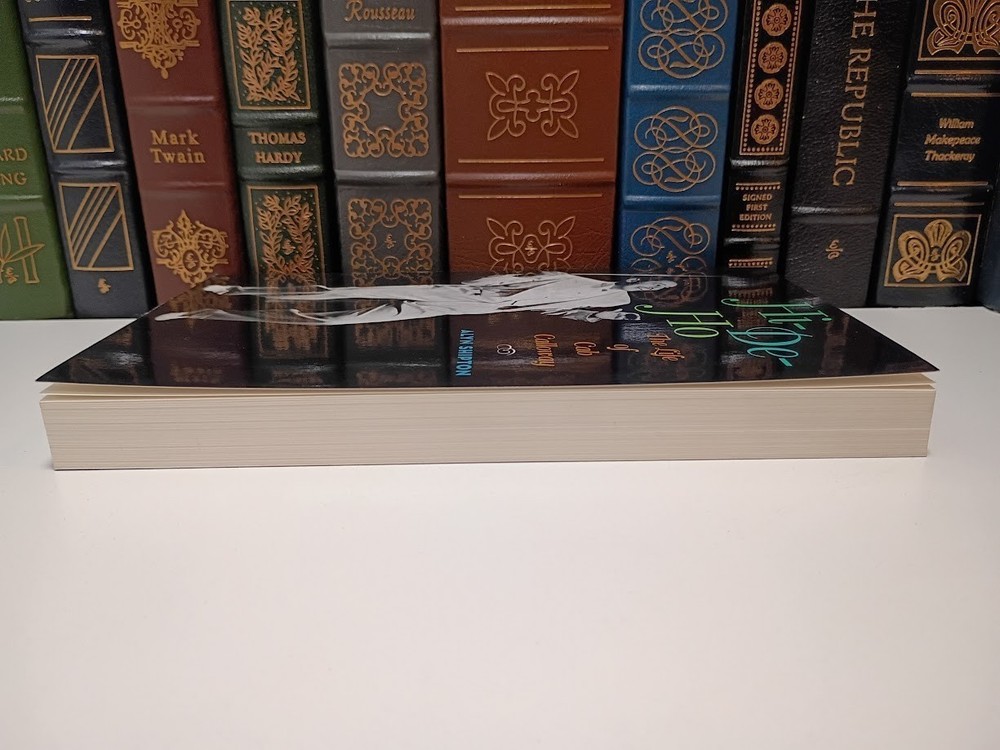
Hi-De-Ho Life of Cab Calloway Jazz Biography Cotton Club Harlem Alyn Shipton LN
$ 6.84
Description
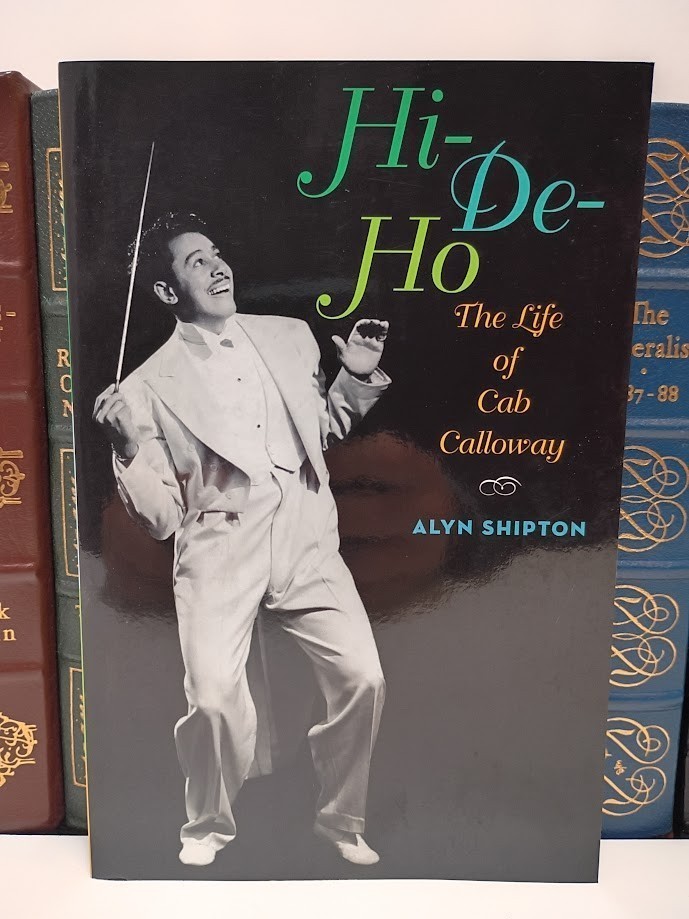
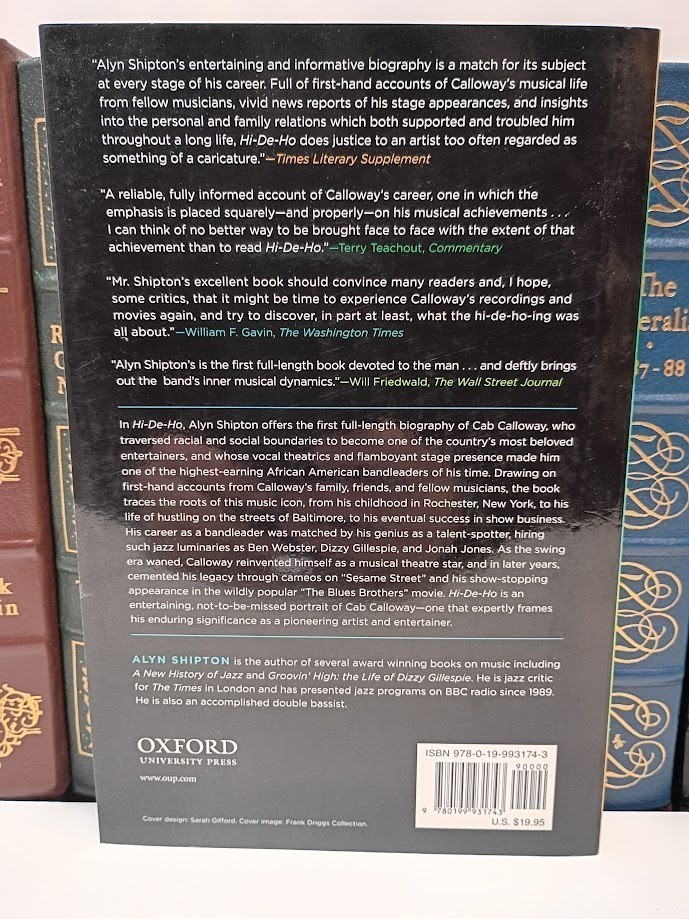
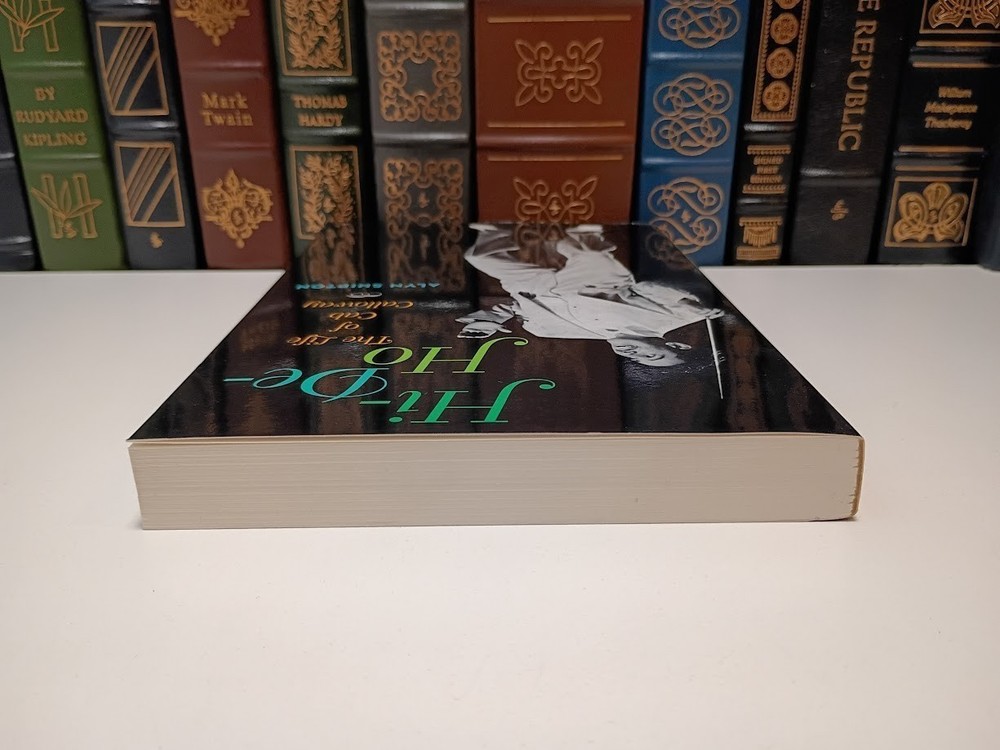
Hi-De-Ho Life of Cab Calloway Jazz Biography Cotton Club Harlem Alyn Shipton LN. Cabell "Cab" Calloway III (1907-1994) wasn't just a bandleader. He was acultural force. With his white tuxedo, wild dance moves, and signature scat singing that made "Hi-De-Ho!". a national catchphrase, Cab didn't just perform—he. ♪ ♫ ♪ ♫ HI-DE-HO The Life of Cab Calloway Hi-De-Ho: The Life of Cab Calloway by Alyn Shipton ISBN: 9780199931743 • First Printing • Paperback Like New The King of Hi-De-Ho From the Cotton Club to Hollywood, from the Harlem Renaissance to the Civil Rights era, Cab Calloway was the most electrifying entertainer in American music. With his white tuxedo, wild dance moves, and signature scat singing that made "Hi-De-Ho!" a national catchphrase, Cab didn't just perform—he exploded across stages for over six decades. This definitive biography by acclaimed jazz historian Alyn Shipton tells the complete story of a man who bridged jazz, swing, big band, bebop, and beyond—all while breaking racial barriers, building a business empire, and becoming one of the most recognizable faces in entertainment history. The Phenomenon Cabell "Cab" Calloway III (1907-1994) wasn't just a bandleader. He was a cultural force. At the height of segregation, when Black entertainers were expected to stay in their lane and keep their heads down, Cab Calloway became one of the highest-paid performers in America—Black or white. 1930s COTTON CLUB RESIDENCY The legendary Harlem venue where Cab became a household name $50K WEEKLY EARNINGS (1930s) Equivalent to $1M+ today—unprecedented for any musician 65+ YEARS IN SHOW BUSINESS From the Jazz Age to the 1990s—an unmatched career span What Made Cab Different Other bandleaders stood at the podium and conducted. Cab Calloway was a showman. He danced. He did splits. He spun around the stage. He scatted improvised lyrics that became instant hits. He wore the wildest suits imaginable. He had more energy at 3am after a full show than most people have getting out of bed. His signature call-and-response—"Hi-De-Hi-De-Hi-De-Ho!" with the audience shouting back—became so famous that people who'd never heard jazz knew Cab Calloway. He appeared in movies, on radio, on early television. He crossed over into mainstream white audiences without compromising his artistic vision or pandering to racist expectations. The Musical Journey 1920s: The Beginning Born in Rochester, NY, raised in Baltimore. Started singing in nightclubs while studying law. Moved to Chicago, then Harlem. Joined the Alabamians, then took over the Missourians. By decade's end, Cab was on his way to stardom. 1930s: Cotton Club Glory Became the Cotton Club's star attraction, alternating with Duke Ellington's orchestra. "Minnie the Moocher" (1931) became a massive hit and his signature song. Appeared in multiple films including "The Big Broadcast" (1932). Built one of the best big bands in jazz history. 1940s: Big Band Peak Continued leading one of the hottest orchestras in America. Employed future legends like Dizzy Gillespie, Milt Hinton, and Chu Berry. Appeared in "Stormy Weather" (1943), one of the first major Hollywood films with an all-Black cast. Kept working through WWII when many bands folded. 1950s-60s: Adaptation & Broadway As the big band era ended, Cab adapted. Worked as a solo act, toured internationally, appeared on television. Starred in an all-Black production of "Porgy and Bess" (1952-54), touring worldwide. Continued to reinvent himself rather than fade away. 1970s-90s: Renaissance & Legacy Introduced to new generations through his role as Curtis in "The Blues Brothers" (1980). Continued performing into his 80s. Received Kennedy Center Honors, National Medal of Arts. Proved that true showmanship never goes out of style. Hi-De-Ho! That phrase became my trademark, my calling card. It didn't mean anything in particular—it was just pure joy, pure energy, pure show business. And that's what I was all about: giving people something they'd never forget. Breaking Barriers Cab Calloway's career unfolded during some of America's darkest periods of racial segregation. Yet he managed to achieve things that seemed impossible for Black entertainers: Economic Power In the 1930s-40s, Cab earned more money than almost any American entertainer. He negotiated his own contracts, managed his own business affairs, and built wealth in an era when most Black performers were systematically underpaid and exploited. He proved that artistic excellence plus business savvy could overcome even the most racist industry practices. Crossover Success Cab performed for integrated audiences when that was still controversial. He appeared in mainstream Hollywood films, on national radio broadcasts, and in venues across America. He didn't achieve this by softening his style or pandering—he did it by being so undeniably talented that audiences couldn't look away. Bandleader & Mentor Cab's orchestra was a training ground for jazz legends. Dizzy Gillespie developed bebop while in Cab's band. Milt Hinton became one of the most recorded bassists in history. Cab paid well, treated his musicians with respect, and created opportunities for Black artists to thrive professionally. Cultural Ambassador Through international tours—including the groundbreaking "Porgy and Bess" world tour—Cab represented American culture abroad during the Cold War. He showed international audiences that American creativity transcended racial divisions, even when America itself hadn't figured that out yet. Cab on Screen Cab Calloway's film career deserves special attention because it captured his magnetism in ways that audio recordings couldn't: "Minnie the Moocher" (1932) - Betty Boop cartoon where Cab's rotoscoped performance created animation history "The Big Broadcast" (1932) - Early film appearance showcasing his Cotton Club act "Stormy Weather" (1943) - Legendary all-Black cast film with Lena Horne, featuring Cab's electrifying "Jumpin' Jive" performance "The Blues Brothers" (1980) - As Curtis, the owner of the blues club, introducing Cab to a whole new generation The "Jumpin' Jive" number from Stormy Weather remains one of the most jaw-dropping musical performances ever captured on film. If you've never seen it, you haven't fully experienced what Cab Calloway could do. What This Biography Offers Definitive & Comprehensive Alyn Shipton is one of the world's leading jazz historians—author of acclaimed biographies of Dizzy Gillespie, Fats Waller, and others, plus the standard reference work "A New History of Jazz." He had access to Cab's personal archives, interviewed surviving family members and band members, and spent years researching to create the most complete portrait of Cab Calloway ever written. Complete life story from childhood through his final performances Detailed analysis of his musical evolution and innovations in scat singing Business history: how Cab built and managed his financial empire Relationships with other jazz legends: Duke Ellington, Louis Armstrong, Dizzy Gillespie, and more Film and television career examined in depth Cultural impact and legacy assessment Personal life: marriages, family, friendships, conflicts The racial dynamics of entertainment during segregation Musical scores and analysis for jazz enthusiasts For Readers Who Love Jazz History This is essential reading for understanding the swing era, big band music, and the evolution from traditional jazz to bebop. Cab's band was a crucible where musical innovation happened. Entertainment Biography Cab's life reads like fiction: the kid from Baltimore who became one of the most famous faces in America, maintained stardom for decades, and never stopped performing. Harlem Renaissance The Cotton Club, the Apollo Theater, the cultural explosion of 1920s-30s Harlem—Cab was at the center of it all, and this book captures that world vividly. American Cultural History Cab's career spans from the Jazz Age through the Civil Rights era to the 1990s. His story is a lens through which to understand how American entertainment, race relations, and popular culture evolved. Did You Know? The "Hi-De-Ho" call-and-response wasn't planned—it was improvised. During a 1931 recording session for "Minnie the Moocher," Cab forgot the lyrics. So he started scatting nonsense syllables: "Hi-De-Hi-De-Hi-De-Ho!" The band and audience loved it so much that it became his signature for the next 60+ years. That moment of creative panic—turning a forgotten lyric into an iconic catchphrase—perfectly captures Cab's genius. He was a master improviser who could turn anything into showbiz gold. Betty Boop owes her career to Cab Calloway. The 1932 cartoon "Minnie the Moocher" used rotoscoping technology to animate Betty Boop dancing to Cab's actual performance. That cartoon became so popular it saved the Betty Boop series from cancellation. Cab's energy literally brought a cartoon character to life. (Also—and I say this with deep admiration—the fact that Cab Calloway was doing splits and backflips on stage in his 70s is absolutely wild. Most people at that age are happy if they can bend over to tie their shoes without making a noise. Cab was out there doing full choreography like he was 25. Just kidding! Well, not kidding at all actually. The man's energy was superhuman. There's video evidence. It's bananas.) Condition Report Overall: Like New condition—appears unread Edition: First Printing paperback Cover: Minor shelf wear only, otherwise excellent Binding: Tight and perfect Pages: Clean, crisp, and pristine throughout Interior: No writing, highlighting, or annotations A beautiful copy for any jazz collection or music library ⚡ JT ENTERPORTALS ⚡ ~1,000,000 Books Sold Since 2008 Hi-De-Ho! Step through the portal to jazz history >>Powered by WonderLister App