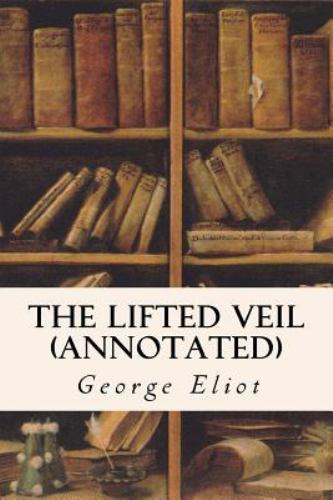
Lifted Veil, Paperback by Eliot, George, Like New Used, Free shipping in the US
$ 5.93
Description
Lifted Veil, Paperback by Eliot, George, Like New Used, Free shipping in the US. The Lifted Veil is a novella by George Eliot, first published in 1859. The novella is a significant part of the Victorian tradition of horror fiction, which includes such other examples as Robert Louis Stevenson's The Strange Case of Dr. Jekyll and Mr. Hyde (1886), and Bram Stoker's Dracula (1897). Lifted Veil, Paperback by Eliot, George, ISBN 1517427150, ISBN-13 9781517427153, Like New Used, Free shipping in the US The Lifted Veil is a novella by George Eliot, first published in 1859. Quite unlike the realistic fiction for which Eliot is best known, The Lifted Veil explores themes of extrasensory perception, the essence of physical life, possible life after death, and the power of fate. The novella is a significant part of the Victorian tradition of horror fiction, which includes such other examples as Robert Louis Stevenson's The Strange Case of Dr. Jekyll and Mr. Hyde (1886), and Bram Stoker's Dracula (1897).The unreliable narrator, Latimer, believes that he is cursed with an otherworldly ability to see into the future and the thoughts of other people. His unwanted "gift" seems to stem from a severe childhood illness he suffered while attending school in Geneva. Latimer is convinced of the existence of this power, and his two initial predictions do come true the way he has envisioned them: a peculiar "patch of rainbow light on the pavement" and a few words of dialogue appear to him exactly as expected. Latimer is revolted by much of what he discerns about others' might seem completely unlike most of George Eliot's other characters due to his supposed "psychic" abilities. Regardless, he reflects Eliot's continual interest in the frequent failure of human sympathy and communication. His repulsion at the self-interested natures of other people may appear overdone and somewhat naive, and he has impressed some critics as one of Eliot's least likeable creations. Bertha is similar to some other Eliot creations, such as Rosamund Vincy in Middlemarch—both are beautiful, narcissistic women who hold a fascination for certain men, to the great regret of these men story demonstrates Eliot's interest in contemporary science and pseudoscience, including physiology, phrenology, mesmerism and clairvoyance. While today's readers might smile at the idea of a simple blood transfusion bringing the dead back to life, Eliot manages this scene with impressive style and force. She handles Latimer's vision sequences with a similar drive and attention to tale departs from Eliot's usual technique. Latimer's first-person narrative, a lone example in the Eliot canon,[citation needed] works with causality and chronology, with the narrative ending where it is Eliot's only venture into what would later be called science fiction.