Literary Criticism & the Structures of History
$ 21.12
Description
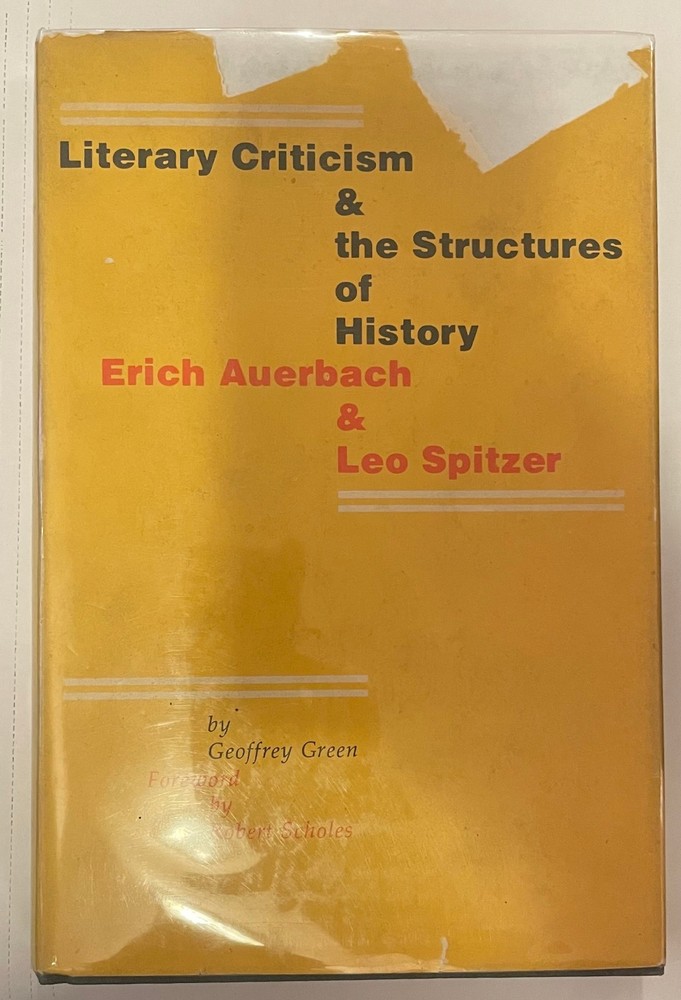
Literary Criticism & the Structures of History. Among the keystones of twentieth-century literary criticism are the works of Erich Auerbach and Leo Spitzer. "Auerbach and Spitzer were more than literary critics. Among the keystones of twentieth-century literary criticism are the works of Erich Auerbach and Leo Spitzer. Unlike many of their famous contemporaries who sought to make criticism an objective science, Auerbach and Spitzer immersed themselves in literary history to discover what literary qualities could edify and sway modern readers. Geoffrey Green's study applies the skills of a literary historian to the works of these two potent critics and describes how they responded to the extreme situations that changed their lives. Both men were faithful to strict philolo-gical discipline; both were exceptionally well read and conversant with many languages; both were Jewish and fled Nazi persecution; both wrote their most important books while in exile. But for all their similarities of genius and circumstance, Auerbach and Spitzer practiced sharply distinct critical methods to guard literature from the barbarism of the times. The differences in their approaches attract Professor Green's special attention. To fight against the devaluation of European humanist ideals Auerbach turned criticism into a weapon. His most acclaimed book, Mimesis (1942-45), is a call to arms, a forthright commitment to expose and engage the new menace of the state. Spitzer, on the other hand, stood above the world's turmoil and labored to rescue the best in world literature by bringing it to his haven. He chose to ignore the threats of war as if they were obnoxious interruptions to the true course of culture. Professor Green frankly evaluates these different responses to fascism and war. "Auerbach and Spitzer were more than literary critics. They were humanists with an abiding concern for the ways in which humanist study might contribute to culture. There is a powerful ethical strain in their work, which marks them-along with their prodigious learning-as scholars of another time and place. Green's major achievement in this study is the tracing of this ethical strain in each career, the isolation of the special quality in each man's work, and the situation of this individuality in relation to the historical moment that shaped it" - Robert Scholes. Geoffrey Green is an assistant professor of English at the University of Southern California. His articles have appeared in College Literature, Genre, Georgia Review, Humanities in Society, and other journals.