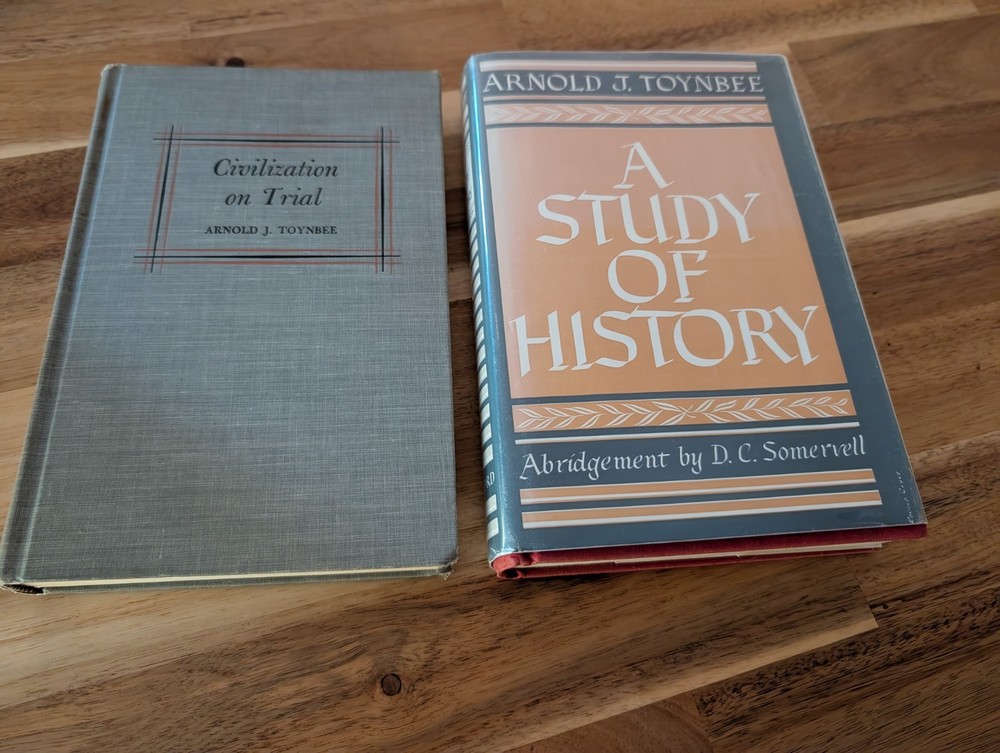
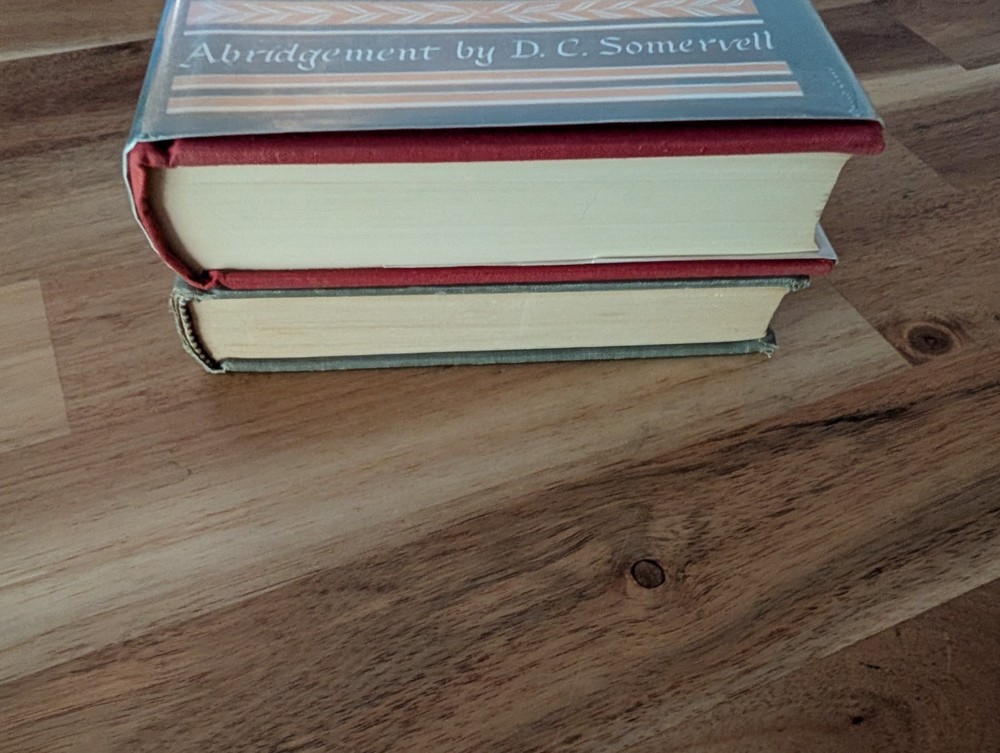



Lot of 2 Arnold J. Toynbee Book: A Study of History & Civilization on Trial
$ 11.21
Description
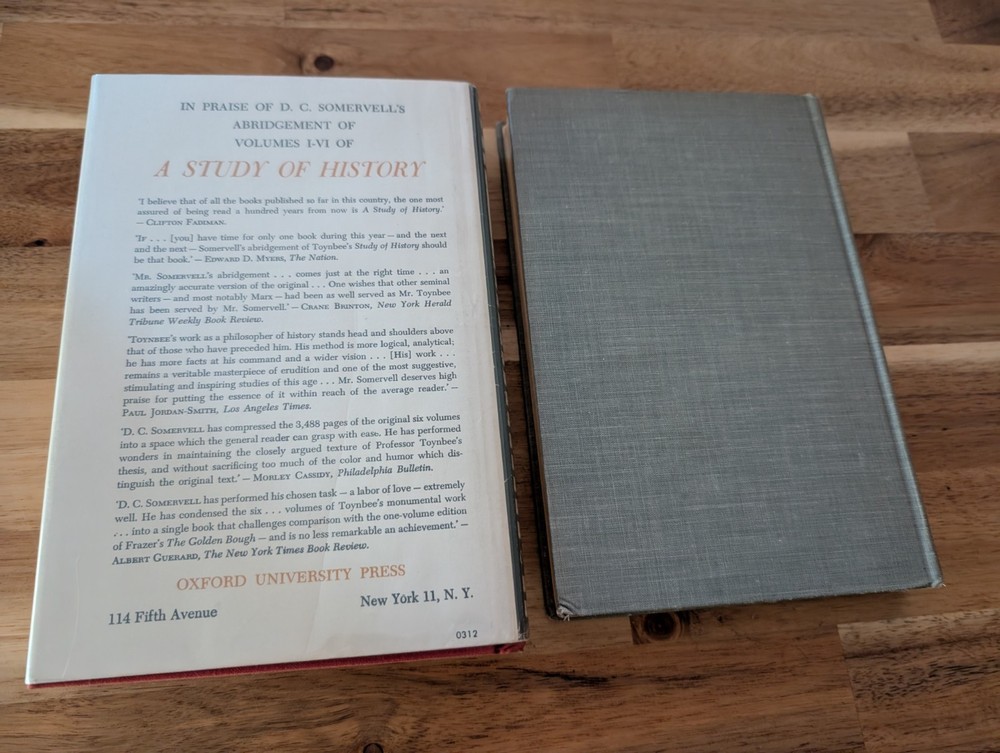
Lot of 2 Arnold J. Toynbee Book: A Study of History & Civilization on Trial. The mundane history of the higher religions is one aspect of the life of a Kingdom of Heaven, of which this world is one province. So history passes over into theology. A Study of History: When D. C. Somervell's one-volume abridgement of the first six volumes of Arnold Toynbee's A Study of History was published in 1947 it was an event of great importance. The book immediately became an international best-seller. Since that time the last four volumes of A Study of History have been published and publication of an abridgement of these volumes by Mr. Somervell is scheduled for the Spring of 1957. Mr. Toynbee's analysis of the rise and fall of civilizations has been acknowledged as an achievement without parallel in modern scholarship. In its way, Mr. Somervell's abridgement of this monumental work is also an unparalleled achievement, for while reducing the work to one-sixth of its original size, he has contrived to pre-serve its method, atmosphere, texture, and, for the most part, the author's very words. Although Mr. Somervell has performed this miracle of condensation with no thought that it should in any sense be considered a substitute for the original, he has provided a concise version that is no mere summary but the very essence of Mr. Toynbee's work. Unknown to Mr. Toynbee, Mr. Somervell, an experienced historian with a number of distinguished works to his credit, made this abridgement for his own pleasure. When he offered it to Mr. Toynbee for whatever use might be made of it, it proved to be exactly what was desired. Civilization on Trial: ALTHOUGH the essays collected in this volume have been written at different dates-several as long as twenty years ago, the majority within the last fifteen months-the book has, in the writer's mind, a unity of outlook, aim, and idea which, he hopes, will be felt by his readers. The unity of outlook lies in the standpoint of a historian who sees the Universe and all that therein is-souls and bodies, experience and events-in irreversible movement through time-space. The common aim that runs through this series of papers is to gain some gleam of insight into the meaning of this mysterious spectacle. The governing idea is the familiar one that the universe becomes intelligible to the extent of our ability to apprehend it as a whole. This idea has practical consequences for the historical method. An intelligible field of historical study is not to be found within any national framework; we must expand our historical horizon to think in terms of an entire civilization. But this wider framework is still too narrow, for civilization, like nations, are plural, not singular; there are different civilizations which meet and, out of their encounters, societies of another species, the higher religions, are born into this world. That is not, however, the end of the historian's quest, for no higher religion is intelligible in terms of this world only. The mundane history of the higher religions is one aspect of the life of a Kingdom of Heaven, of which this world is one province. So history passes over into theology. "To Him return ye every one.'