Old Slave Market St. Augustine FL Postcard W.J. Harris Co. Antebellum Landmark
$ 5.02
Description
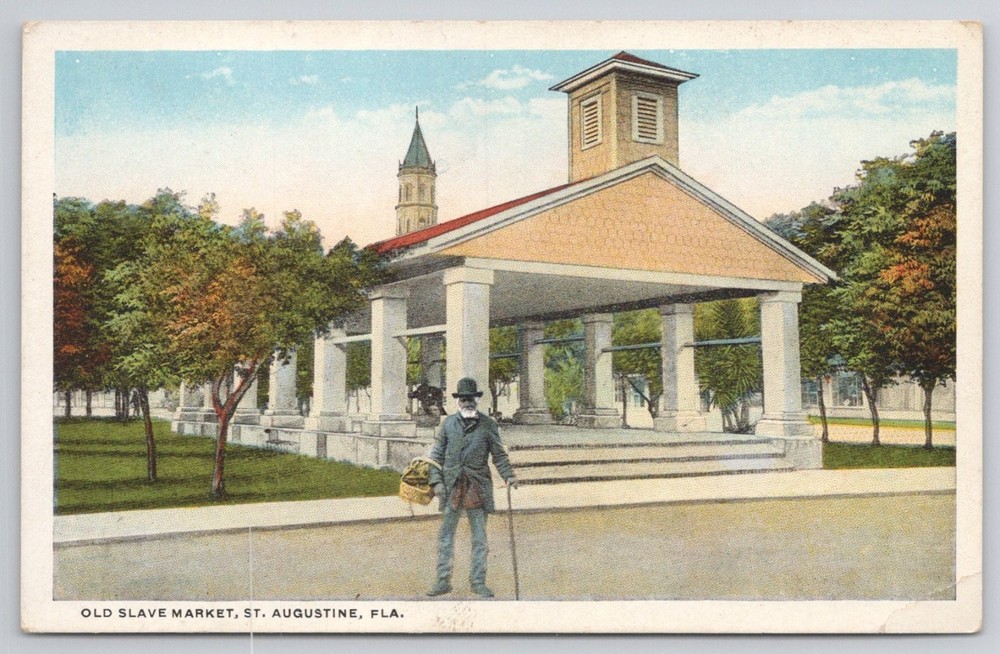
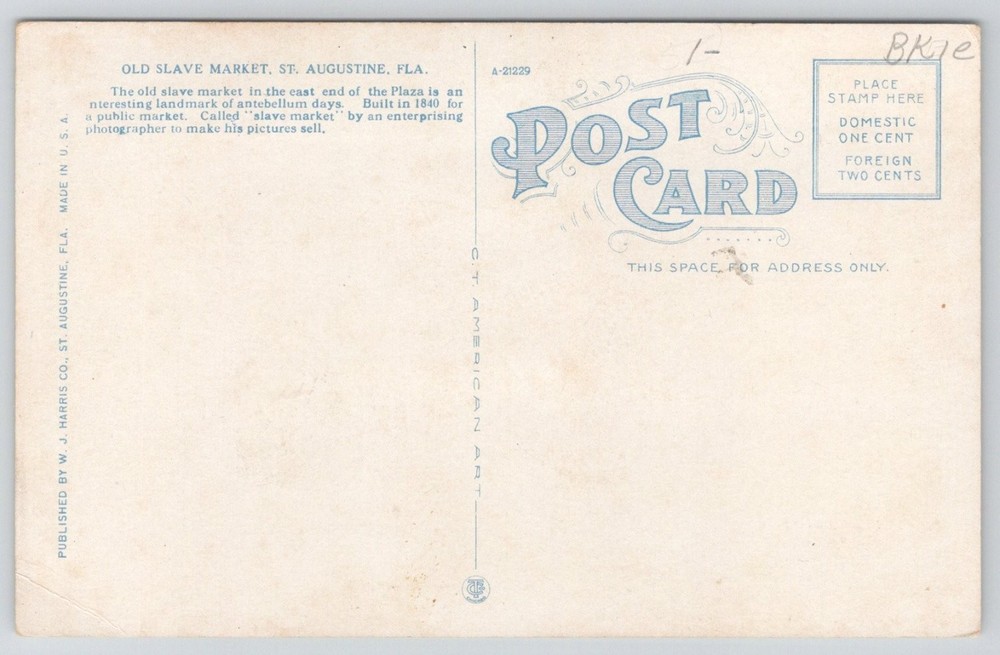
Old Slave Market St. Augustine FL Postcard W.J. Harris Co. Antebellum Landmark. The image showcases the distinctive pavilion structure, featuring a prominent roof supported by sturdy columns, with a gentleman standing in front. The reverse side provides fascinating historical context, noting the market's construction in 1840 as a public market and its later designation as the "slave market" by photographers seeking to enhance their sales. Thank you for visiting! This item is in stock and usually ships within 1 business day of your purchase. It will be shipped via ebay Standard Envelope which provides tracking information when it passes through the sorting machines for First Class mail. USPS workers have no way of scanning the barcode on the label. When it marks it as "out for delivery or delivered" it means it has arrived at your local sorting center, not your home address. Depending on your local postal route, it may take several days yet to arrive at your home. Also, consider possible weather delays in the actual time the service takes. Feel free to write if you have any questions. This captivating vintage postcard depicts the historic Old Slave Market in St. Augustine, Florida, a significant antebellum landmark. The image showcases the distinctive pavilion structure, featuring a prominent roof supported by sturdy columns, with a gentleman standing in front. In the background, lush trees frame the scene, and a distant steeple adds to the architectural interest. The card captures a moment in time, highlighting the market's enduring presence in the city's historical landscape. Published by W. J. Harris Co. of St. Augustine, Florida, this postcard is an example of early 20th-century printing, likely a chromolithograph or colorized photo, characterized by its vibrant hues and detailed rendition. The reverse side provides fascinating historical context, noting the market's construction in 1840 as a public market and its later designation as the "slave market" by photographers seeking to enhance their sales. This piece offers a tangible link to Florida's past and the complex history of its public spaces, making it a compelling item for collectors of Floridiana, historical architecture, and U.S. history.