
Osprey Modelling 21 Ww2 British Churchill Tank Dieppe Normandy Germany Avre El A
$ 5.26
Description
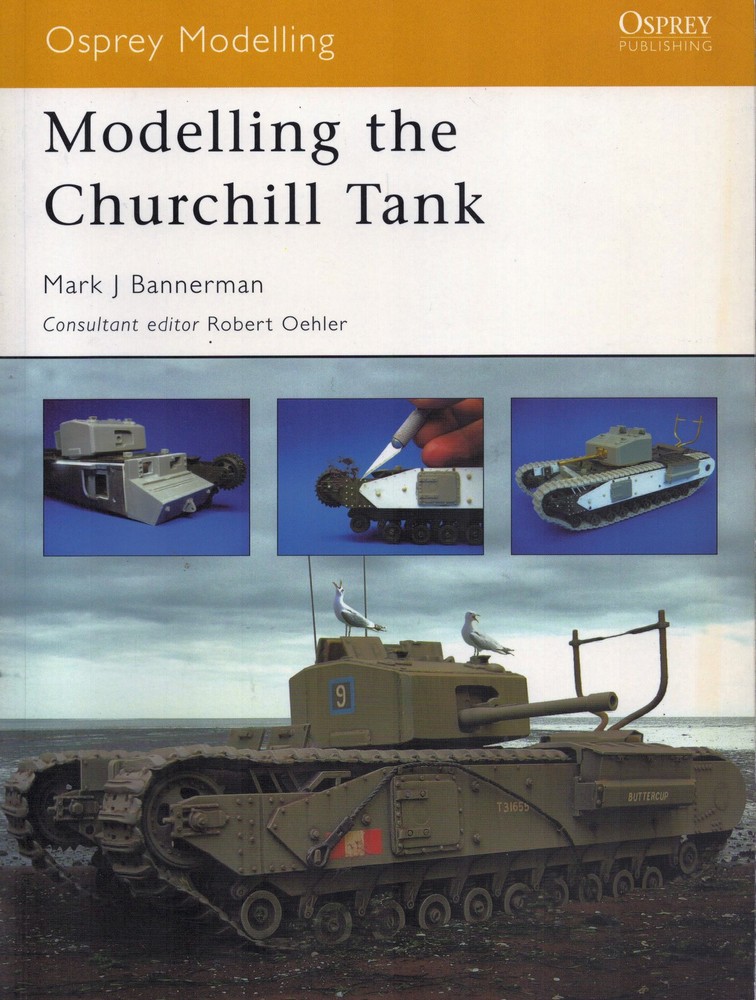
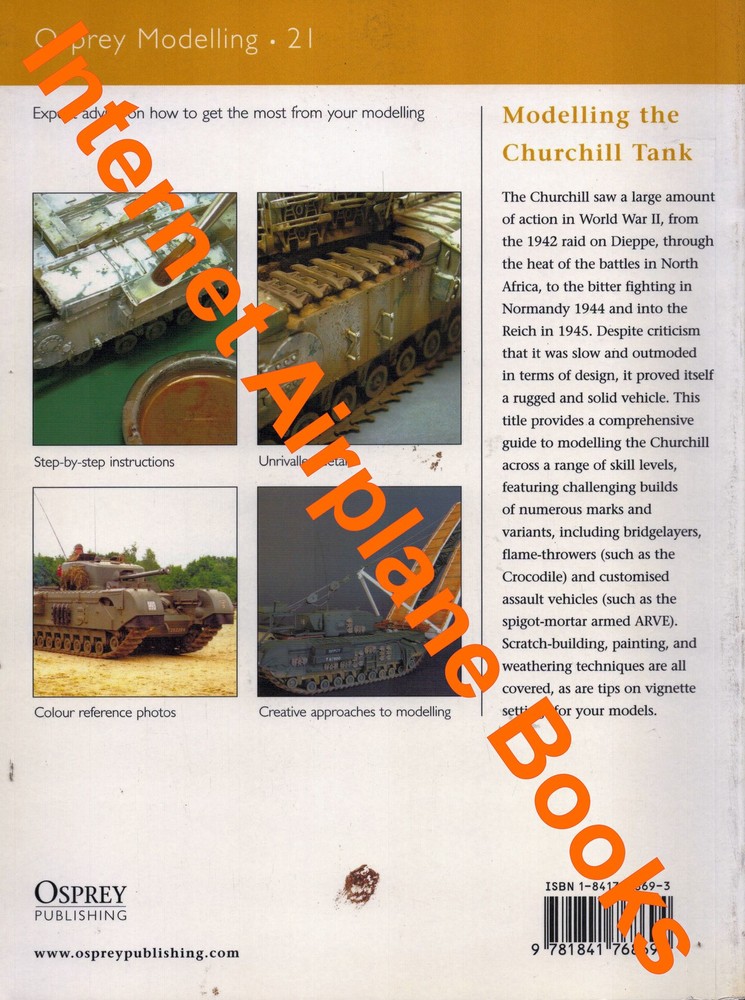
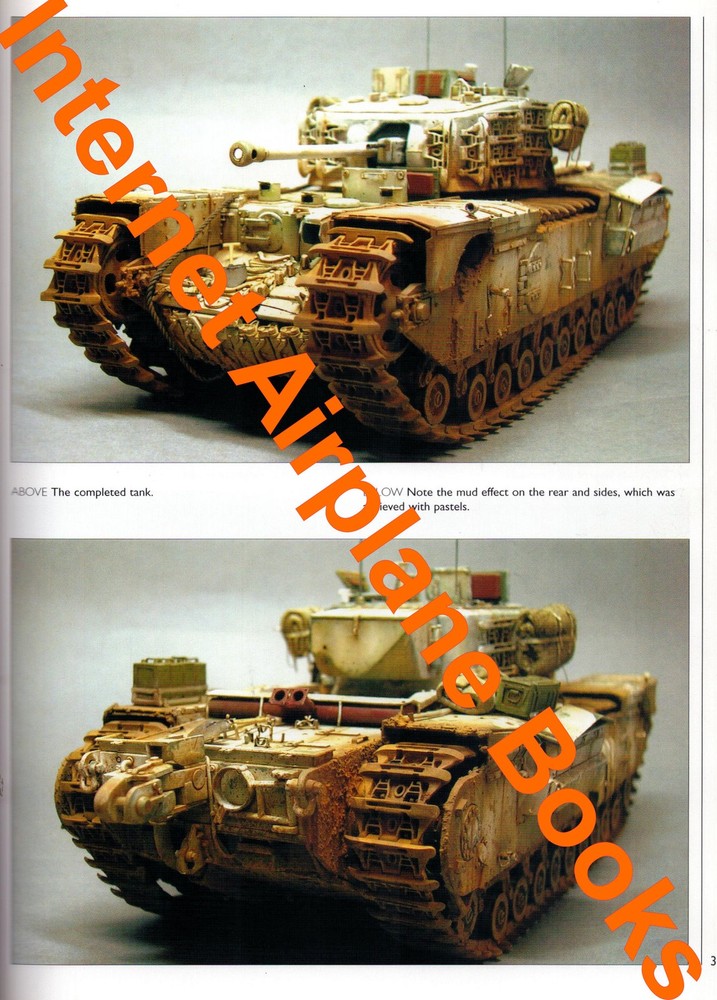
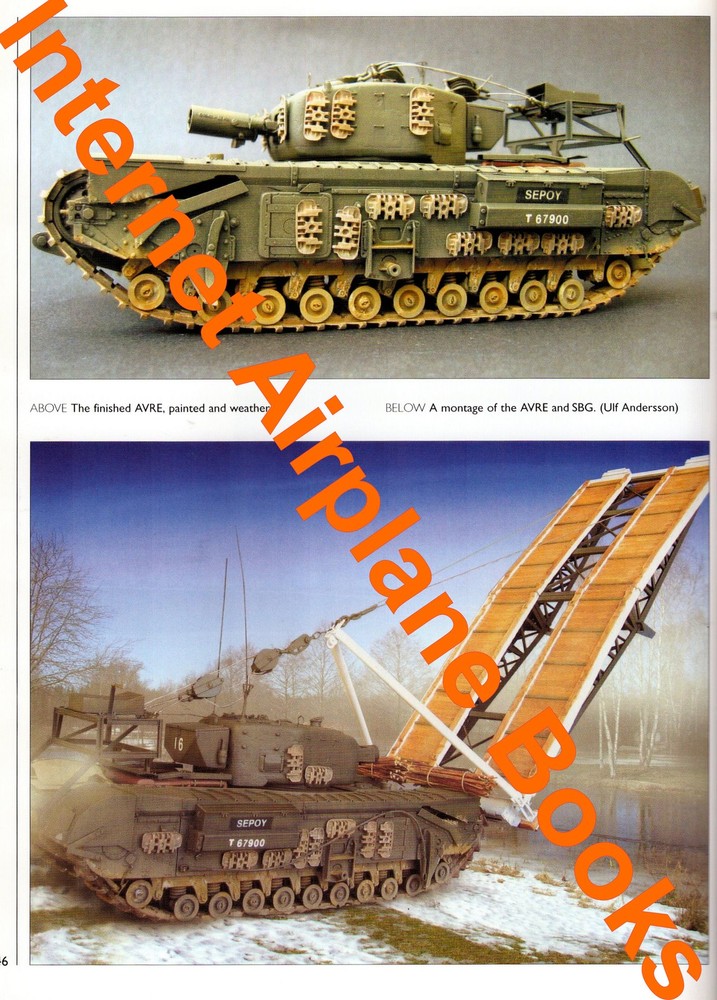
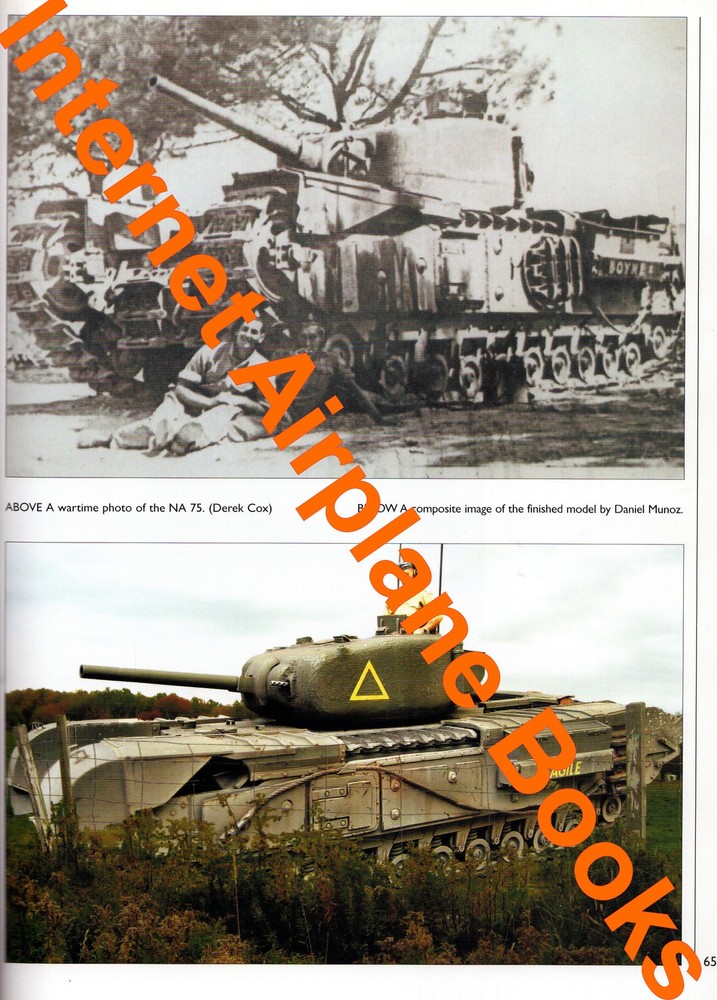
OSPREY MODELLING 21 WW2 BRITISH CHURCHILL TANK DIEPPE NORMANDY GERMANY AVRE EL A. The hull was made up of simple flat plates, which were bolted together in earlier models and were welded in later models. Due to the number of wheels, the tank could survive losing several without much in the way of adverse effects as well as traversing steeper terrain obstacles. OSPREY MODELLING 21 WW2 BRITISH CHURCHILL TANK DIEPPE NORMANDY GERMANY AVRE EL A OSPREY MODELLING 21 WW2 BRITISH CHURCHILL TANK DIEPPE NORMANDY GERMANY AVRE EL ALAMEIN CIRD 3-INCH GUN CARRIER TUNISIA USSR SOVIET RED ARMY SOFTBOUND BOOK in ENGLISH by MARK BANNERMAN The Churchill saw much action in World War II, from the 1942 raid on Dieppe, through the heat of the battles in North Africa, to the bitter fighting in Normandy 1944 and into the Reich in 1945. Despite criticism that it was slow and outmoded in terms of design, it proved itself a rugged and solid vehicle.This title provides a comprehensive guide to modelling the Churchill across a range of skill levels, featuring challenging builds of numerous marks and variants, including brideglayers, flame-throwers (such as the Crocodile) and customised assault vehicles (such as the spigot-mortar armed ARVE). ------------------------- Additional Information from Internet Encyclopedia The Tank, Infantry, Mk IV (A22) Churchill was a British infantry tank used in the Second World War, best known for its heavy armour, large longitudinal chassis with all-around tracks with multiple bogies, its ability to climb steep slopes, and its use as the basis of many specialist vehicles. It was one of the heaviest Allied tanks of the war. The origins of the Churchill's design lay in the expectation that war in Europe might be fought in conditions similar to those of the First World War, and thus emphasised the ability to cross difficult ground. The Churchill was hurried into production in order to build up British defences against a possible German invasion. The first vehicles had flaws that had to be overcome before the Churchill was accepted for wide use. After several marks (versions) had been built, a better-armoured specification, the Mark VII, entered service with the British Army. The improved versions performed well in the later stages of the war. The Churchill was used by British and other Commonwealth forces during the North African, Italian and North-West Europe campaigns. In addition, 344 Churchills were sent as military aid to the Soviet Union during the Second World War and more than 250 saw active service on the Eastern Front. Name The Churchill tank was named after John Churchill, 1st Duke of Marlborough. Winston Churchill told Field Marshal Jan Smuts "That is the tank they named after me when they found out it was no damn good!" The name only incidentally matched what became the British Army practice of giving service names beginning with C to tanks. Cruiser tanks were given names, such as the contemporary Covenanter, Crusader, Cromwell, Cavalier and Comet but infantry tank naming had no particular pattern. History Initially specified just before the outbreak of the Second World War, the A20 (its General Staff specification) was to supplement the Matilda II and Valentine infantry tanks. In accordance with British infantry tank doctrine and based on the expected needs of attacking a fixed defensive line, crossing wide trenches, possibly shell-cratered ground similar to First World War trench warfare it was to be immune to the current German 3.7 cm Pak 36 anti-tank guns and carry an unditching beam. A general outline produced by Woolwich Arsenal was expanded by Belfast shipbuilders Harland & Wolff with advice from the Department of Tank Design. The General Staff had proposed that it was armed with two QF 2 pounder guns, each located in a side sponson with a coaxial Besa machine gun. A third Besa and a smoke projector would be fitted in the front hull. To reduce weight the specification was revised to prefer a maximum armour to the front of 60 mm – sufficient to protect against ordinary shells from the German 37 mm gun. Outline drawings were produced by Woolwich Arsenal based on the A12 Matilda turret – the Director of Mechanisation opposed a turretless design – and the engine and Wilson epicyclic transmission being developed for the A13 Mark III Covenanter tank. Detail design and construction of the A20 was left to Harland & Wolff, who completed four prototypes by June 1940. During the construction period, the armament was reconsidered, including fitting either a 6-pounder gun or the French short 75 mm gun (as used on Char B1) in the forward hull – the former was considered too long and the latter would require redesigning the front of the hull. In the end, a 3-inch howitzer was chosen. The A20 designs were short-lived, however, as at roughly the same time the defeated British Expeditionary Force was evacuated from Dunkirk. While intended for "positional warfare" and direct assaults against fortifications (it was referred to as "Shelled Area Tank", or by the French phrase Char de Fortresse) which had been rendered pointless by the fast pace of German armoured warfare, a heavy tank that could defend the infantry from other tanks was still desired. At an initial 32 tons, with a 300 hp flat-12 Meadows DAV engine, the A20 had limited power compared to the 16-ton Covenanter. This was a less serious limitation than it might appear, owing to the British distinction between the high-speed cruiser tanks and the slow-speed infantry tanks. Vauxhall, who were already involved as consultants on the suspension, were approached to see if they could build the A20 and one example was sent to Vauxhall at Luton to see if they could provide an alternative engine developing 350 bhp. To this end, they developed a flat-12 petrol engine. For speed of production, this engine was based on a Bedford Vehicles (Vauxhall's commercial vehicle operations) six-cylinder lorry engine, giving rise to its name of "Twin-Six". Although using sidevalves to fit within the space, the engine was developed with high squish pistons, dual ignition and sodium-cooled exhaust valves in Stellite seats to give 350 bhp. A22 With France lost, the scenario of trench warfare in Northern Europe was no longer applicable and the design was revised by Dr H. E. Merritt,Director of Tank Design at Woolwich Arsenal, based on the combat witnessed in Poland and France. These new specifications, for the A22 or Infantry Tank Mark IV, were given to Vauxhall in June 1940. With a German invasion of Britain looking imminent, and the loss of a substantial amount of military vehicles in the evacuation from France, the War Office specified that the A22 had to enter production within a year. By July 1940, the design was completed and by December of that year the first prototypes were completed; in June 1941, almost exactly a year as specified, the first Churchill tanks began rolling off the production line. A leaflet from the manufacturer was added to the User Handbook, which also described known faults, with work-arounds and what was being done to correct the problem. It said: Fighting vehicles are urgently required, and instructions have been received to proceed with the vehicle as it is rather than hold up production. All those things which we know are not as they should be will be put right. Harold Drew of Vauxhall achieved miracles with the Churchill and its Merrit-Brown Tank Gearbox produced by David Brown Limited; "a brilliant design that went into production off the drawing board without adequate prototype testing and had the most disastrous teething troubles" according to Robotham,[citation needed] but British tanks were under-powered, under-gunned and unreliable. At the Tank Board level the Director of Artillery was still extolling the merits of the 2-pounder, and this gun was still fitted to every British tank until March 1942.[note 4] In a 1942 exercise, one tank had to have its gearbox changed five times. Because of its hasty development, there had been little testing and the Churchill was plagued with mechanical faults. Most apparent was that the Churchill's engine was underpowered, unreliable, and difficult to access for servicing. Another serious shortcoming was the tank's inadequate[citation needed] armament, the 2 pounder (40 mm) gun, which was improved by the addition of a 3-inch howitzer in the hull to deliver a HE shell, albeit not on a howitzer's usual high trajectory. Production of a turret to carry the QF 6 pounder gun began in 1941, but lack of supplies of the plate used in an all-welded design led to an alternative cast turret also being produced. These formed the distinction between Mark III and Mark IV. In August 1942, the Churchill was used offensively for the first time in the Dieppe Raid. The poor speed of the Churchill nearly caused production to be ceased in favour of the forthcoming Cromwell tank; it was saved by the successful use of the Mk III at the Second Battle of El Alamein in October 1942. The second major improved Churchill, the Mk VII, was first used in the Battle of Normandy in 1944. The Mk VII improved on the already heavy armour of the Churchill with a wider chassis and the British 75 mm gun, which had been introduced on the Mk VI. It was primarily this variant, the A22F, which served through the remainder of the war. It was re-designated A42 in 1945. The Churchill was a versatile project and was used in numerous specialist roles. Design The hull was made up of simple flat plates, which were bolted together in earlier models and were welded in later models. The hull was split into four compartments: the driver's position at the front, then the fighting compartment including the turret, the engine compartment, and the gearbox compartment.[19] The suspension was fitted under the two large "panniers" on either side of the hull, the track running over the top. There were eleven bogies either side, each carrying two 10-inch wheels.[20] Only nine of the bogies normally took the vehicle weight, the front coming into play when the vehicle nosed into the ground or against an obstacle, the rear acting in part as a track tensioner. Due to the number of wheels, the tank could survive losing several without much in the way of adverse effects as well as traversing steeper terrain obstacles. As the tracks ran around the panniers, escape hatches in the side could be incorporated into the design. These were retained throughout the revisions of the Churchill and were of particular use when the Churchill was adopted as the AVRE. The Bedford Vehicles engine was effectively two engines in horizontally opposed configuration ("flat twelve") on a common crankshaft. There were four Solex carburettors each on a separate manifold that fed three cylinders formed as a single cylinder head. The elements of the engine and ancillary components were laid out so they could be reached for maintenance through the engine deck covers. Air for the engine was drawn from the fighting compartment through air cleaners. Cooling air was drawn into the engine compartment through louvres on the sides, across the radiators and through the engine compartment by a fan driven by the clutch. This fan blew the air over the gearbox and out the rear of the hull. By opening a flap between the fighting compartment and the engine compartment, this airflow could be used to remove fumes produced by firing the armament. The 1,296 cu in (21.238 L) capacity engine was rated at 325 bhp (242 kW) at 2,200 rpm, delivering 960 lb ⋅ ft (1,300 N ⋅ m) torque over an engine speed range from 800 to 1,600 rpm. With the introduction of the Churchill Mk VII and VIII, the engine was uprated to 350 bhp (260 kW) at 2,200 rpm, presumably to counteract the increased weight. The gearbox featured a regenerative steering system that was controlled by a tiller bar instead of the more commonplace brake levers or, as with the German Tiger I heavy tank, a steering wheel. The tiller was connected, with servo assistance, hydraulically to the steering brakes. The Churchill was also the first tank to utilise the Merritt-Brown triple differential gearbox, which allowed the tank to be steered by changing the relative speeds of the two tracks; this effect became more pronounced with each lower gear, ultimately allowing the tank to perform a "neutral turn" when no gear was engaged, where it could fully pivot within its own length and thus rotate in place. There were final reduction gears, of the planetary type, in the driving wheels. Although capable of 17 mph (27 km/h) the noise at that speed was so great that the Churchill was limited to 10 to 12 mph (16 to 19 km/h) by not using the highest gear. The first turrets were of cast construction and were rounded in shape, providing sufficient space to accommodate the relatively small 2 pounder gun. To fulfil its role as an infantry support vehicle, the first models were equipped with a 3-inch howitzer in the hull[23] in a layout very similar to the French Char B1. This enabled the tank to deliver a useful high-explosive capability while retaining the anti-tank capabilities of the 2 pounder. However, like other multi-gun tanks, it was limited by a poor fire arc – the track horns limiting traverse – and elevation of only 9°. Despite the length of the gun the muzzle velocity was only 600 ft/s (180 m/s) .[note 5][22] The Mark IVA (retrospectively the Churchill Mk II) dispensed with the howitzer (there had been only enough guns to equip 300 tanks) and replaced it with a bow machine gun[23] and on the Mk III, the 2 pounder was replaced with the 6 pounder, significantly increasing the tank's anti-tank capabilities. The tank underwent field modification in North Africa with several Churchills being fitted with the 75 mm gun of destroyed M4 Shermans. These "NA75" variants were used in Italy. The use of the 75mm increased despite its worse anti-tank performance when compared to the 6pdr due to the HE rounds used by the 75mm being considerably more effective when used in infantry support roles. Churchills made use of the Vickers Tank Periscope MK.IV. In the Mark VII, the driver had two periscopes as well as a vision port in the hull front that could be opened. The hull gunner had a single periscope as well as the sighting telescope on the BESA machine gun mounting. In the turret, the gunner and loader each had single periscope and the commander had two fitted in his hatch cupola. The armour on the Churchill, often considered its most important feature, was originally specified to a minimum of 16 millimetres (0.63 in) and a maximum of 102 millimetres (4.0 in); this was increased with the Mk VII to a range from 25 millimetres (0.98 in) to 152 millimetres (6.0 in). Though this armour was considerably thicker than its rivals (including the German Tiger I tank, but not the Tiger II) it was not sloped, reducing its effectiveness. Earlier models were given extra armour by the expedient of welding on extra plates. On the Mark VII, the hull front armour was made up of a lower angled piece of 5.5 in (140 mm), a nearly horizontal 2.25 in (57 mm) plate and a vertical 6 inch plate. The hull sides, were, for the most part, 3.75 in (95 mm). The rear was 2 in (51 mm) and the hull top 0.525 in (13.3 mm). The turret of the Mark VII was 6 in (150 mm) to the front and 3.75 in (95 mm) for the other sides. The turret roof was 0.79 (20 mm) thick. Plate was specified as IT 80, the cast sections as IT 90. The A22F, also known as "Heavy Churchill", was a major revision of the design. The most significant part was the use of welding instead of riveted construction. Welding had been considered earlier for the Churchill but, until its future was assured, this was no more than testing techniques and hulls at the firing ranges. What welding reduced in the overall weight (estimates were around 4%), the thicker armour of the A22F made up for. Welding also required fewer man-hours in construction. The hull doors changed from square to round which reduced stresses. A new turret went with the new hull. The sides, which included a flared base to protect the turret ring, were a single casting while the roof, which did not need to be so thick, was a plate fitted to the top. Since the engines on the Churchill were never upgraded, the tank became increasingly slow as additional armour and armament was equipped and weight increased; while the Mk I weighed 40 long tons (41,000 kg) and the Mk III weighed 39 long tons (39,630 kg), the Mk VII weighed 40 long tons (40,640 kg). This caused a reduction in the tanks' maximum speed from its original 26 km/h (16 mph) down to 20.4 km/h (12.7 mph). Another problem was the tank's relatively small turret that prevented the use of powerful weapons; definitive versions of the tank were armed with either the QF 6-pounder or the derivative QF 75 mm gun. The 6-pounder was effective against armoured vehicles, but less so against other targets; the 75 mm was a better all-round weapon, but lacked in effectiveness against armour. Although the Churchills with their 6-pounders could outgun many contemporary German medium tanks (like the Panzer IV with the short-barrel 75 mm gun, and the Panzer III armed with the 50 mm gun) and the thick armour of all Churchill models could usually withstand several hits from any German anti-tank gun, in the later years of the war the German Panther tank had a 75 mm high-velocity cannon as its main armament along with increased protection, against which the Churchills' own guns often lacked sufficient armour penetration to fight back effectively. The Churchill had many variations, including many specialised modifications. The most significant change to the Churchill was that it was up-gunned from 2-pounder to 6-pounder and then 75 mm guns over the course of the war. By the war's end, the late model Churchill Mk VII had exceptional amounts of armour – considerably more than the German Tiger tank. However, the firepower weakness was never fully addressed. The Mark VII turret that was designed for the 75 mm gun was of composite construction – cast with top and bottom plates welded into position. While it had weaknesses, the Churchill could cross terrain obstacles that most other tanks of its era could not. This capacity frequently proved useful, especially during the fighting in Normandy. One action in Normandy where the tank's ability to surmount obstacles was found to be of value was the capture of Hill 309 on 30/31 July 1944 (Operation Bluecoat) conducted by VIII Corps. Production The Churchill tank was produced with Vauxhall as the design parent. Subcontracted work on some tanks was provided by Whessoe Foundry & Engineering, Metropolitan ‑ Cammell Carriage & Wagon, Babcock & Wilcox, Newton, Chambers & Company and the Gloucester Railway Carriage & Wagon Company; the latter two produced some complete vehicles. Other contractors produced hulls and turrets which went to Vauxhall, Charles Roberts & Co, and Dennis Brothers for final assembly. The Churchill first saw combat on 19 August 1942, in the Dieppe Raid, planned to temporarily take control of the French port of Dieppe using a force of only about 6,000 troops, mostly drawn from Canadian units. The operation, codenamed Jubilee, would test the feasibility of opposed landings. Nearly 60 Churchill tanks from the 14th Army Tank Regiment (The Calgary Regiment (Tank)) were allocated to support the infantry and commandos; they would be put ashore by Landing Craft Tank vessels, along with the supporting engineers. Some problems were anticipated and allowed for: waterproofing of the hulls, canvas carpets ("Bobbin") to aid the tanks crossing the short stretch of shingle beach, engineer teams to demolish road blocks and a few of the tanks were fitted with flame-throwers. The tanks, a mix of Mark I with hull howitzers, Mark II (three with flamethrowers) and Mark III (some with Bobbin), were expected to enter the town and reach a nearby airfield before retiring back to the beach to be taken off by the LCTs. Half of the tank force would be held in reserve offshore. Two Mark II had been sent to North Africa for trials and they were joined by six Mk III Churchills (with the 6 pounder) to form the Special Tank Squadron commanded by Major Norris King. They saw action in the Second Battle of El Alamein in October 1942. This detachment, called "Kingforce", supported the attack of 7th Motor Brigade first with three tanks at Kidney Ridge (where one was hit "repeatedly" by anti-tank gun fire (including "friendly fire" from a British gun) and another took "a lot of punishment"), then the remaining five at Tell-el-Aqqaqir.[38] The Churchills were fired on many times by Italian and German anti-tank guns, but only one was knocked out and partially caught fire. One tank was said to have been hit up to 80 times. Kingforce, formed to test whether the Churchills could operate in Africa, was considered too slow to participate in the chase after the retreating Axis, sent back to Alexandria and disbanded after El Alamein.[38] This seems unlikely, as firstly the Churchill has the same top speed as the Valentine tanks that the 8th Army did use on this advance and secondly; the tanks would have been loaded onto tank transporters such as the Scammell Pioneer to transport them any strategic distance in a reasonable time, without the fuel consumption and wear and tear of driving tanks hundreds of kilometres. It is more likely that Kingforce was disbanded as the trial was limited only to the battle of El Alemain and when that ended, the six tanks of Kingforce were earmarked to go to a Brigade that was operating Churchill tanks, of which the 8th Army had no such brigades. The 25th Army Tank Brigade of three regiments was sent to Africa, and went into action in February 1943 during the Tunisian campaign.[note 7] It was followed by 21st Army Tank Brigade. Churchill tanks took part in containing the German offensive of Operation Ochsenkopf in February – March 1943. At the battle of Steamroller Farm, two Churchill Mk III tanks of 51 RTR got ahead of their squadron. They came across an entire German transport column, which they ambushed and completely shot up before they rejoined. The result was the destruction of two 88 mm, two 75 mm and two 50 mm, four lesser anti-tank guns, 25 wheeled vehicles, two 3-inch mortars, two Panzer III tanks and infliction of nearly 200 casualties. A Churchill tank in a hull down defensive position made a particular contribution to Allied success. In one encounter, on 21 April 1943, during the start of the Battle of Longstop Hill, a Churchill tank of the 48th Royal Tank Regiment got the better of a German Tiger I heavy tank. A 6 pounder shot from the Churchill lodged between the Tiger's turret and turret ring, jamming the turret and injuring the German crew. They abandoned the Tiger, which was subsequently captured by the British. Known as Tiger 131, this was the first Tiger captured by the Western Allies and was particularly useful for intelligence. Tiger 131 has since been restored to full working condition and is now on display at The Tank Museum in Dorset, UK. As of late 2025, it is the only working Tiger tank in the world . Churchill tanks were not initially used in the Italian mainland in 1943. There were six regiments with Churchills in Tunisia, these may have been kept out because Montgomery preferred the Sherman or because their 6-pdr guns were not considered suitable for the fighting in Italy. Churchills did land in Italy in April/May 1944 with 75mm gun armed Churchills arriving later. As the mainstay of the Tank Brigades, which operated in support of the infantry, Churchill units were in operation more often than other tank units. The Churchill NA75s, Churchill Mark IVs converted to carry the US 75 mm gun, were used in Italy. As the Churchill proved to be a better gun platform than the Sherman, the effective range of the 75 mm was increased . The Soviet Union was sent 301 Churchill tanks (45 Mk II, 151 Mk III and 105 Mk IV) as part of the Lend-Lease programme. 43 of them (19 Mk II and 24 Mk III) were lost en route on the Arctic Convoys. Delivery of the first 25 units took place in May 1942, but adoption by the Red Army was delayed because of the 30 that were sent by June 1942, 20 had been lost in shipping. The Churchill was not very popular in Soviet service. Soviet operators disliked the 2 pdr gun of the Mk II version (also used by Matildas and Valentines shipped to the USSR),[56] and the tank was considered "sufficient" by inspectors, who warned that it was "unrefined" in terms of both design and production and would require constant maintenance in the field.[56] Like Soviet heavy tanks, they were assigned to separate breakthrough tank regiments tasked with infantry support. In 1942–1943, Churchills were used in the Battle of Stalingrad (47th and 48th regiments of heavy tanks – 42 Churchills). In 1943, the Soviet 5th Guards Tank Army used Churchills in the Battle of Prokhorovka (15th and 36th regiments of heavy tanks – 42 Churchills) during the Battle of Kursk, and in the Fourth Battle of Kharkov. It was also used in other battles until 1944 (82nd regiment of heavy tanks). The Churchills were also employed at the Finnish front, and they took part on the capture of Viipuri 1944. The Finnish forces reported to have destroyed "three heavy tanks of previously unknown type", which after the war were recognized as Churchill III tanks. FREE scheduling, supersized images and templates. Get Vendio Sales Manager. Make your listings stand out with FREE Vendio custom templates! FREE scheduling, supersized images and templates. Get Vendio Sales Manager. Over 100,000,000 served. Get FREE counters from Vendio today!