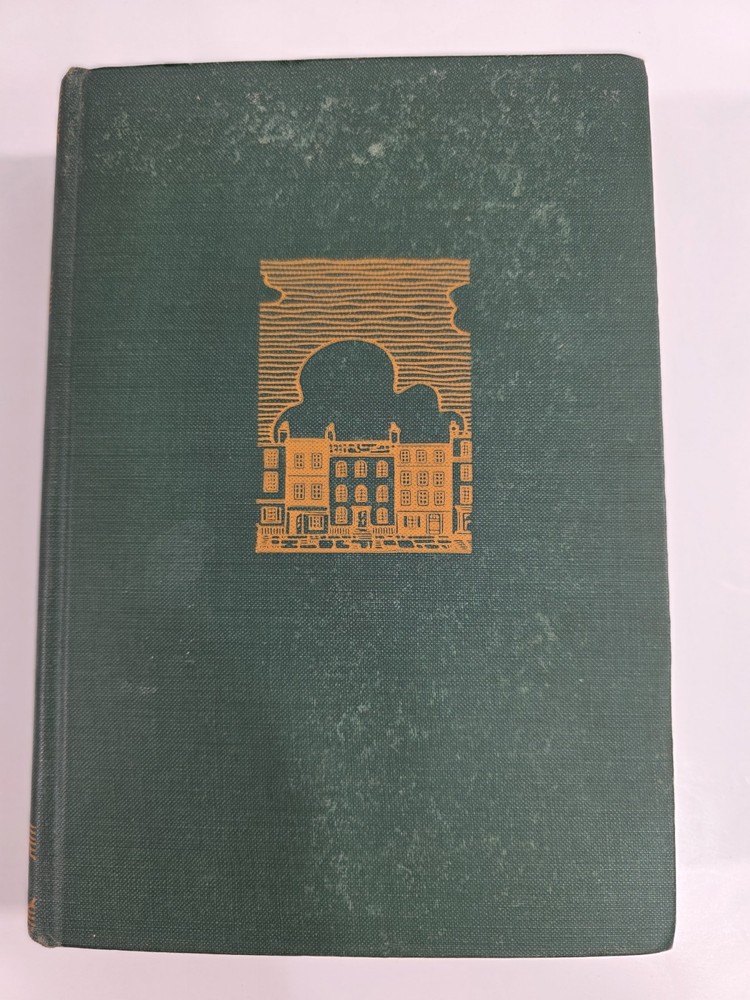
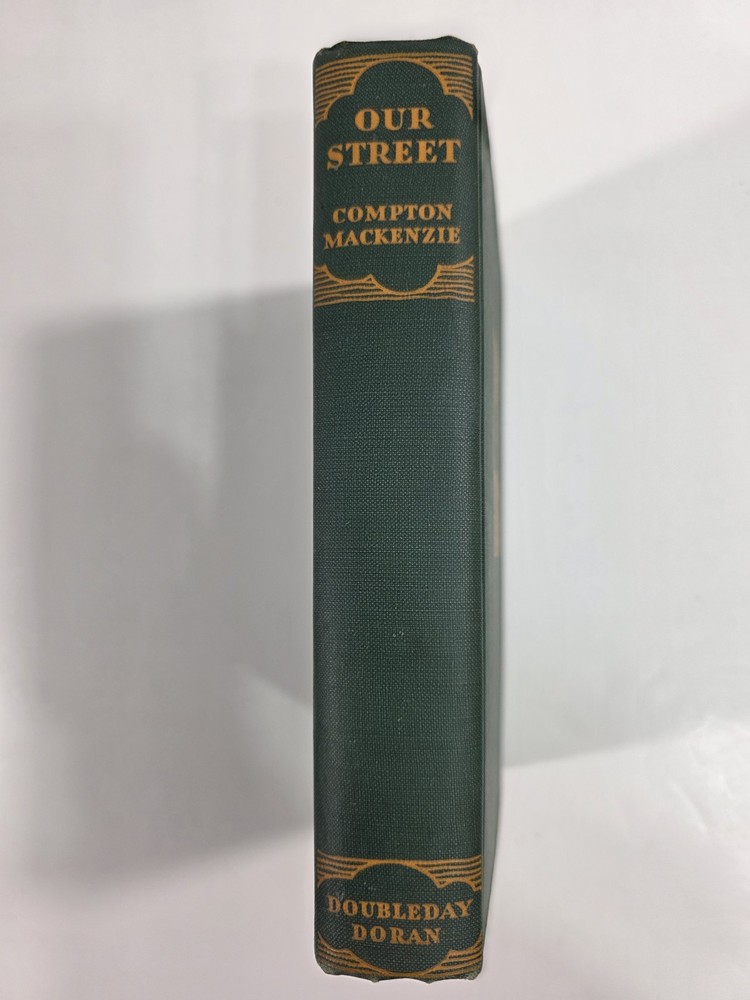
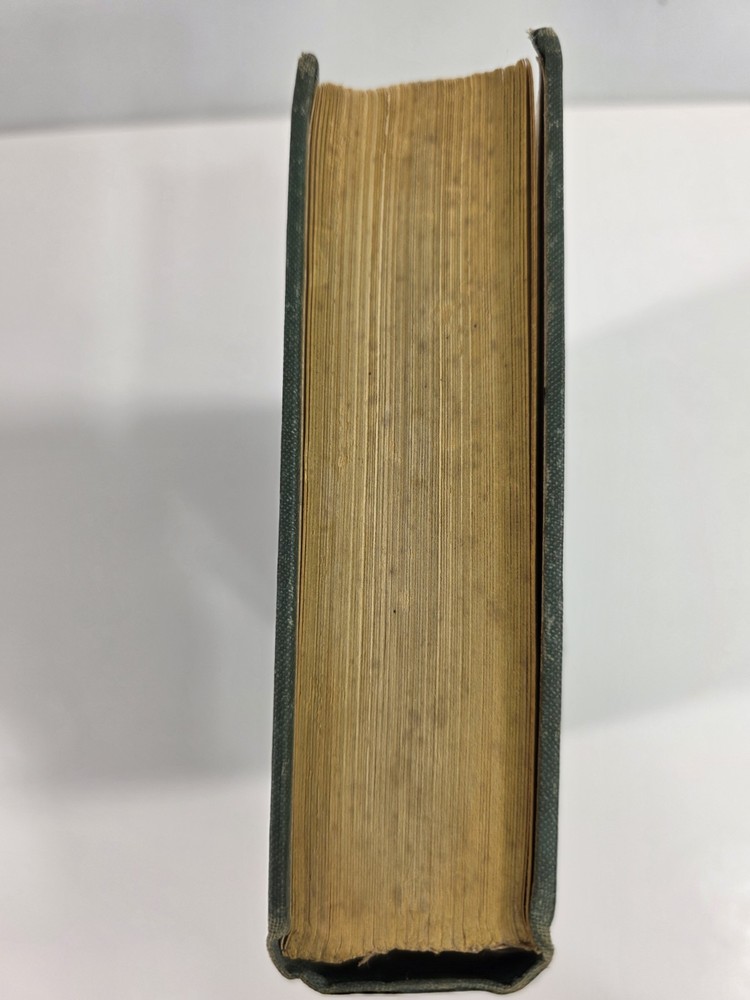
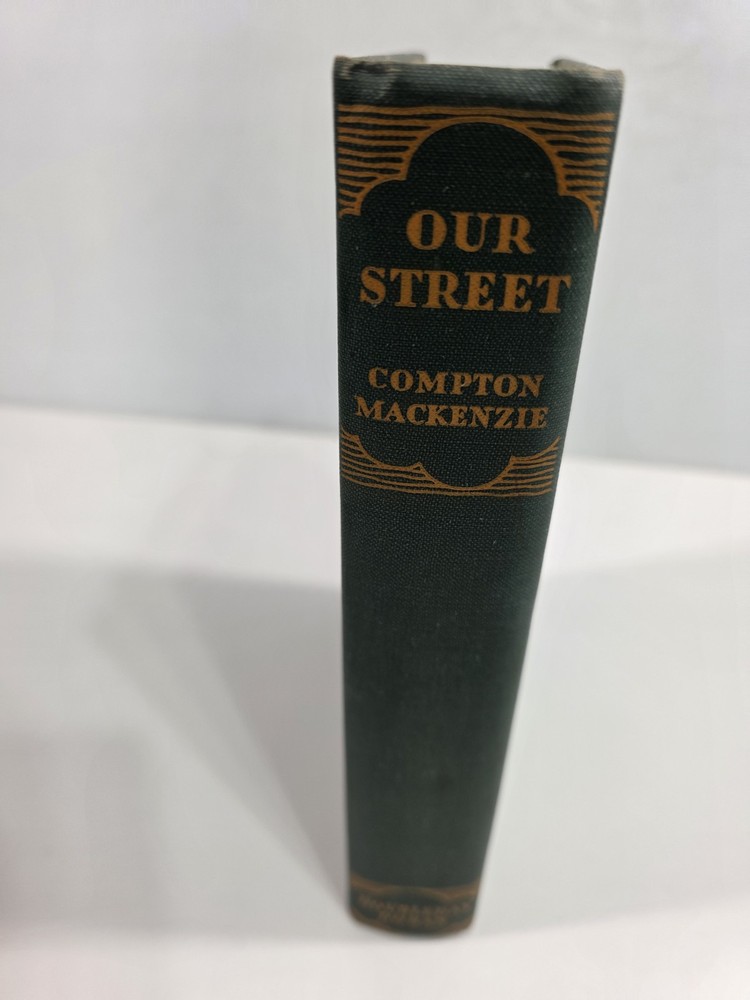
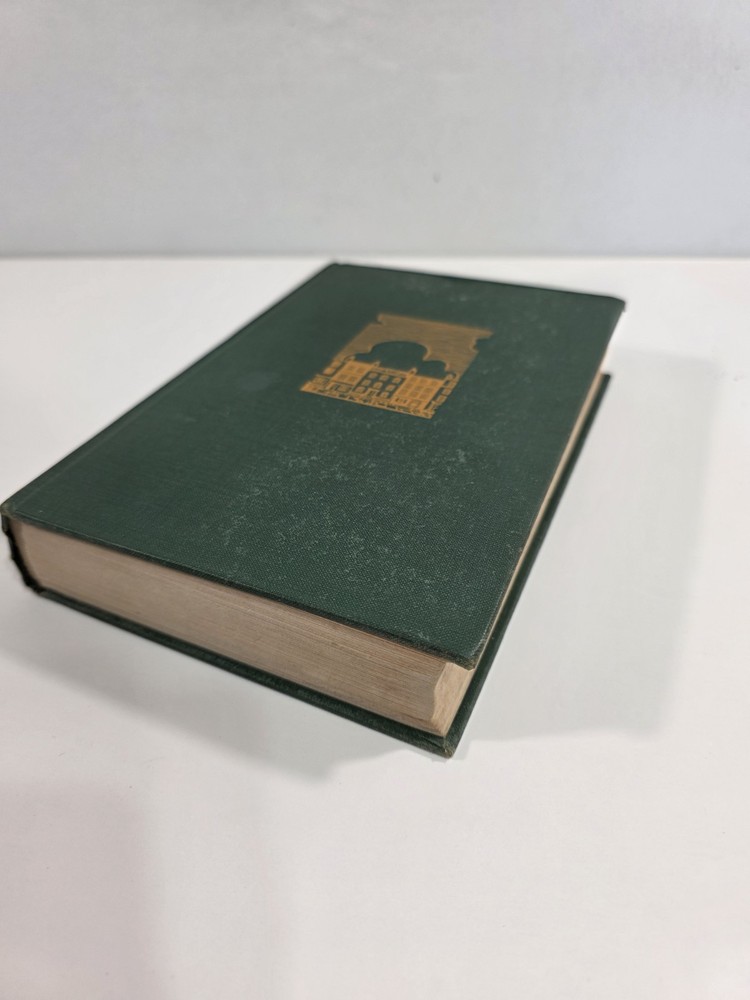
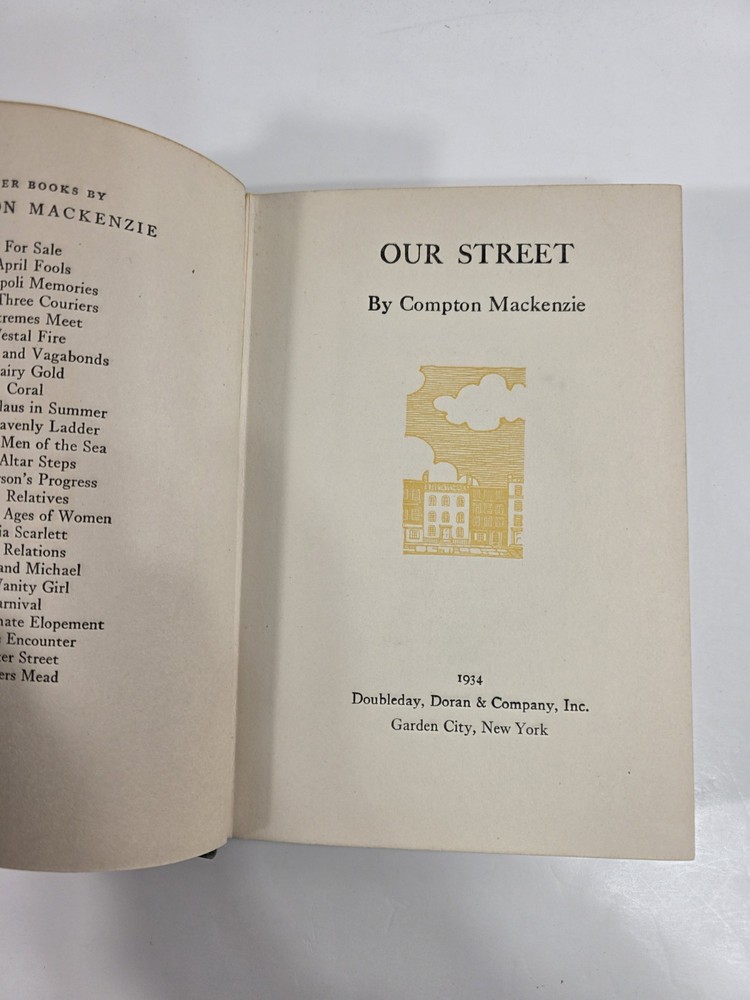
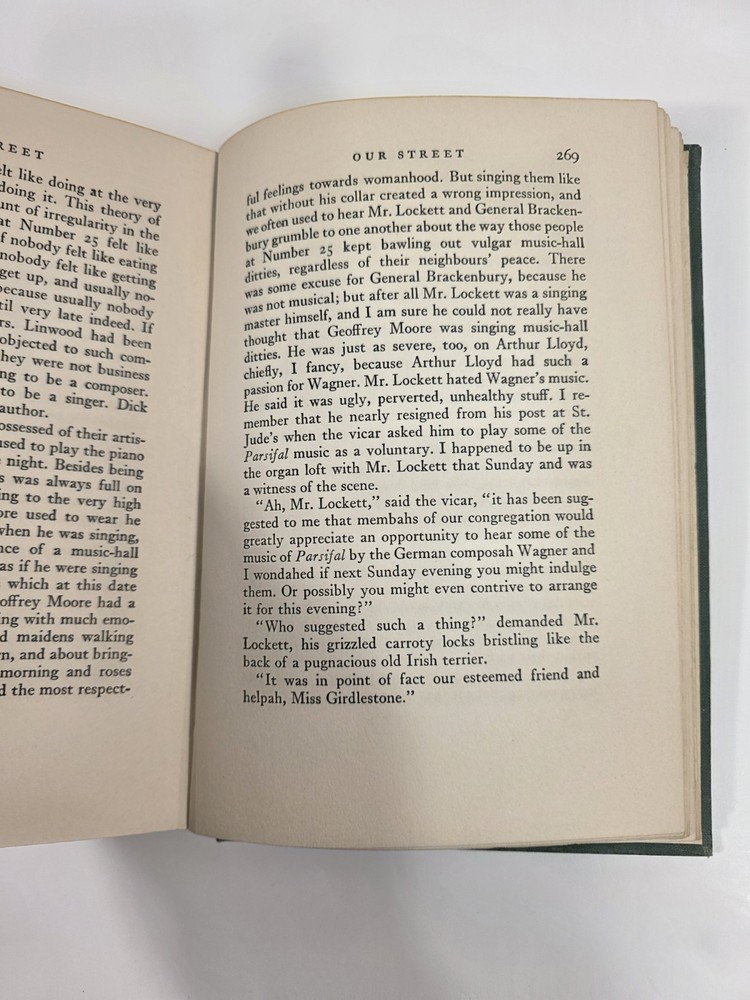
Our Street By Compton Mackenzie Vintage 1934 Hc Book No Dust Jacket
$ 6.21
Description
OUR STREET BY COMPTON MACKENZIE VINTAGE 1934 HC BOOK NO DUST JACKET. M. Barrie 's plays, includingPeter Pan. He was educated atSt Paul's School, London, andMagdalen College, Oxford, from where he graduated with a degree in Modern History. [ 3] He was admired byF. OUR STREET BY COMPTON MACKENZIE VINTAGE 1934 HC BOOK NO DUST JACKET Sir Edward Montague Compton Mackenzie , OBE (17 January 1883 – 30 November 1972) was a Scottish writer of fiction, biography, histories and a memoir, as well as a cultural commentator, raconteur and lifelong Scottish nationalist . He was one of the co-founders in 1928 of the National Party of Scotland along with Hugh MacDiarmid , Cunninghame Graham and John MacCormick . He was knighted in the 1952 Birthday Honours List . Background Edward Montague Compton Mackenzie was born in West Hartlepool , County Durham , England, into a theatrical family of Mackenzies, many of whose members used Compton as their stage surname, starting with his English grandfather Henry Compton , a well-known Shakespearean actor of the Victorian era . His father, Edward Compton Mackenzie, and mother, Virginia Frances Bateman , were actors and theatre company managers; his sister, Fay Compton (whose son was Anthony Pelissier , Compton's nephew), starred in many of J. M. Barrie 's plays, including Peter Pan . He was educated at St Paul's School , London, and Magdalen College, Oxford , from where he graduated with a degree in Modern History.[ 1] In 1910, he began a brief career as an actor at the Garrick theatre in The Bishop's Son by Hall Caine . From there he joined the satirical theatrical troupe The Follies under the management of the comedian and impresario H. G. Pélissier at the Apollo, Shaftesbury Avenue as a song lyricist and sketch writer. Within a year their relationship became estranged over the marriage of his sister Fay, aged 17, to the 37-year-old Pélissier. It was then that he took up novel writing as a full-time career bolstered by the success of his early best-seller Carnival (1912), partly based on his experience with The Follies. [ 2] Writing Mackenzie is perhaps best known for two comic novels set in Scotland: Whisky Galore (1947) set in the Hebrides , and The Monarch of the Glen (1941) set in the Scottish Highlands . They were the sources of a successful film and a television series , respectively. He published almost a hundred books on different subjects, including ten volumes of autobiography: My Life and Times (1883–71). He wrote history (on the Battle of Marathon and the Battle of Salamis ), biography (Mr Roosevelt , a 1943 biography of FDR ), literary criticism, satires, apologia (Sublime Tobacco 1957), children's stories, poetry and so on. Of his fiction, The Four Winds of Love is sometimes considered his magnum opus .[ 3] He was admired by F. Scott Fitzgerald , whose first book, This Side of Paradise , was written under the literary influence of Compton.[ 4] Sinister Street , his lengthy 1913–14 Bildungsroman , influenced George Orwell and Cyril Connolly , who both read it as schoolboys.[ 5] [ 6] Max Beerbohm praised Mackenzie's writing for vividness and emotional reality.[ 7] Frank Swinnerton , a literary critic, comments on Mackenzie's "detail and wealth of reference". Sir John Betjeman said of it, "This has always seemed to me one of the best novels of the best period in English novel writing." Henry James thought it to be the most remarkable book written by a young author in his lifetime. After his conversion to Roman Catholicism in 1914, Mackenzie explored religious themes in a trilogy of novels, The Altar Steps (1922), The Parson's Progress (1923) and The Heavenly Ladder (1924).[ 8]