
Schiffer German Jet Aircraft 1939-1945 Hbdj Ww2 Luftwaffe *Near Mint* (Diedrich)
$ 7.9
Description
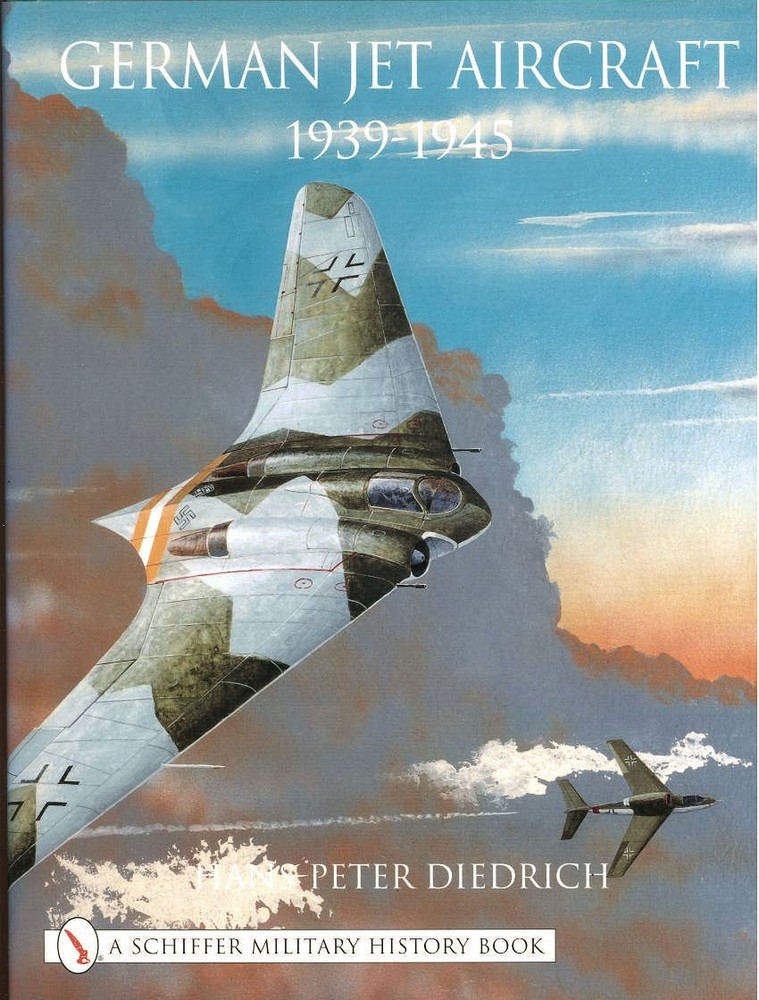
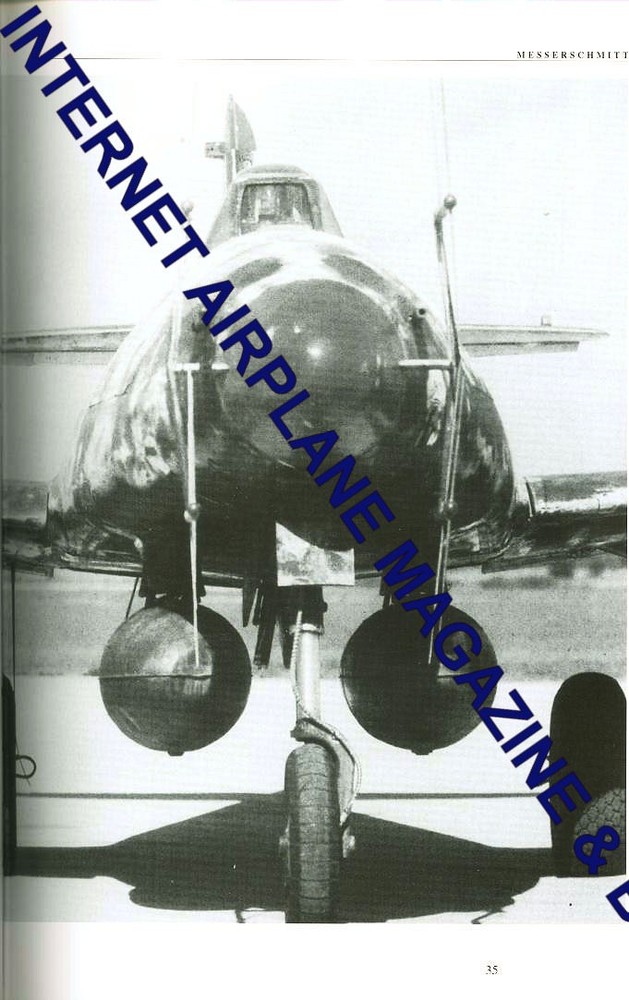
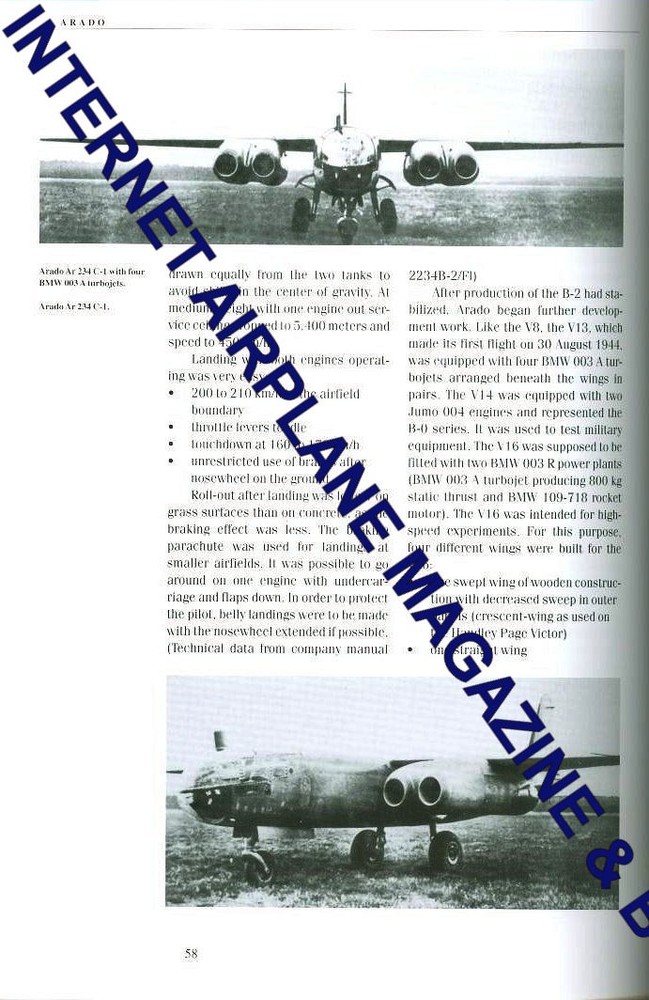
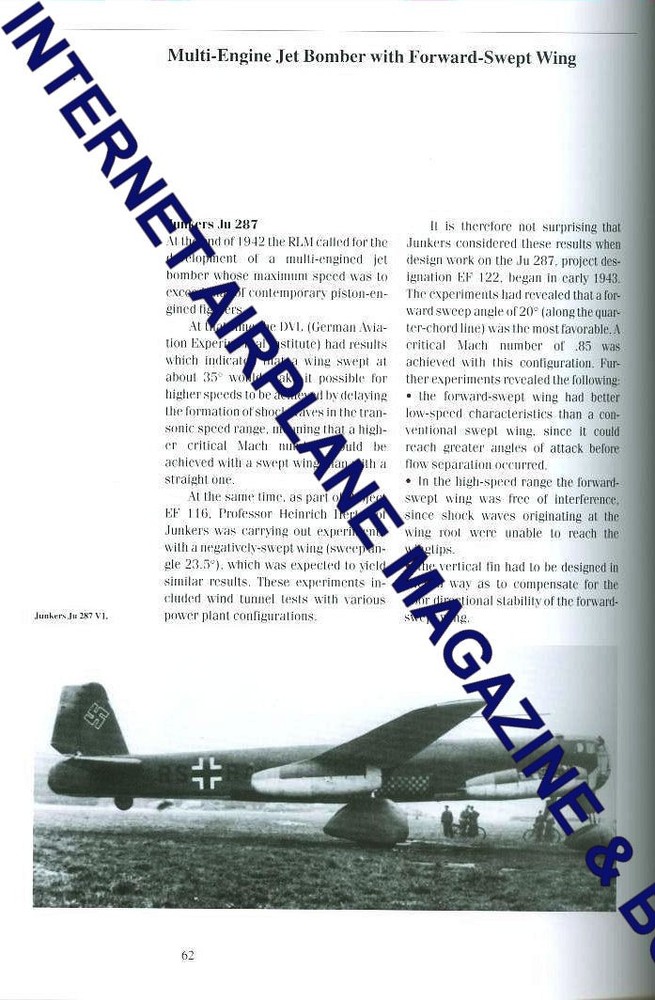
SCHIFFER GERMAN JET AIRCRAFT 1939-1945 HBDJ WW2 LUFTWAFFE *NEAR MINT* (DIEDRICH). HARDBOUND with DUSTJACKET BY HANS-PETER DIEDRICH (110 PAGES) IN ENGLISH. Two weeks later, on 18 February 1945, disaster struck during the third test flight. Ziller took off without any problems to perform a series of flight tests. SCHIFFER GERMAN JET AIRCRAFT 1939-1945 HBDJ WW2 LUFTWAFFE *NEAR MINT* (DIEDRICH) SCHIFFER GERMAN JET AIRCRAFT 1939-1945 HBDJ WW2 LUFTWAFFE *NEAR MINT* (DIEDRICH) HARDBOUND with DUSTJACKET BY HANS-PETER DIEDRICH (110 PAGES) IN ENGLISH HEINKEL He178 HEINKEL He280 HEINKEL He162 VOLKSJAGER SALAMANDER WW2 GERMAN LUFTWAFFE JET FIGHTER JG (ERNST HEINKEL / SIEGFRIED GUNTER, HEINKEL AIRCRAFT ROSTOCK / VIENNA, HEINKEL PROJECT P 1073, PROTOTYPES / FLIGHT TESTING LECHFELD, He162 PRODUCTION �LANGUSTE� UNDERGROUND FACILITIES MODLING AUSTRIA & EGER SALZBURG, ENGINEERING DRAWINGS, COCKPIT PHOTOGRAPHS & DIAGRAMS, BMW 003 JET ENGINE, FUSELAGE, WINGS AND WING TIP DETAIL, TAIL ASSEMBLY, He162 TEST PILOTS, He162S GLIDERS FOR HITLER YOUTH TRAINING, OPERATIONS: JAGDGESCHWADER JG1 LCOK / HOLSTEIN MAY 1945) HEINKEL He343 MESSERSCHMITT Me262 ( Me262A-1a FIGHTER SCHWALBE �SWALLOW�(30mm Mk108 CANNON, FuG-24 RADIO, FuG-25 IFF, 5cm R4M ROCKETS, Me262A-1a/U3 PHOTO RECONNAISSANCE VARIANT AUFL (ALL-CAMERA NOSE, R6-50/30 VERTICAL CAMERA, Me262A-2a STURMVOGEL�STORMBIRD� BOMBER KG, BMW003A TURBOJET, BMW718 BI-FUEL ROCKET ENGINE, MIXED POWER UNIT EXPERIMENTS WALTHER 109-509 ROCKET ENGINE, Me262B-1a TWO-SEAT TRAINER, Me262B-1a NIGHTFIGHTER NACHTSJAGER NJG (LICHTENSTEIN SN-2 RADAR, Me262B-2a NIGHTFIGHTER, FUSELAGE, WING AND TAIL UNIT, UNDERCARRIAGE, JUMO 004B TURGO JET ENGINES, FUEL TANKAGE AND ENDURANCE, ARMAMENT, WEIGHTS AND LOADINGS, PERFORMANCE, RADIO AND RADAR INSTALLATION, FUG16 ZY, EVI 7, FuG 25a, FuG 125, FuG 120, FuG 218, FuG 35, Me262C-1a INTERCEPTOR HOME DEFENDER, Me262D 50mm MAUSER Mk114 CANNON, ADVANCED DESIGNS, DESIGN ANALYSIS) MESSERSCHMITT Me328 MESSERSCHMITT P1101 ARADO Ar234 BLITZ JET BOMBER RECONNAISSANCE KG76 WW2 ( Ar234 PROTOTYPES, 109-500 JATO TAKE-OFF ASSIST ROCKETS �SMOKE DISCHARGERS�, Ar234 OPERATIONS WITH KG.76, ARADO Ar234C, ARADO Ar234 RECONNAISSANCE AIRCRAFT, Ar234B-2/N NIGHTFIGHTER KOMMANDO BONOW, MG 151/20 GUN INSTALLATION, KOMMANDO SPERLING, JUMO 004-B JET ENGINE DETAILED DRAWINGS, Ar234A TAKE-OFF TROLLEY �STARTWAGEN� DETAILED DRAWINGS) JUNKERS Ju287 ( THE ROAD TO NEGATIVE WING SWEEP, OPERATION STRABO � THE JUNKERS Ju287 JET BOMBER, DEVELOPMENT OF THE JUNKERS Ju287, TESTING THE Ju287 V1 PROTOTYPE, JUNKERS Ju287 V2, PRODUCTION PROTOTYPE Ju287 V3, FIRST OPERATIONAL PLANS FOR Ju287, GEWALTAKTION 287, THE BMW 109-003 & JUNKERS JUMO 109-004 JET ENGINES, Ju287 ROCKET-ASSISTED TAKEOFF PROPULSION RATO, HWK-109-501, HWK 109-502 AND WASAG 109-522, THE Ju287 TWIN SISTER � EF 131 DEVELOPMENTAL AIRPLANE HORTEN Ho.IX ( THE PATH TO THE Ho229, H IX V1 EXPERIMENTAL GLIDER, FIRST TURBOJET-POWERED FLYING WING H IX V2, BMW 003 TURBOJET ENGINE, JUMO 004B TURBOJET ENGINE , LAST LUTWAFFE FLYING WING, PLANNED DEVELOPMENTS H IX V3) HENSCEL Hs132 LIPPISCH P 13a / DM 1 FOCKE WULF Ta183 HEINKEL JET ENGINES JUNKERS JUMO JET ENGINES BMW JET ENGINES DAIMLER BENZE JET ENGINES SUPERSONIC RESEARCH IN GERMANY TECHNICAL OVERVIEW CHRONOLOGICAL OVERVIEW Originally published in Germany under the title: DIE DEUTSCHEN STRAHLFLUGZEUGE BIS 1945 Germany was one of the leading developers of jet propulsion during the Second World War in August 1939 the world�s first jet aircraft, the Heinkel He 178, took to the air on its maiden flight. This new book examines all of the developments, production and aircraft types: He 280, Me 262, Ar 234, He 162, Ju 287, Ho IX, Me 328, P1101, Hs 132, DM 1, Ta 183 and others by such aircraft manufacturers as Heinkel, Junkers, Messerschmitt, and powerplant manufacturers BMW and Daimler-Benz. Numerous photographs and three-view drawings illustrate this extraordinary book. ------------------------------------------------------------------------------------------------------------------ Additional Information from Internet Encyclopedia The Heinkel He 280 was the first turbojet-powered fighter aircraft in the world. It was inspired by Ernst Heinkel's emphasis on research into high-speed flight and built on the company's experience with the He 178 jet prototype. A combination of technical and political factors led to it being passed over in favor of the Messerschmitt Me 262. Only nine were built and none reached operational status. The Heinkel company began the He 280 project on its own initiative after the He 178 had been met with indifference from the Reichsluftfahrtministerium (German, Reich Aviation Ministry, RLM ). The head designer was Robert Lusser, who began the project under the designation He 180 in late 1939. It had a typical Heinkel fighter fuselage, elliptically-shaped wings and a dihedralled tailplane with twin fins and rudders. The landing gear was of the retractable tricycle type with very little ground clearance. This arrangement was considered too frail for the grass or dirt airfields of the era; however, the tricycle layout eventually gained acceptance. The Me 262 was originally designed as a tail-dragger, but this configuration makes it difficult for a jet to become airborne, and the Me 262 entered production with a redesigned tricycle landing gear. Internally, the He 280 was equipped with a compressed-air powered ejection seat, the first aircraft to carry one. The first prototype was completed in the summer of 1940, but the HeS 8 intended to power it was running into difficulties. On 22 September 1940, while work on the engine continued, the first prototype started glide tests with ballasted pods hung in place of its engines. It would be another six months before Fritz Sch�fer would take the second prototype into the air under its own power, on 30 March 1941. The type was then demonstrated to Ernst Udet, head of RLM's development wing, on 5 April, but like its predecessor, it apparently failed to make an impression. One benefit of the He 280 which did impress the political leadership was the fact that the jet engines could burn kerosene, which requires much less expense and refining than the high-octane fuel used by piston-engine aircraft. However, government funding was lacking at the critical stage of initial development. Over the next year, progress was slow due to the ongoing engine problems. A second engine design, the HeS 30 was also undergoing development, both as an interesting engine in its own right, as well as a potential replacement for the HeS 8. In the meantime, alternative powerplants were considered, including the Argus As 014 pulsejet that famously powered the V-1 flying bomb. (Using as many as eight was proposed.) By the end of 1943, however, the third prototype was fitted with refined versions of the HeS 8 engine and was ready for its next demonstration. On 22 December, a mock dogfight was staged for RLM officials in which the He 280 was matched against an Fw 190. Here, the jet demonstrated its vastly superior speed, completing four laps of an oval course before the Fw 190 could complete three. Finally, at this point the RLM became interested and placed an order for 20 pre-production test aircraft, to be followed by 300 production machines. Engine problems continued to plague the project. In 1942, the RLM had ordered Heinkel to abandon the HeS 8 and HeS 30 to focus all development on a follow-on engine, the HeS 011, a much more advanced (and therefore problematic) design. Meanwhile, the first He 280 prototype had been re-equipped with pulsejets and was towed aloft to test them. Bad weather caused the aircraft to ice up, however, and before the jets could be tested, pilot Helmut Schenk became the first person to put an ejection seat to use. The seat worked perfectly, but the aircraft was lost, and never found. With the HeS 011 not expected for some time, Heinkel was forced to accept that it would have to use a competitor's engines, and selected the BMW 003. Unfortunately, this engine was also experiencing problems and delays, and in the meantime, the second He 280 prototype was re-engined with Junkers Jumo 004s while the next three airframes were earmarked for the BMW motor (which, in the end, would never be ready before the end of the He 280 project). The Jumo engines were much larger and heavier than the HeS 8 that the plane had been designed for, and while it flew well enough (for the first time on 16 March 1943), it was immediately obvious that this engine would be unsuitable in the long term. The aircraft was slower and generally less efficient than the Me 262. Less than two weeks later, on 27 March, Erhard Milch cancelled the project. The Jumo 004-powered Me 262 appeared to have most of the qualities of the He 280, but was better matched to its engine. Heinkel was ordered to abandon the He 280 and focus attention on bomber development and construction, something he remained bitter about until his death. ------------------------------------------------------------------------------------------------------------------ Additional Information from Internet Encyclopedia The Horten H.IX , RLM designation Ho 229 (often, and wrongly, called Gotha Go 229 because of the identity of the chosen manufacturer of the aircraft) was a German prototype fighter/bomber designed by Reimar and Walter Horten and built by Gothaer Waggonfabrik late in World War II. It was the first pure flying wing powered by jet engines. It was given the personal approval of German Luftwaffen Reichsmarschall Hermann G�ring, and was the only aircraft to come close to meeting his "3�1000" performance requirements, namely to carry 1,000 kilograms (2,200 lb) of bombs a distance of 1,000 kilometres (620 mi) with a speed of 1,000 kilometres per hour (620 mph). Its ceiling was 15,000 metres (49,000 ft). Since the appearance of the B-2 Spirit flying wing stealth bomber in the 1990s, its similarities in role and shape to the Ho 229 has led many to retrospectively describe the Ho 229 as "the first stealth bomber". A static reproduction of the only surviving Ho 229 prototype, the Ho 229 V3, in American hands since the end of World War II was later tested by the U.S. military who found the basic shape and paint composition of the mock copy would provide for 37% reduction in detection range against the Chain Home radar of the 1940s, but no significant stealth benefit against most other contemporary radar systems. In the early 1930s, the Horten brothers had become interested in the flying wing design as a method of improving the performance of gliders. The German government was funding glider clubs at the time because production of military and even motorized aircraft was forbidden by the Treaty of Versailles after World War I. The flying wing layout removes any "unneeded" surfaces and, in theory at least, leads to the lowest possible weight. A wing-only configuration allows for a similarly performing glider with wings that are shorter and thus sturdier, and without the added drag of the fuselage. The result was the Horten H.IV. In 1943, Reichsmarschall G�ring issued a request for design proposals to produce a bomber that was capable of carrying a 1,000 kilograms (2,200 lb) load over 1,000 kilometres (620 mi) at 1,000 kilometres per hour (620 mph); the so-called "3�1000 project". Conventional German bombers could reach Allied command centers in Great Britain, but were suffering devastating losses from Allied fighters. At the time, there was no way to meet these goals�the new Junkers Jumo 004B turbojets could provide the required speed, but had excessive fuel consumption. The Hortens concluded that the low-drag flying wing design could meet all of the goals: by reducing the drag, cruise power could be lowered to the point where the range requirement could be met. They put forward their private project, the H.IX , as the basis for the bomber. The Government Air Ministry (Reichsluftfahrtministerium ) approved the Horten proposal, but ordered the addition of two 30 mm cannons, as they felt the aircraft would also be useful as a fighter due to its estimated top speed being significantly higher than that of any Allied aircraft. The H.IX was of mixed construction, with the center pod made from welded steel tubing and wing spars built from wood. The wings were made from two thin, carbon-impregnated plywood panels glued together with a charcoal and sawdust mixture. The wing had a single main spar, penetrated by the jet engine inlets, and a secondary spar used for attaching the elevons. It was designed with a 7g load factor and a 1.8x safety rating; therefore, the aircraft had a 12.6g ultimate load rating. The wing's chord/thickness ratio ranged from 15% at the root to 8% at the wingtips. The aircraft utilized retractable tricycle landing gear, with the nosegear on the first two prototypes sourced from a He 177's tailwheel system, with the third prototype using an He 177A main gear wheelrim and tire on its custom-designed nosegear strutwork and wheel fork. A drogue parachute slowed the aircraft upon landing. The pilot sat on a primitive ejection seat. The aircraft was originally designed for the BMW 003 jet engine, but that engine was not quite ready and the Junkers Jumo 004 engine was substituted. Control was achieved with elevons and spoilers. The control system included both long span (inboard) and short span (outboard) spoilers, with the smaller outboard spoilers activated first. This system gave a smoother and more graceful control of yaw than would a single spoiler system. The first prototype H.IX V1, an unpowered glider with fixed tricycle landing gear, flew on 1 March 1944. Flight results were very favorable, but there was an accident when the pilot attempted to land without first retracting an instrument-carrying pole extending from the aircraft. The design was taken from the Horten brothers and given to Gothaer Waggonfabrik. The Gotha team made some changes: They added a simple ejection seat, dramatically changed the undercarriage to enable a higher gross weight, changed the jet engine inlets, and added ducting to air-cool the jet engine's outer casing, so as to prevent damage to the wooden wing. The H.IX V1 was followed in December 1944 by the Junkers Jumo 004-powered second prototype H.IX V2; the BMW 003 engine was preferred, but unavailable. G�ring believed in the design and ordered a production series of 40 aircraft from Gothaer Waggonfabrik with the RLM designation Ho 229, even though it had not yet taken to the air under jet power. The first flight of the H.IX V2 was made in Oranienburg on 2 February 1945. All subsequent test flights and development were done by Gothaer Waggonfabrik. By this time, the Horten brothers were working on a turbojet-powered design for the Amerika Bomber contract competition, and did not attend the first test flight. The test pilot was Leutnant Erwin Ziller. Two further test flights were made between 2 and 18 February 1945. Another test pilot used in the evaluation was Heinz Scheidhauer. The H.IX V2 reportedly displayed very good handling qualities, with only moderate lateral instability (a typical deficiency of tailless aircraft). While the second flight was equally successful, the undercarriage was damaged by a heavy landing caused by Ziller deploying the brake parachute too early during his landing approach. There are reports that during one of these test flights, the H.IX V2 undertook a simulated "dog-fight" with a Messerschmitt Me 262, the first operational jet fighter and that the H.IX V2 outperformed the Me 262. Two weeks later, on 18 February 1945, disaster struck during the third test flight. Ziller took off without any problems to perform a series of flight tests. After about 45 minutes, at an altitude of some 800 m, one of the Jumo 004 turbojet engines developed a problem, caught fire and stopped. Ziller was seen to put the aircraft into a dive and pull up several times in an attempt to restart the engine and save the precious prototype. Ziller undertook a series of four 360-degree turns with the wings banked 20 degrees. Ziller did not use his radio or eject from the aircraft. He may already have been unconscious as a result of the fumes from the burning engine. The aircraft crashed just outside the boundary of the airfield. Ziller was thrown from the aircraft on impact and died from his injuries two weeks later. The prototype aircraft was completely destroyed Despite this setback, the project continued with sustained energy. On 12 March 1945, the Ho 229 was included in the J�ger-Notprogramm (Emergency Fighter Program) for accelerated production of inexpensive "wonder weapons". The prototype workshop was moved to the Gothaer Waggonfabrik (Gotha) in Friedrichroda. In the same month, work commenced on the third prototype, the Ho 229 V3. The V3 was larger than previous prototypes, the shape being modified in various areas, and it was meant to be a template for the pre-production series Ho 229 A-0 day fighters, of which 20 machines had been ordered. The V3 was meant to be powered by two Jumo 004C engines with 10% greater thrust each than the earlier Jumo 004B production engine used for the Me 262A and Ar 234B, and could carry two MK 108 30mm cannon in the wing roots. Work had also started on the two-seat Ho 229 V4 and Ho 229 V5 night-fighter prototypes, the Ho 229 V6 armament test prototype, and the Ho 229 V7 two-seat trainer. During the final stages of the war, the U.S. military initiated Operation Paperclip, an effort to capture advanced German weapons research, and keep it out of the hands of advancing Soviet troops. A Horten glider and the Ho 229 V3, which was undergoing final assembly, were secured for sending to the United States for evaluation. En route, the Ho 229 spent a brief time at RAE Farnborough in the UK while it was considered if British jet engines could be fitted, but the mountings were found to be incompatible with the early British turbojets only using centrifugal compressors with their comparatively larger diameter compressor sections, and not the slimmer axial-flow turbojet powerplants the Germans were using, and which the Americans were just starting to create their own versions FREE scheduling, supersized images and templates. Get Vendio Sales Manager. Make your listings stand out with FREE Vendio custom templates! FREE scheduling, supersized images and templates. Get Vendio Sales Manager. Over 100,000,000 served. Get FREE counters from Vendio today!


![L' Année Liturgique TOME 3 Vol.3 by DOM GUERANGER [Leather Bound]](/static_images_g_tvcAAeSwlfZojF7s_s-l1000.jpg)