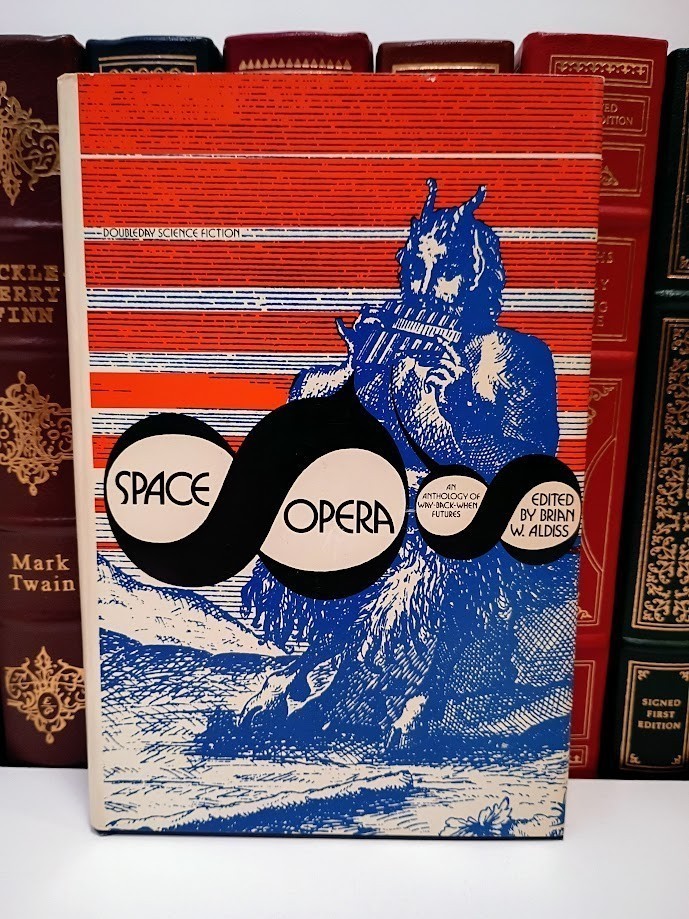
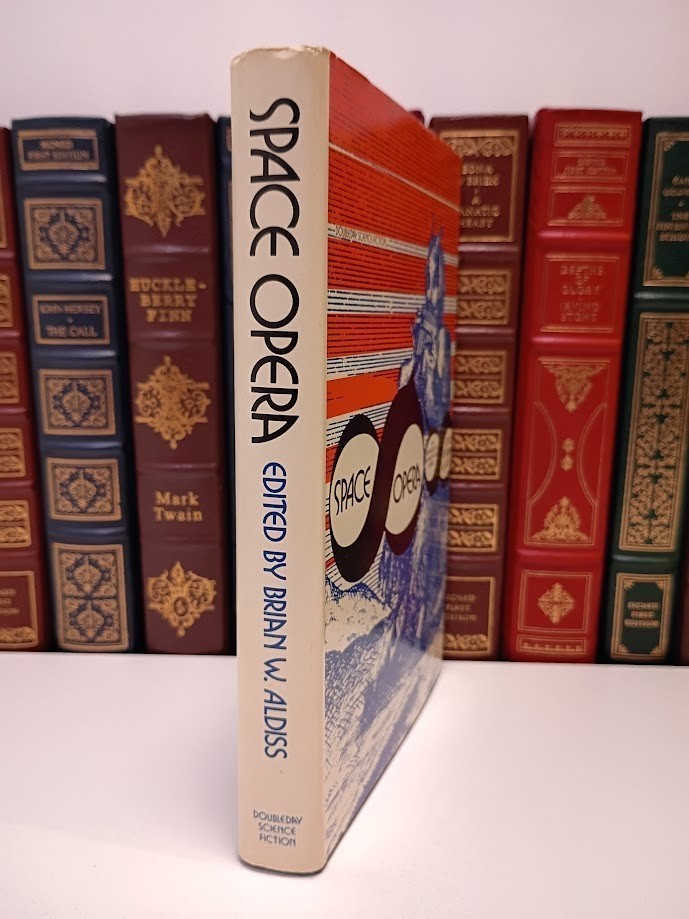
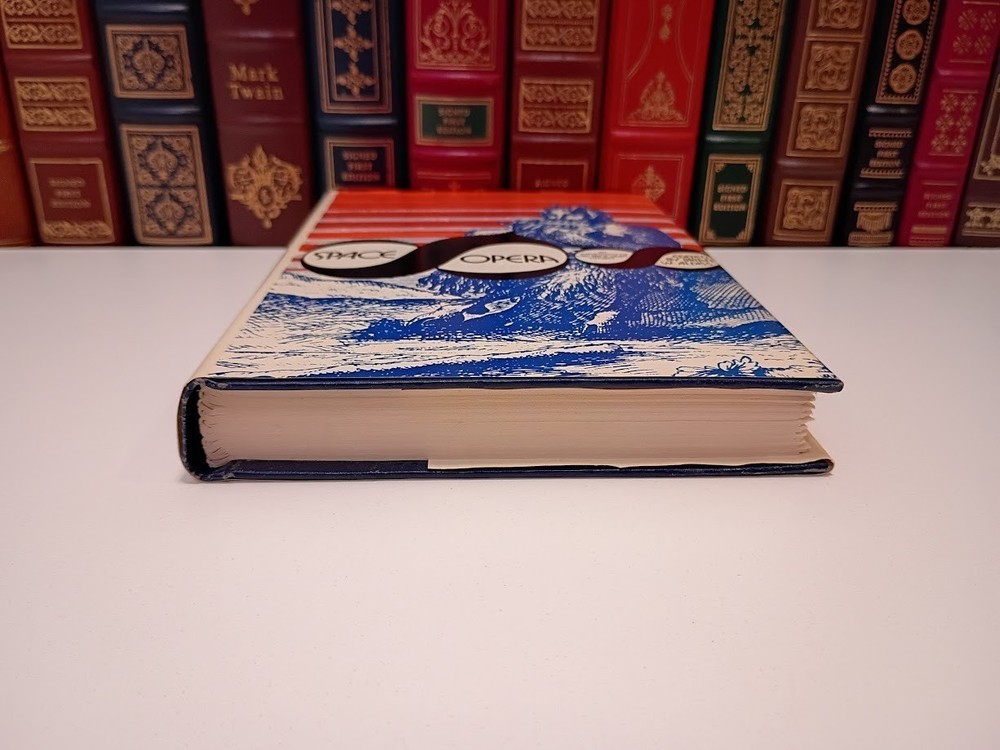
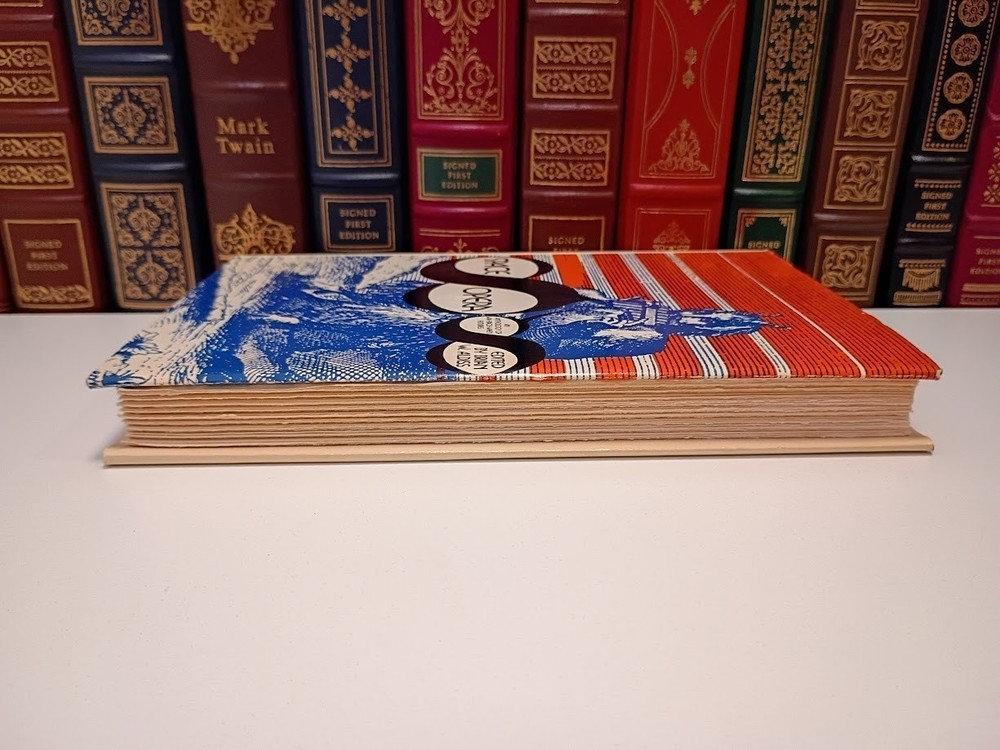
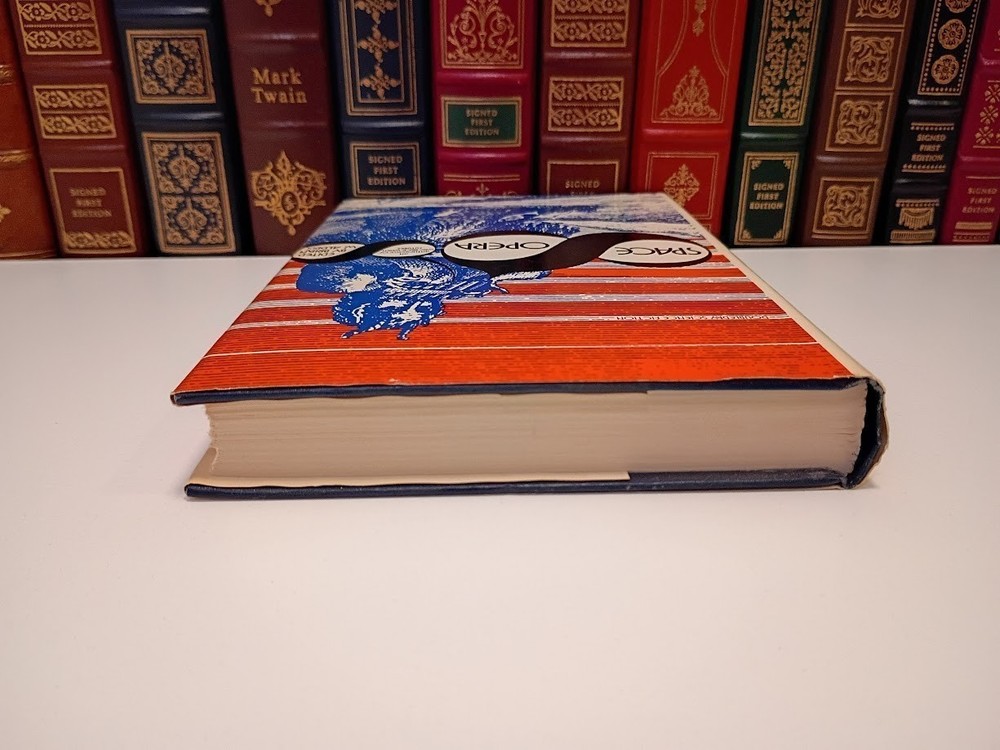
Space Opera HC (BCE) Philip K. Dick Jack vance Brian Aldiss Ray Bradbury DJ
$ 13.18
Description
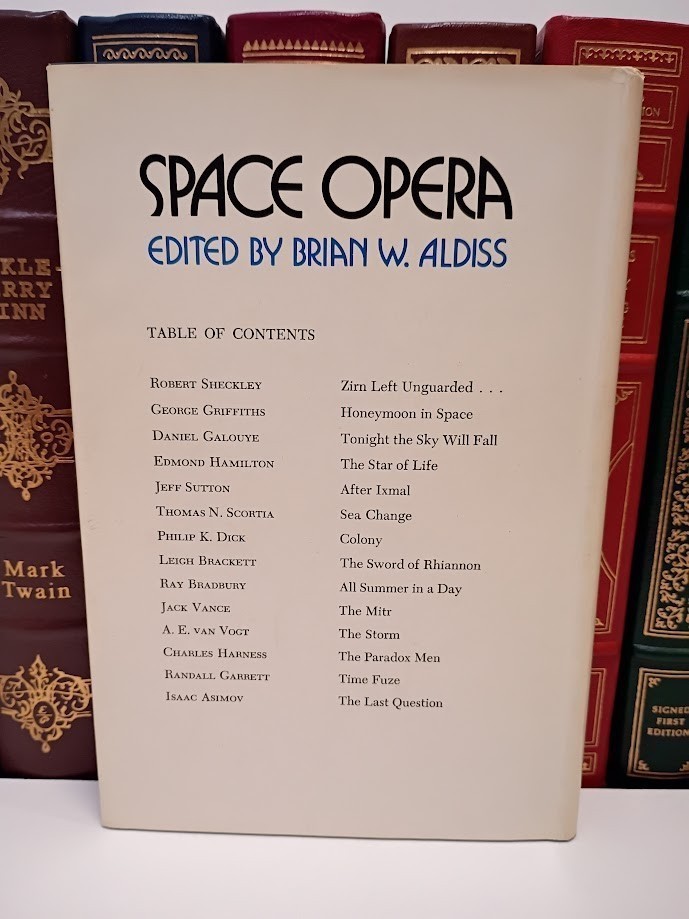
Space Opera HC (BCE) Philip K. Dick Jack vance Brian Aldiss Ray Bradbury DJ. A Galactic Grand Tour: A Review of Brian W. Aldiss's "Space Opera". For anyone wanting to understand the heart and soul of classic science fiction, Brian W. Aldiss's anthology. Aldiss, a master of the genre himself, assembled a veritable who's who of 20th-century science fiction. A Galactic Grand Tour: A Review of Brian W. Aldiss's "Space Opera" For anyone wanting to understand the heart and soul of classic science fiction, Brian W. Aldiss's anthology Space Opera serves as an essential and exhilarating primer. This collection isn't just a random assortment of tales; it's a carefully curated journey through the subgenre that defined adventure in science fiction for decades. From cosmic empires to desperate planetary pioneers, this book captures the boundless imagination, philosophical depth, and sheer sense of wonder that made space opera a cornerstone of the field. The true strength of this anthology lies in its incredible roster. Aldiss, a master of the genre himself, assembled a veritable who's who of 20th-century science fiction. Each story acts as a perfect snapshot of its author's unique style and contribution to the genre, making the book a dynamic and consistently engaging read. It's a collection where every turn of the page introduces you to a new universe, a new dilemma, and a new master storyteller. Whether you're a seasoned sci-fi reader or a newcomer looking for a gateway to the classics, Space Opera is a treasure. It’s a testament to a time when space was the ultimate frontier, filled with infinite possibilities for adventure, horror, and profound human discovery. Here is a closer look at the brilliant authors and their contributions to this collection: The Stories and Their Authors 1. "Zirn Left Unguarded" by Robert Sheckley The Story: A clever and satirical tale about two bumbling agents tasked with guarding a planetary fortress of immense power, Zirn. When the locals begin worshiping the fortress, things get complicated in a way only Sheckley could devise. It’s a witty look at bureaucracy, religion, and human fallibility on a galactic scale. The Author: Robert Sheckley (1928-2005) was an American writer celebrated for his unpredictable and often darkly comedic science fiction. He was a master of the short story, known for his satirical takes on modern life's absurdities, transplanted into futuristic or alien settings. 2. "Honeymoon in Space" by George Griffiths The Story: A pioneering work of the genre, this story chronicles the interplanetary honeymoon of a wealthy couple aboard their personal anti-gravity vessel. It's a tale brimming with the optimism and romanticism of early sci-fi, focusing on the sheer wonder of exploring the solar system. The Author: George Griffiths (1857-1906) was a British science fiction writer and explorer. One of the most popular authors of his time, his "future war" and space exploration stories were foundational to the genre, predating even H.G. Wells in some themes. 3. "Tonight the Sky Will Fall" by Daniel F. Galouye The Story: A mind-bending tale where humanity lives under a strange, artificial "sky" with manufactured stars. When one man begins to see cracks in this reality, he uncovers a shocking truth about his world and a desperate, ancient war. The Author: Daniel F. Galouye (1920-1976) was an American author known for his complex and paranoid science fiction narratives, often exploring themes of simulated reality and perception. His work, like the novel Simulacron-3 (adapted into the films The Thirteenth Floor and World on a Wire), was ahead of its time. 4. "The Star of Life" by Edmond Hamilton The Story: A classic, sweeping space opera adventure. An Earthman finds himself swept up in a galactic conflict revolving around a legendary artifact, the "Star of Life," which promises immortality. The story is packed with vast starships, ancient alien races, and high-stakes action. The Author: Edmond Hamilton (1904-1977) was an American writer often called the "King of Space Opera." He was prolific in the pulp magazines of the 1920s and '30s, known for his grand, galaxy-spanning sagas and creating the iconic hero Captain Future. 5. "After Ixmal" by Jeff Sutton The Story: A story of survival and first contact. A scout ship crash-lands on a hostile alien world, Ixmal. The lone survivor must adapt to the harsh environment while navigating a tense relationship with the planet's enigmatic, intelligent native species. The Author: Jefferson "Jeff" Sutton (1913-1979) was an American author specializing in technically detailed, problem-solving science fiction. Often drawing on his background in engineering and aerospace, his stories focused on the practical challenges of space exploration and survival. 6. "Sea Change" by Thomas N. Scortia The Story: This tale explores the profound psychological and biological transformations humans might undergo to colonize alien worlds. It's a haunting and intimate story about identity and what it means to be human when your very body is adapted for an alien sea. The Author: Thomas N. Scortia (1926-1986) was an American writer and chemist. He is best known for co-authoring the bestselling disaster novel The Glass Inferno (which was adapted into the film The Towering Inferno), but he also wrote poignant and thoughtful science fiction that often explored the human cost of technological progress. 7. "Colony" by Philip K. Dick The Story: A paranoid and thrilling tale about a survey crew on a new planet who find themselves attacked by seemingly everyday objects that can mimic and transform. The story is a masterclass in suspense, exploring themes of mimicry, paranoia, and the terror of an enemy you cannot identify. The Author: Philip K. Dick (1928-1982) was a visionary American writer whose work questioned the nature of reality, identity, and humanity. His deeply philosophical and often dystopian stories have been widely adapted into acclaimed films like Blade Runner, Total Recall, and Minority Report. 8. "The Sword of Rhiannon" by Leigh Brackett The Story: A quintessential example of "planetary romance." An archaeologist is transported back in time on Mars to a dying, decadent world of ancient gods, sea kings, and skullduggery. It’s a lush, atmospheric adventure combining science fiction with sword-and-sorcery elements. The Author: Leigh Brackett (1915-1978) was an American author and screenwriter, hailed as the "Queen of Space Opera." She was renowned for her vivid, pulp-infused planetary romances. Beyond her novels, she had a successful screenwriting career, most famously co-writing the script for The Empire Strikes Back. 9. "All Summer in a Day" by Ray Bradbury The Story: A deeply poignant and heartbreaking story set on Venus, where the sun is only visible for two hours every seven years. A group of children, who have never seen the sun, cruelly ostracize a young girl from Earth who remembers its warmth, leading to a devastating conclusion. The Author: Ray Bradbury (1920-2012) was one of the most celebrated American writers of the 20th century. While often classified as a science fiction author, his work transcended genre, blending fantasy, horror, and nostalgic Americana. He is beloved for classics like Fahrenheit 451 and The Martian Chronicles. 10. "The Mitr" by Jack Vance The Story: Showcasing Vance's signature style, this story is set on a world with a rigid, bizarrely complex social structure. A man from a lower caste embarks on a quest to challenge the system, navigating labyrinthine rules and deadly customs. The plot is secondary to the incredible world-building and ornate prose. The Author: Jack Vance (1916-2013) was an American fantasy and science fiction writer. He is revered for his "Dying Earth" subgenre, his unique and imaginative world-building, and his elegant, slightly ironic prose. His influence on fantasy and even the game Dungeons & Dragons is immense. 11. "The Storm" by A. E. van Vogt The Story: A group of shipwrecked soldiers on a jungle planet must contend with a bizarre, violent ecosystem where the weather itself is a predatory, semi-sentient life form. It’s a tense story of survival against an utterly alien and incomprehensible threat. The Author: A. E. van Vogt (1912-2000) was a Canadian-born writer who was a major figure in the Golden Age of Science Fiction. He was known for his complex, often dream-like and fast-paced plots, weaving together psychic powers, galactic empires, and powerful alien entities. 12. "The Paradox Men" by Charles L. Harness The Story: A condensed version of his classic novel, this is a dizzying, high-concept adventure featuring a society of immortals, time travel, and a swashbuckling hero named Alar who is a paradox in himself. It’s a story bursting with ideas and a sense of intellectual grandeur. The Author: Charles L. Harness (1915-2005) was an American science fiction author and patent attorney. His work is noted for its intellectual rigor, often incorporating complex scientific concepts, mythology, and literary allusions into operatic, mind-expanding plots. 13. "Time Fuze" by Randall Garrett The Story: A military sci-fi story with a clever twist. A bomb expert is tasked with disarming a seemingly impossible "time fuze" bomb left by an alien race, where the countdown is measured not in seconds, but in the radioactive decay of a single atom. The Author: Randall Garrett (1927-1987) was an American science fiction and fantasy author. He was a prolific writer, known for his humorous "Lord Darcy" series (which mixed magic and detective fiction) as well as more traditional, clever science fiction stories. 14. "The Last Question" by Isaac Asimov The Story: A perfect capstone for the anthology. This iconic story spans trillions of years, following humanity and its descendant computers as they repeatedly ask the cosmic computer, "Can the entropy of the universe be reversed?" The story builds to one of the most famous and awe-inspiring final lines in all of science fiction. The Author: Isaac Asimov (1920-1992) was an American writer and professor of biochemistry, considered one of the "Big Three" science fiction writers (along with Robert A. Heinlein and Arthur C. Clarke). He was immensely prolific, writing or editing over 500 books, and is best known for his Foundation series and the Robot series, where he established the Three Laws of Robotics. >>Powered by WonderLister App