
Squadron Signal Walk Around Convair F-102 Delta Dagger Usaf Fis Ang Vietnam War
$ 5.26
Description
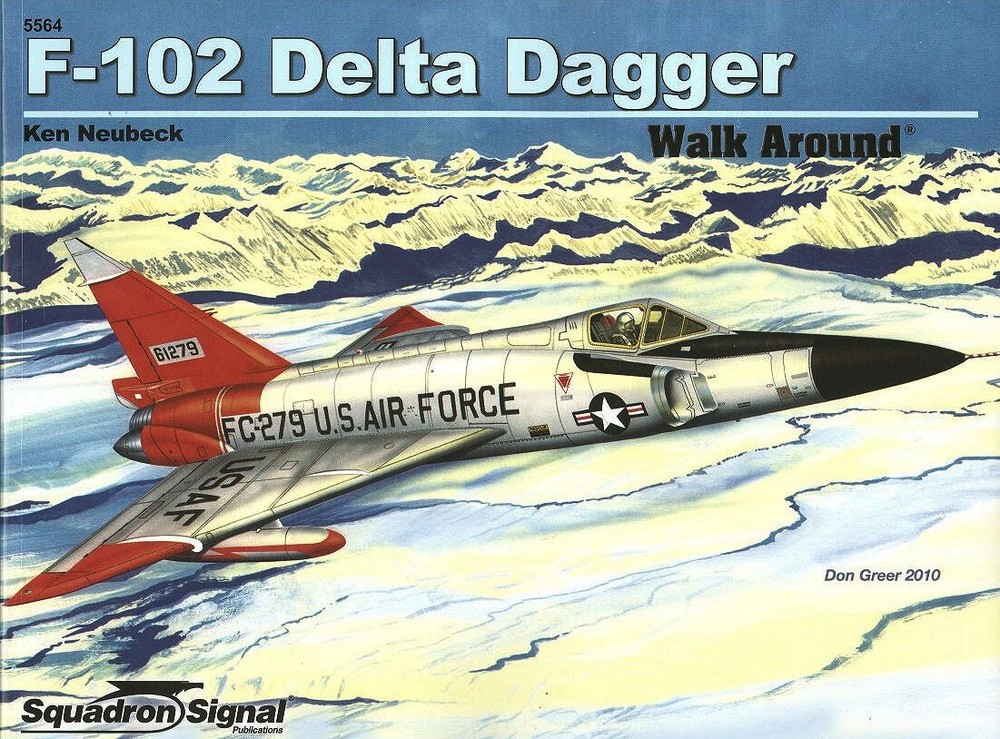
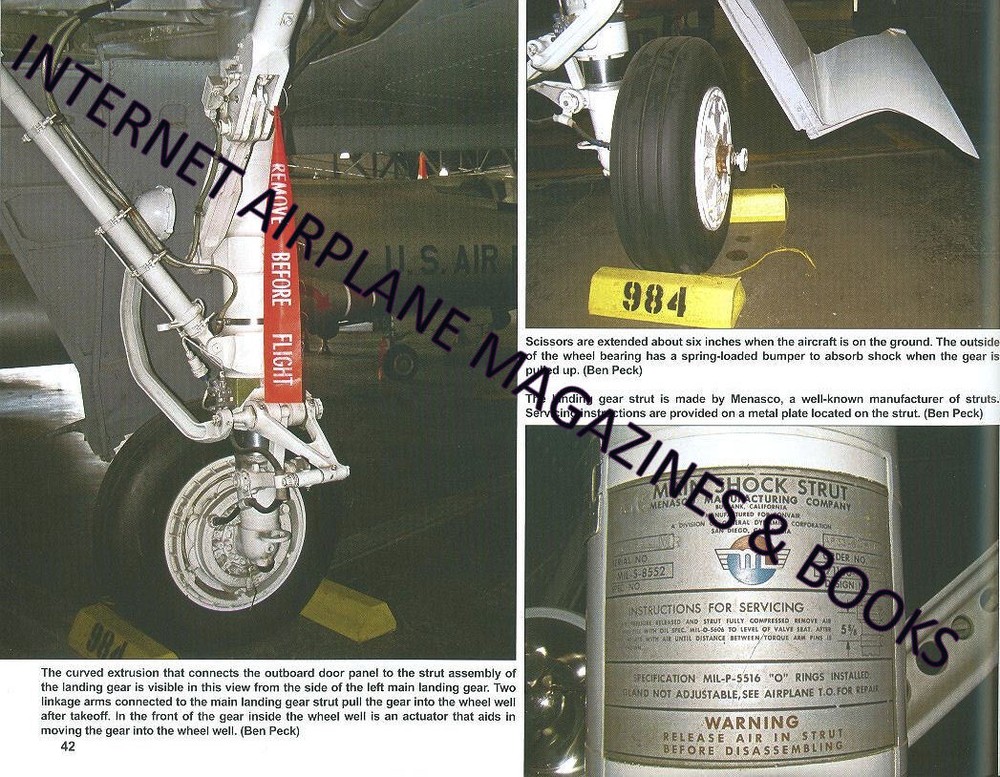
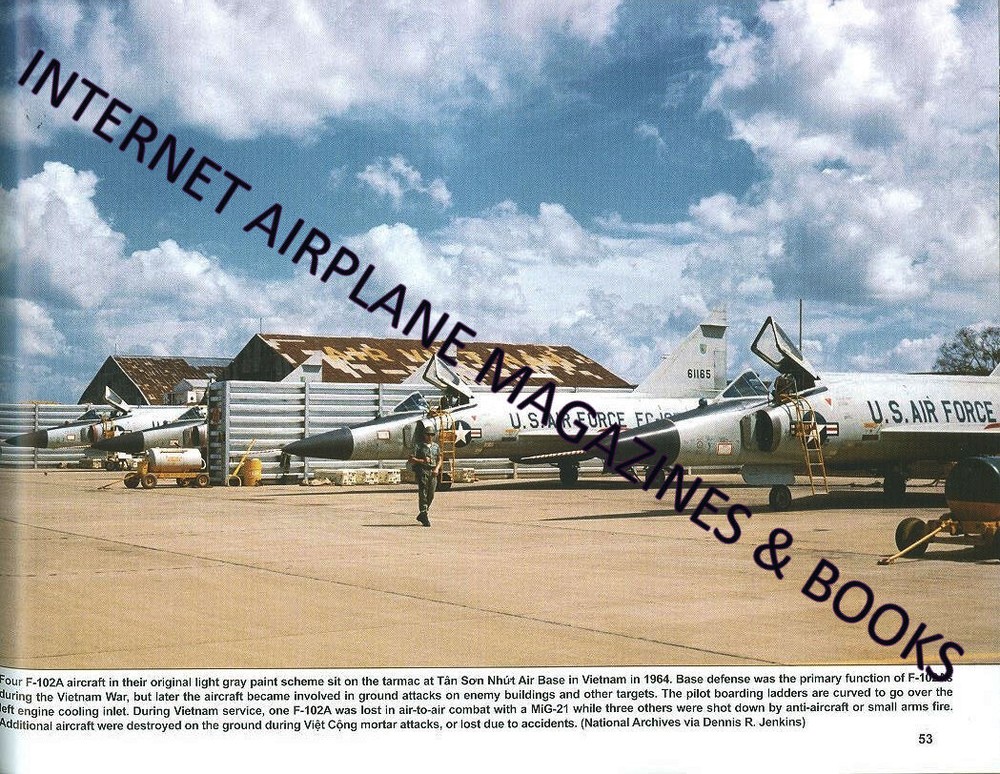
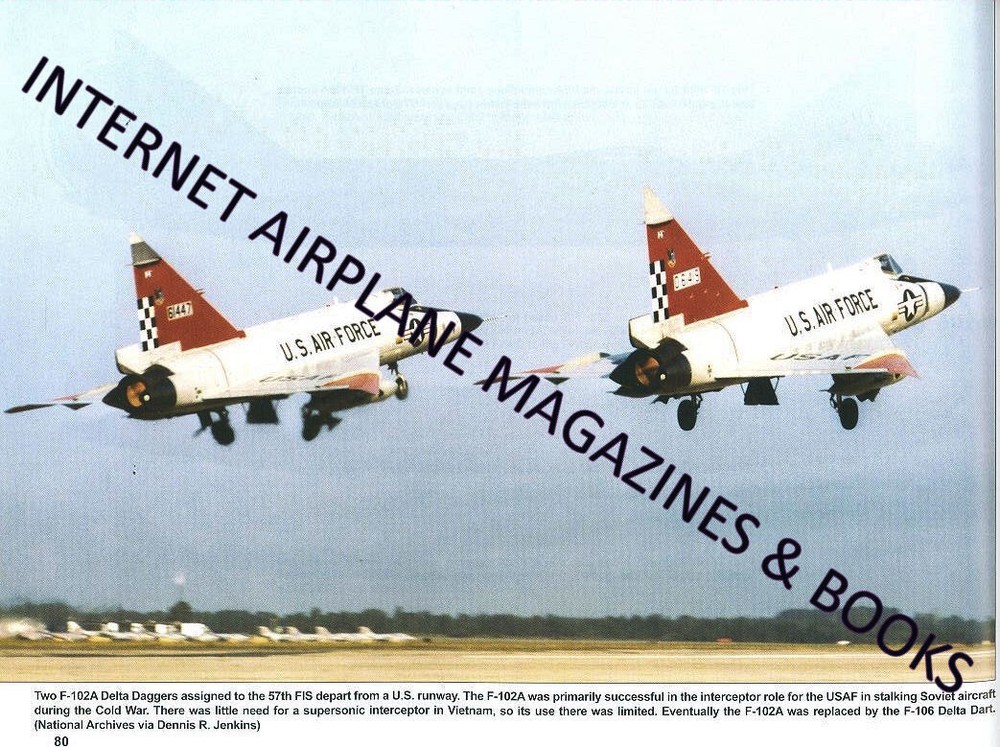
SQUADRON SIGNAL WALK AROUND CONVAIR F-102 DELTA DAGGER USAF FIS ANG VIETNAM WAR. CONSOLIDATED VULTEE CONVAIR XP-92A MODEL 7002. THFIS GRIFFIS AFB, 509THE FIS UDORN RTAFB, 32. Convair would also use a delta wing design in the Mach 2 class Convair B-58 Hustler bomber. AIR NATIONAL GUARD ANG SERVICE (196. ). SQUADRON SIGNAL WALK AROUND CONVAIR F-102 DELTA DAGGER USAF FIS ANG VIETNAM WAR SQUADRON SIGNAL WALK AROUND CONVAIR F-102 DELTA DAGGER USAF FIS ANG VIETNAM WAR SOFTBOUND BOOK CONSOLIDATED VULTEE CONVAIR XP-92A MODEL 7002 THE 1954 INTERCEPTOR YF-102 MODEL 8-80 SERVICE TEST AIRCRAFT YF-102 MODEL 8-82 YF-102 MODEL 8-90 F-102A MODEL 8-10 (EDWARDS AFB, 327TH FIS GEORGE AFB, LADD AFB ALASKA ARCTIC, 496TH FIS HAHN AB GERMANY) OEPRATIONAL SERVICE (326TH FIS GRANDVIEW AFB MISSOURI, HUGHES AIM-4 FALCON MISSILE, 329TH FIS, 48TH FIS LANGLEY AFB, 317TH FIS ALASKA, 318TH FIS McCHORD AFB WASHINGTON, AIR DEFENSE COMMAND LOCKHEED RC-121D CONSTELLATION EARLY WARNING AIRCRAFT, 4780TH ADW PERRIN AFB TEXAS, 327TH FIS THULE GREENLAND, 57TH FIS KEFLAVIK ICELAND, 27TH FIS GRIFFIS AFB, 509THE FIS UDORN RTAFB, 32ND FIS SOESTERBURG AB NETHERLANDS, AIR DEFENSE WEAPONS CENTER TYNDALL AFB, 525TH FIS BITBURG AB GERMANY, 526TH RAMSTEIN AB, 332ND FIS McGUIRE AFB, 47TH FIS NIAGRA FALLS, 509TH FIS CLARB AB PHILIPPINES, 460TH FIS PORTLAND OREGON, 482ND FIS SEYMOUR JOHNSON, 37TH FIS ETHAN ALLEN AFB VERMONT, 64TH FIS PAINE AFB, 71ST FIS SELFRIDGE AFB MICHIGAN16TH FIS NAHA AB OKINAWA, 509TH FIS DON MUANG BANGKOK, 82ND FIS TRAVIS AFB) AIR NATIONAL GUARD ANG SERVICE (196TH CALIFORNIA ANG, 111TH FIS TEXAS ANG, 102ND FIS NEW YORK ANG) VIETNAM WAR (82ND FIS SUWON AB KOREA, BIEN HOA SOUTH VIETNAM, 64TH FIS UBON RTAFB, 82ND FIS NAHA AB OKINAWA, SEA CAMOUFLAGE SCHEME, 509TH FIS BIEN HOA, DA NANG AB) TF-102A TWO SEATER OTHER VARIANTS (F-102B, JF-102A, QF-102, PQM-102A/B) WING VARIATIONS (CASE X AND CASE XX) EJECTION SEAT AND CONTROL COLUMN ENGINE AIR INTAKES & REVISED DESIGN WITH SPLITTER PLATE PRATT & WHITNEY J57 ENGINE HUGHES MG-3 FIRE CONTROL EQUIPMENT / AIM-4 FALCON NOSE LANDING GEAR / MAIN LANDING GEARS (WHEEL WELLS, TIRES, WHEELS) -------------------------------------------------------------------------------------------------------------------- Additional Information from Internet Encyclopedia The Convair F-102 Delta Dagger was an American interceptor aircraft that was built as part of the backbone of the United States Air Force's air defenses in the late 1950s. Entering service in 1956, its main purpose was to intercept invading Soviet strategic bomber fleets (Tupolev Tu-95) during the Cold War. Designed and manufactured by Convair, 1,000 F-102s were built. A member of the Century Series, the F-102 was the USAF's first operational supersonic interceptor and delta-wing fighter. It used an internal weapons bay to carry both guided missiles and rockets. As originally designed, it could not achieve Mach 1 supersonic flight until redesigned with area ruling. The F-102 replaced subsonic fighter types such as the Northrop F-89 Scorpion, and by the 1960s, it saw limited service in the Vietnam War in bomber escort and ground-attack roles. It was supplemented by McDonnell F-101 Voodoos and, later, by McDonnell Douglas F-4 Phantom IIs. Many of the F-102s were transferred from the active duty Air Force to the Air National Guard by the mid-to-late 1960s, and with the exception of those examples converted to unmanned QF-102 Full Scale Aerial Target (FSAT) drones, the type was totally retired from operational service in 1976. The follow-on replacement was the Mach-2 Convair F-106 Delta Dart, which was an extensive redesign of the F-102. Convair embarked on a major redesign, incorporating the recently discovered area rule, while at the same time simplifying production and maintenance. The redesign entailed lengthening the fuselage by 11 ft (3.35 m), being "pinched" at the midsection (dubbed the "Coke Bottle configuration"), with two large fairings on either side of the engine nozzle, with revised intakes and a new, narrower canopy. A more powerful model of the J57 was fitted, and the aircraft structure was lightened. The first revised aircraft, designated YF-102A flew on 20 December 1954, 118 days after the redesign started, exceeding Mach 1 the next day. The revised design demonstrated a speed of Mach 1.22 and a ceiling of 53,000 ft (16,154 m). These improvements were sufficient for the Air Force to allow production of the F-102, with a new production contract signed in March 1954. The production F-102A had the Hughes MG-3 fire control system, later upgraded in service to the MG-10. It had a three-segment internal weapons bay under the fuselage for air-to-air missiles. Initial armament was three pairs of GAR-1/2/3/4 (Later re-designated as AIM-4 ) Falcon missiles, which included both infrared homing and semi-active radar homing variants. The doors of the two forward bays each had tubes for 12 FFARs (for a total of 24) with initially 2 in (5.1 cm) being fitted and later 2.75 in (70 mm) replacing them. The F-102 was later upgraded to allow the carrying of up to two GAR-11/AIM-26 Nuclear Falcon missiles in the center bay. The larger size of this weapon required redesigned center bay doors with no rocket tubes. Plans were considered to fit the MB-1 Genie nuclear rocket to the design, but although a Genie was test fired from a YF-102A in May 1956, it was never adopted. The F-102 received several major modifications during its operational lifetime, with most airframes being retrofitted with infrared search/tracking systems, radar warning receivers, transponders, backup artificial horizons, and improvements to the fire control system. A proposed close-support version (never built) would have incorporated, in addition, an internal Gatling gun, an extra two hardpoints for bombs (in addition to the two underwing pylons for drop tanks that were fitted to all production F-102s), bigger internal fuel tanks, and an in-flight-refueling probe. To train F-102A pilots, the TF-102A trainer was developed, with 111 eventually manufactured. The aircraft was designed with side-by-side seating to facilitate pilot training, a popular concept in the 1950s (also used with the American Cessna T-37, British Hawker Hunter T.7 and English Electric Lightning T.4, among others). This required a redesign of the cockpit and nose incorporating a set of vortex generators on the top of the cockpit to prevent flow separation under certain circumstances, and repositioning of the intake ducts. Despite the many changes, the aircraft was combat-capable, although this variant was predictably slower, reaching only subsonic speeds in level flight. The numerous inherent design and technical limitations of the F-102 led to a proposed successor, initially known as the F-102B "Ultimate Interceptor". The improved design, in which the proposed Curtiss-Wright J67 jet engine was eventually replaced by a Pratt & Whitney J75, underwent so many aerodynamic changes (including variable-geometry inlets) that it essentially became an entirely new aircraft and hence was redesignated and produced as the F-106 Delta Dart. Convair would also use a delta wing design in the Mach 2 class Convair B-58 Hustler bomber. The F-102 served in Vietnam, flying fighter patrols and serving as bomber escorts. A total of 14 aircraft were lost in Vietnam: one to air-to-air combat, several to ground fire and the remainder to accidents. Initially, F-102 detachments began to be sent to bases in Southeast Asia in 1962 after radar contacts detected by ground radars were thought to possibly be North Vietnamese Il-28 "Beagle" bombers � considered to be a credible threat in that time period. The F-102s were sent to Thailand and other nearby countries to intercept these aircraft if they threatened South Vietnam. The F-102 was employed in the air-to-ground role with limited success, although neither the aircraft nor the training for its pilots were designed for that role. The 509th Fighter-Interceptor Squadron's Deuces arrived at Da Nang Air Base, 4 August 1964 from Clark Air Base, Philippines. The interceptor was equipped with 24 2.75 in (70 mm) FFARs in the fuselage bay doors. These could be used to good effect against various types of North Vietnamese targets in daylight. At night it proved less dangerous to use heat-seeking Falcon missiles in conjunction with the F-102's nose-mounted IRST (Infrared Search & Track) on nighttime harassment raids along the Ho Chi Minh trail. Some F-102As were configured to accommodate a single AIM-26 Super Falcon in each side bay in lieu of the two conventional AIM-4 Falcons. Operations with both the F-102A and TF-102A two-seaters (which were used in a Forward Air Control role because its two seats and 2.75 in/70 mm rockets offered good versatility for the mission) continued in Vietnam until 1968 when all F-102s were returned to the United States. The F-102 left U.S. service in 1976, while the last QF-102A / PQM-102B drone was expended in 1986. No F-102s remain in flyable condition today, although many can be seen at museums or as permanent static displays at Air Force and Air National Guard installations. United States Air Force Air Defense Command / Aerospace Defense Command 2nd Fighter-Interceptor Squadron � Suffolk County AFB (1956�1959) 5th Fighter-Interceptor Squadron � Suffolk County AFB (1956�1960) 11th Fighter-Interceptor Squadron � Duluth AFB (1956�1960) 18th Fighter-Interceptor Squadron � Wurtsmith AFB (1957�1960) 27th Fighter-Interceptor Squadron � Griffiss AFB (1957�1959) 31st Fighter-Interceptor Squadron � Wurtsmith AFB (1956�1957); transferred to Alaska Air Command 37th Fighter-Interceptor Squadron � Ethan Allen AFB (1957�1960) 47th Fighter-Interceptor Squadron � Niagara Falls AFB (1958�1960) 48th Fighter-Interceptor Squadron � Langley AFB (1957�1960) 57th Fighter-Interceptor Squadron � Naval Station Keflavik (1962�1973) 59th Fighter-Interceptor Squadron � Goose Bay AFB(1960�1966) 61st Fighter-Interceptor Squadron � Truax Field (1957�1960) 64th Fighter-Interceptor Squadron � McChord AFB (1957�1960), Paine Field (1960�1966) 71st Fighter-Interceptor Squadron � Selfridge AFB (1958�1960) 76th Fighter-Interceptor Squadron � Westover AFB (1961�1963) 82d Fighter-Interceptor Squadron � Travis AFB (1957�1966) 86th Fighter-Interceptor Squadron � Youngstown AFB (1957�1960) 87th Fighter-Interceptor Squadron � Lockbourne AFB (1958�1960) 95th Fighter-Interceptor Squadron � Andrews AFB (1958�1959) 317th Fighter-Interceptor Squadron � McChord AFB (1957�1958) 318th Fighter-Interceptor Squadron � McChord AFB (1957�1960) 323d Fighter-Interceptor Squadron � Truax Field (1956�1957), Harmon AFB (1957�1960) 325th Fighter-Interceptor Squadron � Truax Field (1957�1966) 326th Fighter-Interceptor Squadron � Richards-Gebaur AFB (1957�1967) 327th Fighter-Interceptor Squadron � George AFB (1956�1958), Thule AB (1958�1960) 329th Fighter-Interceptor Squadron � George AFB (1958�1960) 331st Fighter-Interceptor Squadron � Webb AFB (1960�1963) 332nd Fighter-Interceptor Squadron � McGuire AFB (1957�1959), England AFB (1959�1960), Thule AB (1960�1965) 438th Fighter-Interceptor Squadron � Kincheloe AFB (1957�1960) 456th Fighter-Interceptor Squadron � Castle AFB (1958�1960) 460th Fighter-Interceptor Squadron � Portland AFB (1958�1966) 482nd Fighter-Interceptor Squadron � Seymour Johnson AFB (1956�1965) 498th Fighter-Interceptor Squadron � Geiger Field (1957�1959) Alaskan Air Command 317th Fighter-Interceptor Squadron � Elmendorf AFB (1958�1970) 31st Fighter-Interceptor Squadron � Elmendorf AFB (1957�1958) United States Air Forces in Europe 32d Fighter-Interceptor Squadron � Soesterberg AB (1960�1969) 431st Fighter-Interceptor Squadron � Zaragosa AB (1960�1964) 496th Fighter-Interceptor Squadron � Hahn AB (1960�1970) 497th Fighter-Interceptor Squadron � Torrejon AB (1960�1963) 525th Fighter-Interceptor Squadron � Bitburg AB (1959�1969) 526th Fighter-Interceptor Squadron � Ramstein AB (1960�1970) Pacific Air Forces 4th Fighter-Interceptor Squadron � Misawa AB (1957�1965) 16th Fighter-Interceptor Squadron � Naha AB (1959�1965) 40th Fighter-Interceptor Squadron � Yokota AB (1957�1965) 64th Fighter-Interceptor Squadron � Clark AB (1966�1969) 68th Fighter-Interceptor Squadron � Itazuke AB (1957�1965) 82d Fighter-Interceptor Squadron � Naha AB (1966�1971) 509th Fighter-Interceptor Squadron � Clark AB (1959�1970) Air National Guard 102d Fighter-Interceptor Squadron, NY ANG � Suffolk County ANGB (1972�1975) 111th Fighter-Interceptor Squadron, TX ANG � Ellington Field (1960�1975) 116th Fighter-Interceptor Squadron, WA ANG � Geiger Field (1965�1969) 118th Fighter-Interceptor Squadron, CT ANG � Bradley ANGB (1966�1971) 122nd Fighter-Interceptor Squadron, LA ANG � NAS New Orleans (1960�1971) 123d Fighter-Interceptor Squadron, OR ANG � Portland ANGB (1966�1971) 132nd Fighter-Interceptor Squadron, ME ANG � Bangor ANGB (1969�1970) 134th Fighter-Interceptor Squadron, VT ANG � Burlington ANGB (1965�1975) 146th Fighter-Interceptor Squadron, PA ANG � Pittsburgh AP (1961�1975) 151st Fighter-Interceptor Squadron, TN ANG � McGhee-Tyson ANGB (1963�1964) 152d Fighter-Interceptor Squadron, AZ ANG � Tucson ANGB (1966�1969) 157th Fighter-Interceptor Squadron, SC ANG � MacEntire ANGB (1963�1975) 159th Fighter-Interceptor Squadron, FL ANG � Imeson Field (1960�1968), Jacksonville ANGB 1968�1974 175th Fighter-Interceptor Squadron, SD ANG � Sioux Falls AFB (1960�1970) 176th Fighter-Interceptor Squadron, WI ANG � Truax Field (1966�1974) 178th Fighter-Interceptor Squadron, ND ANG � Hector Field (1966�1969) 179th Fighter-Interceptor Squadron, MN ANG � Duluth ANGB (1966�1971) 182nd Fighter-Interceptor Squadron, TX ANG � Kelly AFB (1960�1969) 186th Fighter-Interceptor Squadron, MT ANG � Great Falls ANGB (1966�1972) 190th Fighter-Interceptor Squadron, ID ANG � Gowen Field (1964�1975) 194th Fighter-Interceptor Squadron, CA ANG � Fresno ANGB (1964�1974) 196th Fighter-Interceptor Squadron, CA ANG � Ontario IAP (1965�1975) 199th Fighter-Interceptor Squadron, HI ANG � Hickam AFB (1960�1977) FREE scheduling, supersized images and templates. Get Vendio Sales Manager. Make your listings stand out with FREE Vendio custom templates! FREE scheduling, supersized images and templates. Get Vendio Sales Manager. Over 100,000,000 served. Get FREE counters from Vendio today!
![[SIGNED] I've Been Killing Slimes for 300 Years and Maxed Out My Level Vol. 1](/static_images_g_08QAAeSw5aJpKSld_s-l1000.jpg)