The Tyndale New Testament: William Tyndale's 1526 Translation with...
$ 5.36
Description
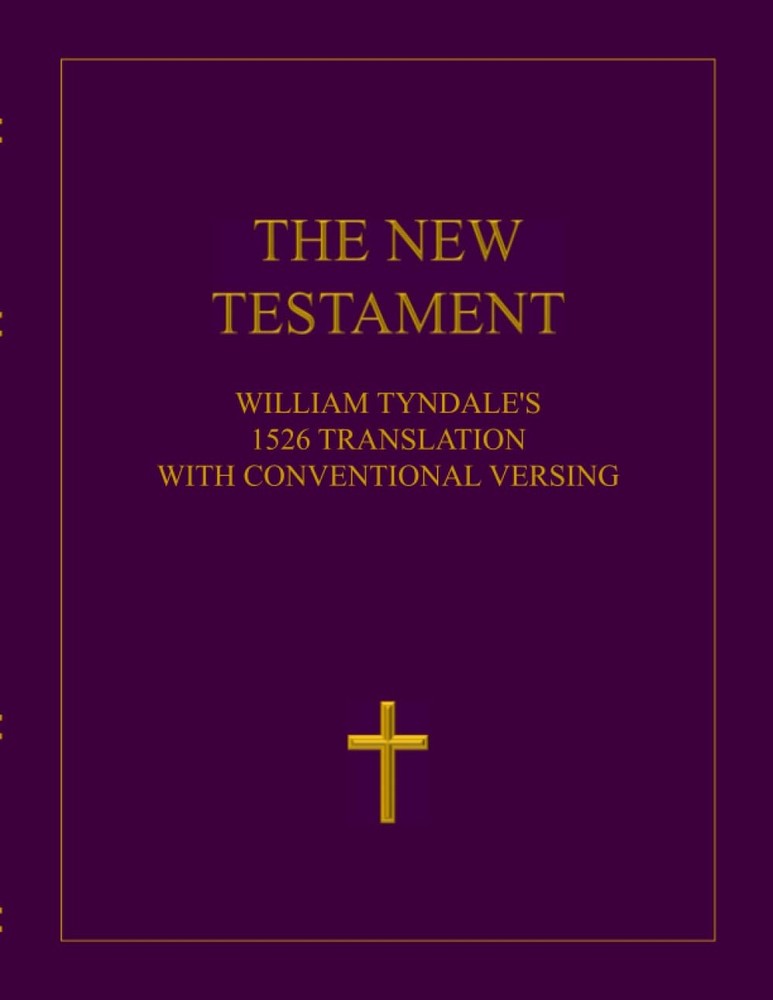
The Tyndale New Testament: William Tyndale's 1526 Translation with... . In the 1300s, John Wycliffe translated the Latin Vulgate into middle English, making Tyndale’s translation the first translation from any language into modern English. Because of this, it has influenced every subsequent translation. The Tyndale New Testament: William Tyndale's 1526 Translation with Conventional Versing Product Details 8-1/2 x 11 (the size of a regular piece of printer paper), large 12-point Times New Roman typeWilliam Tyndale’s translation of the New Testament is the first translation of the New Testament into English from Greek, the language in which the New Testament was written. In the 1300s, John Wycliffe translated the Latin Vulgate into middle English, making Tyndale’s translation the first translation from any language into modern English. Because of this, it has influenced every subsequent translation. Because of the printing press, it could be sold cheaply enough that the average laborer could read the Word of God for himself. Indeed, for many, it is the first time they heard God’s Word in a language they understood.While the spellings in this text may appear to us as typos or erroneous, these spellings, along with their variations and inconsistencies, are original to the manuscript and were acceptable in their historical context.Example: God soo loved the worlde / that he gave his ōly sonne for the entent / that none that beleve in hym / shulde perisshe: Butt shulde have everlastynge lyfe.This volume contains only the text of the New Testament, without Tyndale’s Note to the Reader or list of printing errors. We used conventional book titles and chapter headings. It contains no special characters, illustrations, or marginal notes. We simply included the text that you would find, generally speaking, in the New Testament of any 66-book Bible. That said, we have volumes forthcoming that substantially replicate the original manuscript and will contain all of these features except the marginal notes.Tyndale, a priest and scholar who was fluent in both Hebrew and Greek, was unable to obtain permission from church authorities to carry out this translation. As a result, the work was illegal, and Tyndale carried out the work on the run. He was eventually imprisoned for 18 months before being martyred and burned at the stake as a heretic.