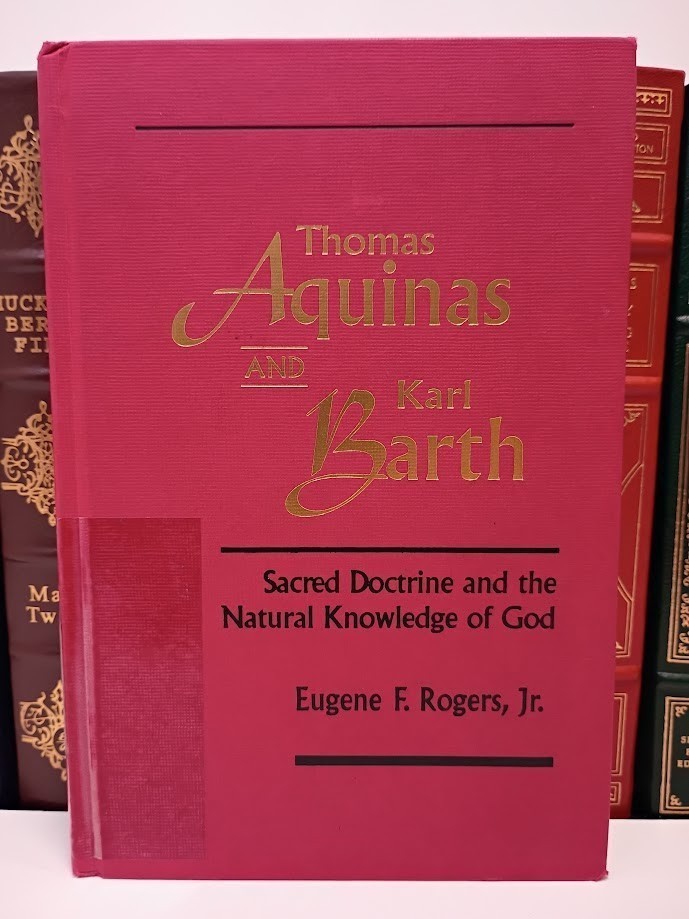


Thomas Aquinas and Karl Barth : Sacred Doctrine and the Natural Knowledge of God
$ 36.55
Description
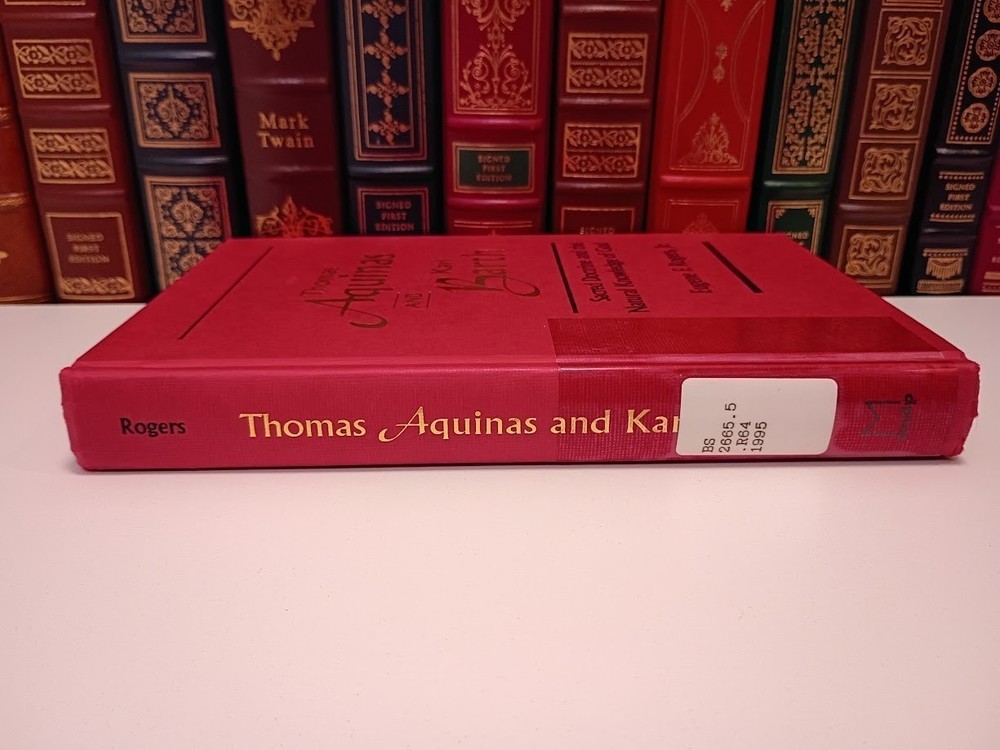
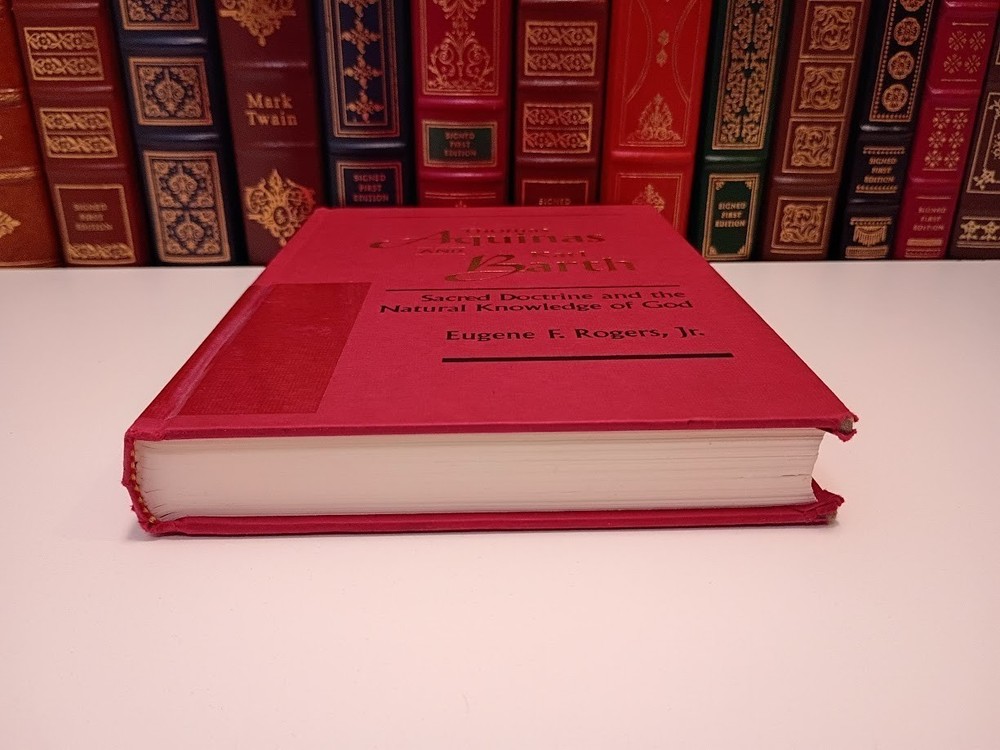
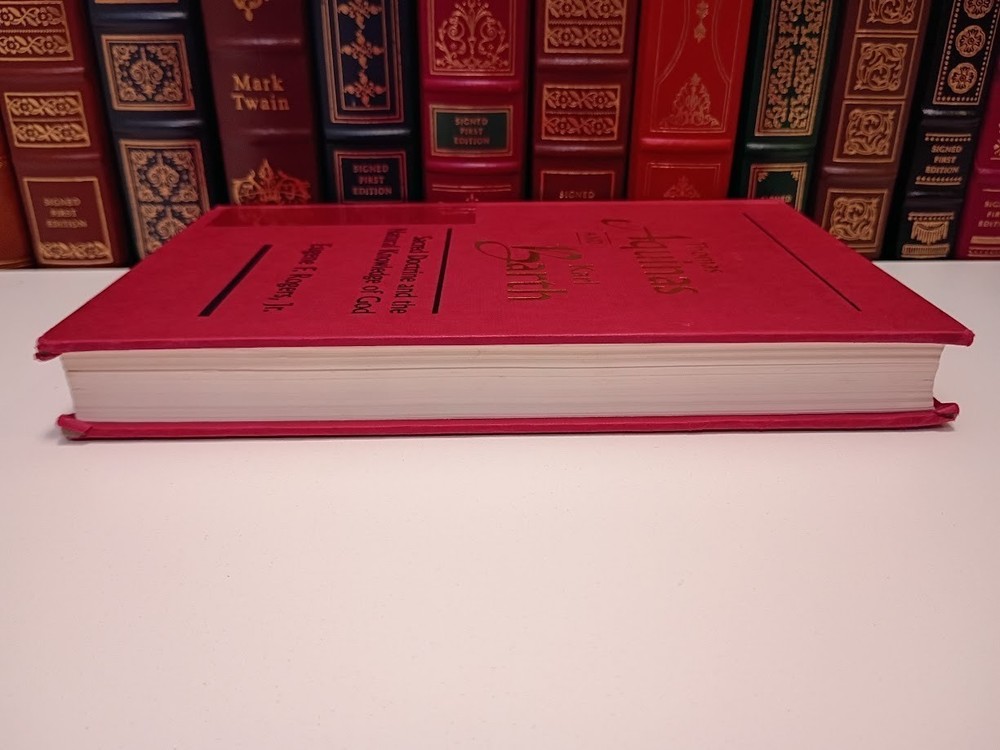
Thomas Aquinas and Karl Barth : Sacred Doctrine and the Natural Knowledge of God. (See Photos) Former Catholic Theological Union Library copy. The cover has some minor wear. The binding is tight. The pages are clean and crisp. No writing or highlighting. Will be shipped carefully and quickly the same or next business day.Will be shipped carefully and quickly. "Thomas Aquinas and Karl Barth: Sacred Doctrine and the Natural Knowledge of God" explores how two towering figures in Christian theology—Thomas Aquinas, the medieval Catholic scholastic, and Karl Barth, the 20th-century Swiss Reformed theologian—understand the relationship between sacred doctrine (revealed theology) and natural knowledge of God (what humans can know about God through reason and creation). Eugene Rogers engages both thinkers in a comparative analysis, showing how each theologian navigates the tension between reason and revelation. The book investigates: Thomas Aquinas’s integration of Aristotelian philosophy with Christian doctrine, where natural reason can grasp certain truths about God, but supernatural revelation completes and fulfills this knowledge. Karl Barth’s critical stance toward natural theology, emphasizing the priority of God’s self-revelation in Jesus Christ and arguing that natural human knowledge of God is insufficient or even misleading without divine revelation. Rogers carefully parses the nuanced positions of each thinker, showing that Barth’s rejection of natural theology is complex and that Aquinas’s approach is often more flexible and dynamic than commonly understood. The book seeks to illuminate the ongoing conversation in Christian theology about the limits and possibilities of natural knowledge of God and challenges simplistic readings of Aquinas and Barth. It highlights their shared concern to keep sacred doctrine sufficiently grounded in God’s initiative rather than human attempts at theological knowledge. Historical and Intellectual Context Thomas Aquinas (1225–1274) is one of the most influential theologians of the Western Christian tradition. His synthesis of Christian doctrine with Aristotelian philosophy laid the foundation for much of Catholic theology, especially through his Summa Theologiae. Aquinas’s understanding of natural knowledge involves the idea that human reason can discern certain truths about God and morality by reflecting on creation, but divine revelation (e.g., Scripture, Church teaching) is necessary to know God fully. Karl Barth (1886–1968) was a leading figure in 20th-century Protestant theology, especially influential in the development of neo-orthodoxy and dialectical theology. Barth vehemently critiqued natural theology as insufficient and potentially idolatrous because it placed human reason over God’s free grace and revelation. His emphasis was always on God’s self-revelation as the foundation for true knowledge of God, especially revealed in Jesus Christ. Eugene Rogers, as a contemporary scholar, situates his study amid ongoing debates about the compatibility or incompatibility of reason and revelation in Christian theology. The book contributes to modern theological discourse by showing how these two giants, often seen as opposites, dialogue with related concerns about how humans know God. The product is a textbook titled "Thomas Aquinas and Karl Barth : Sacred Doctrine and the Natural Knowledge of God" by Eugene F. Rogers Jr. It was published by the University of Notre Dame Press in 1996 as part of the Revisions Ser. The book delves into the religious and philosophical teachings of Thomas Aquinas and Karl Barth, exploring their perspectives on sacred doctrine and the natural knowledge of God. This text is a valuable resource for students and scholars interested in Christian theology, religious studies, and biblical criticism.>>Powered by WonderLister App