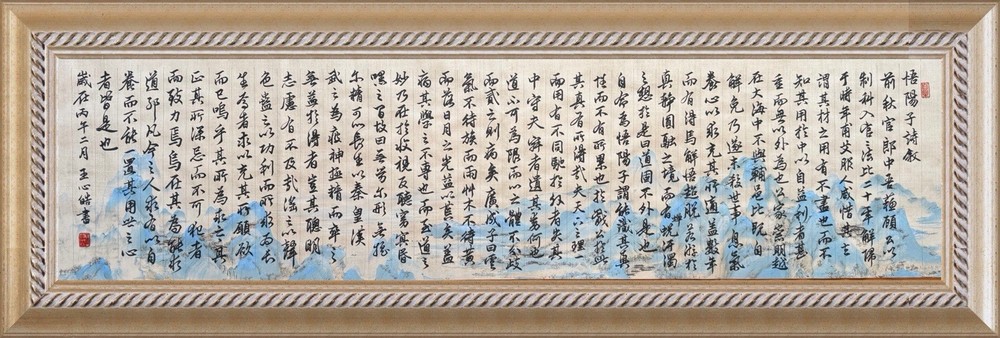
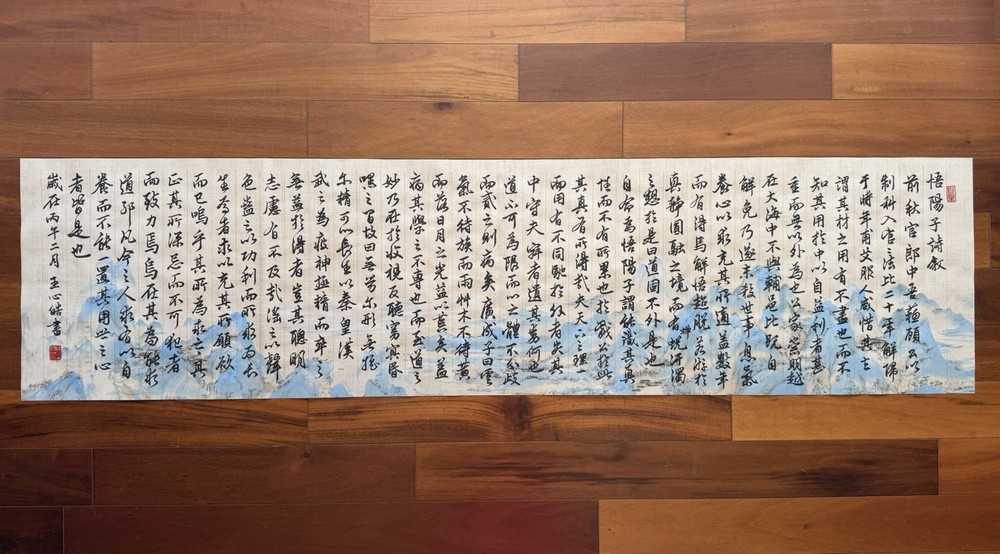
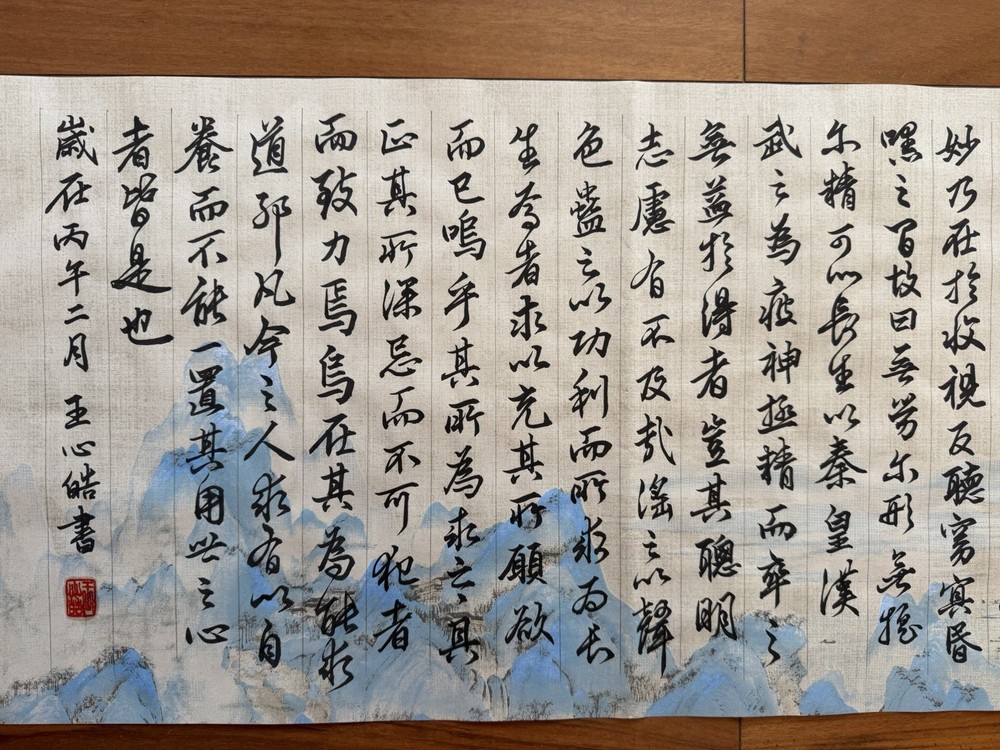
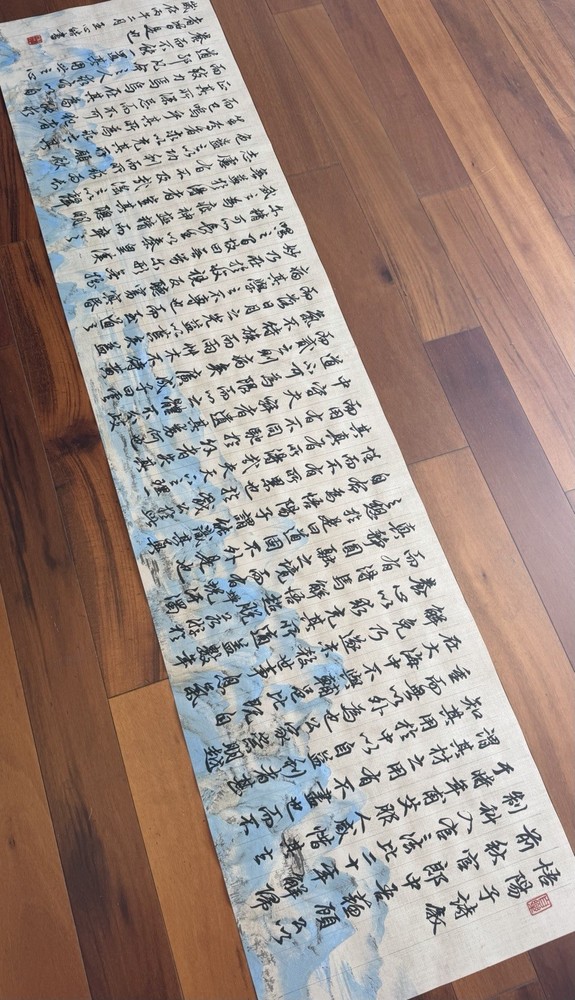
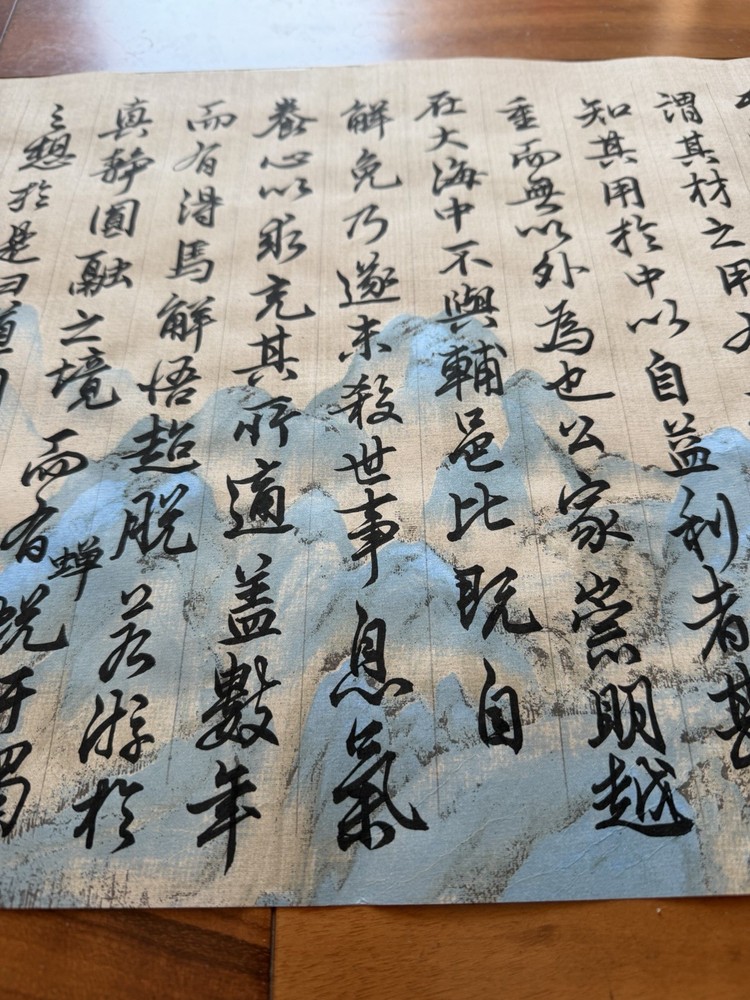
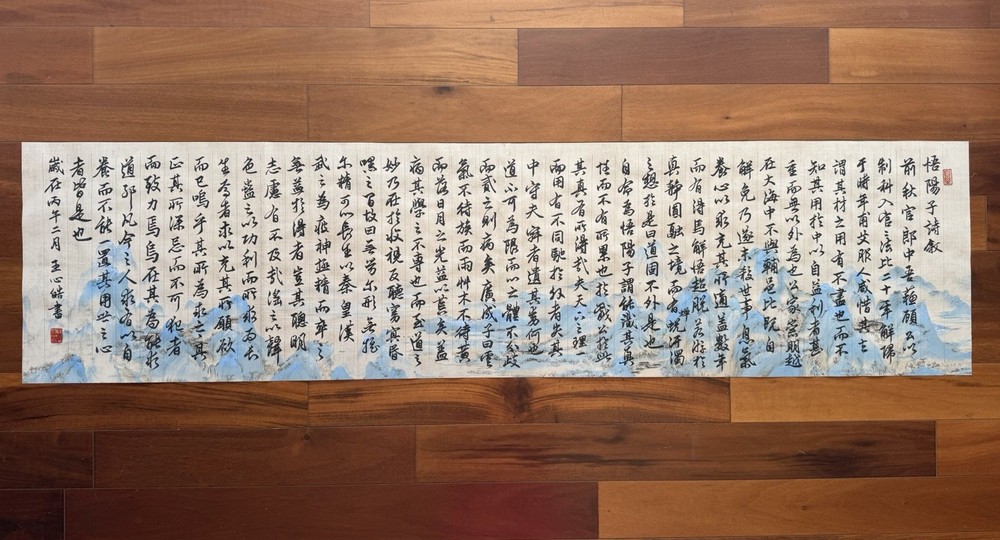
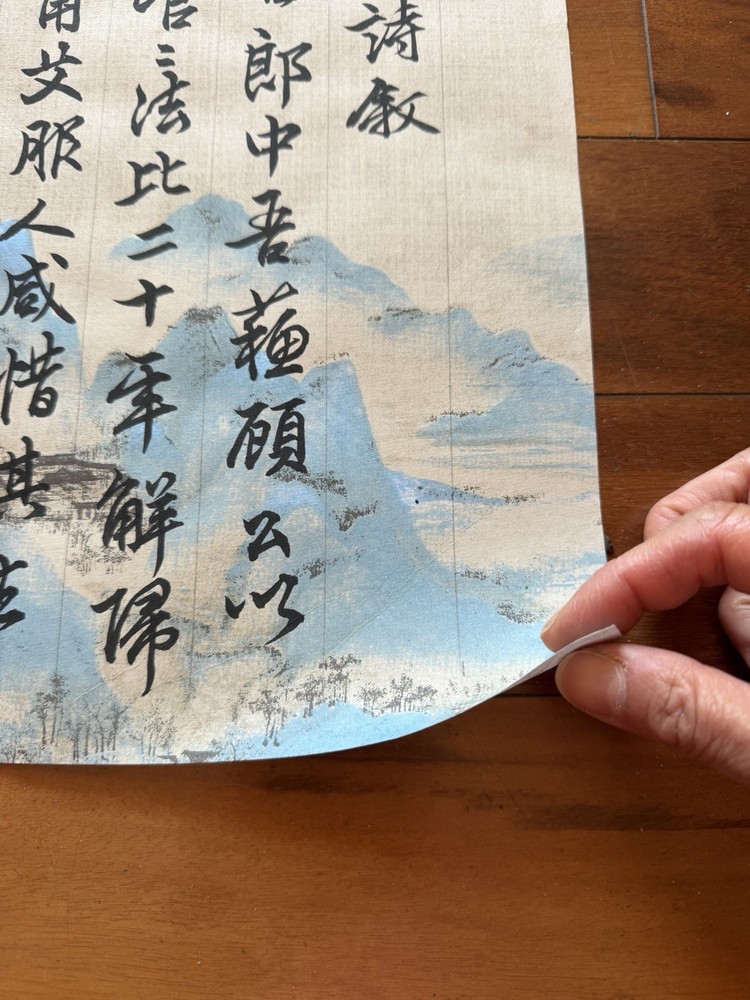
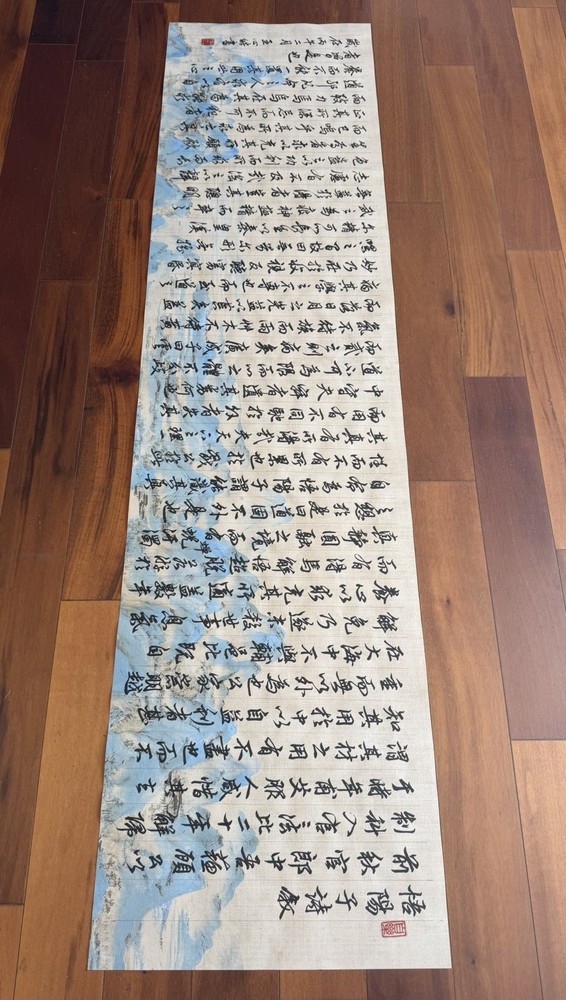
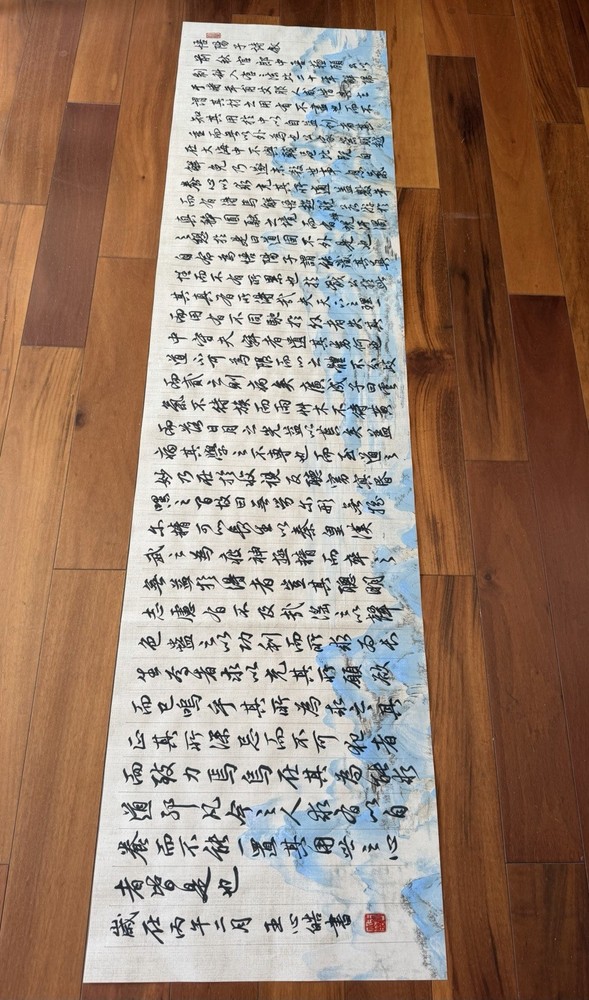
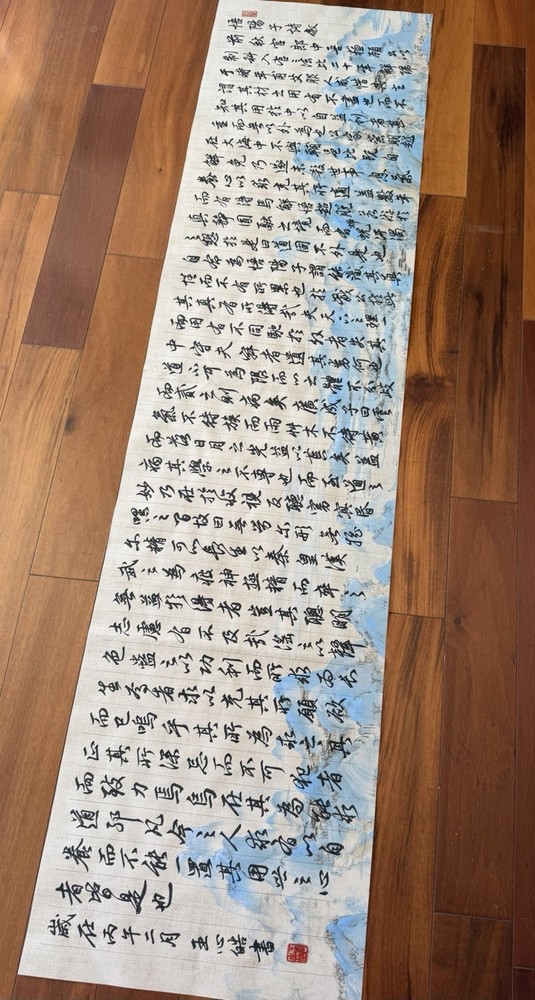
Unframed Chinese calligraphy Part Of WuYangZi Preface Wax Paper Banner悟陽子詩序2626
$ 13.2
Description
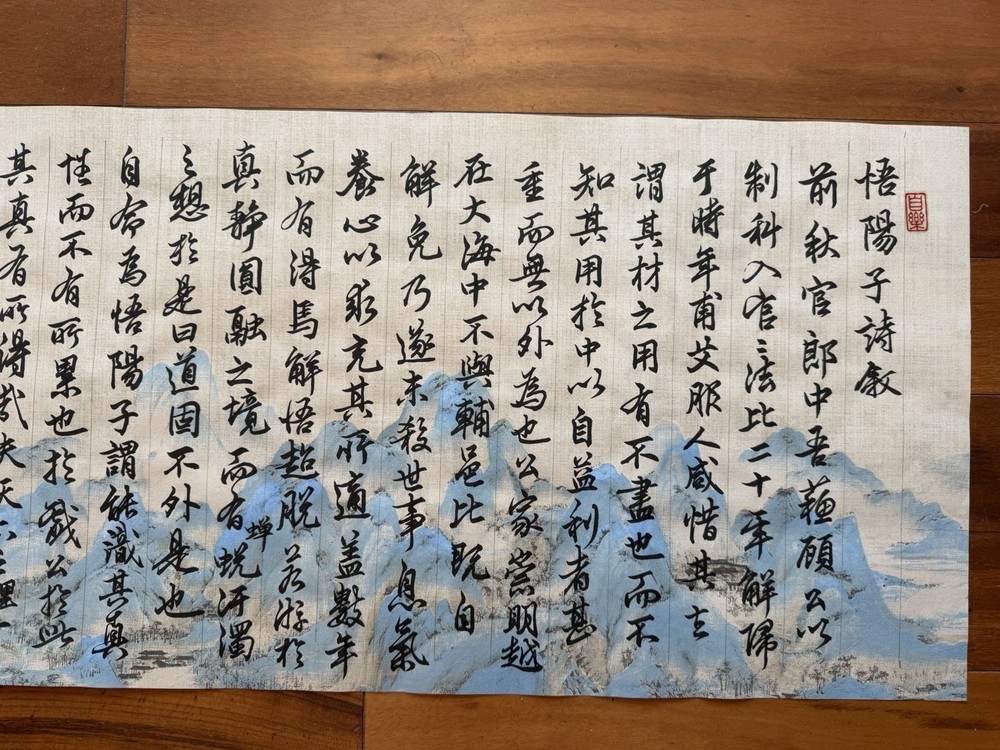
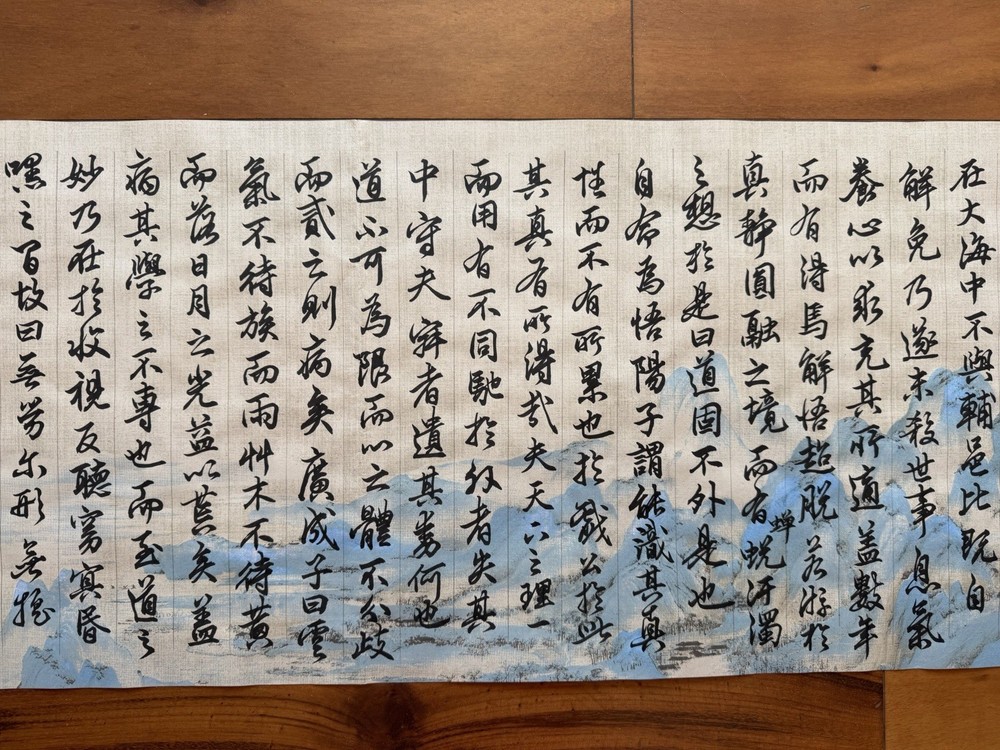
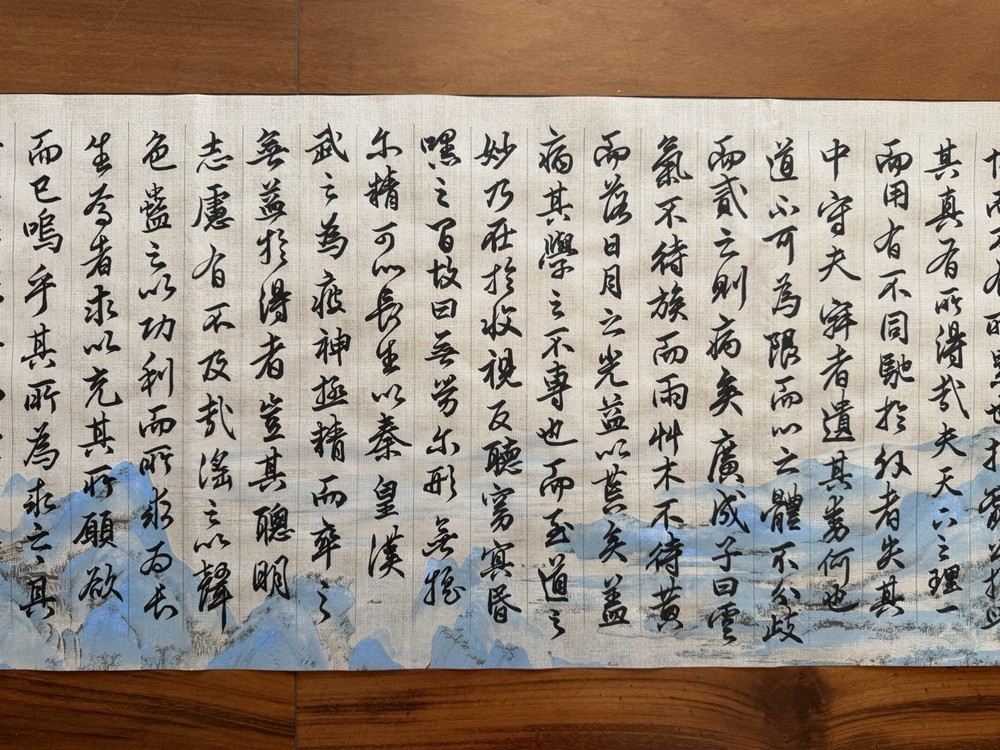
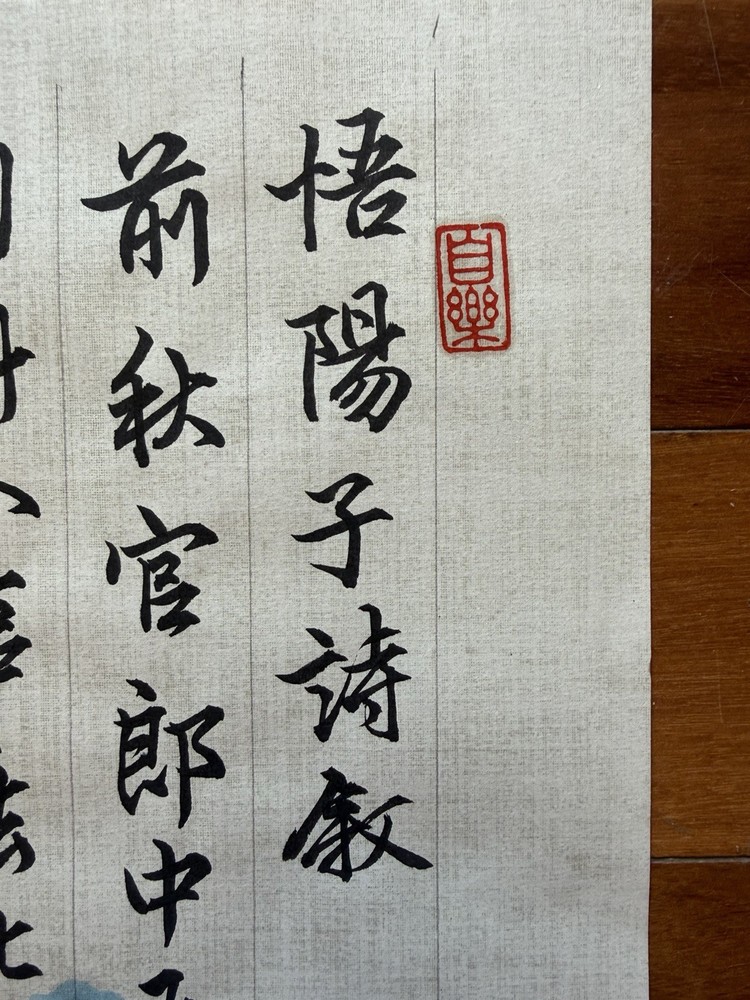
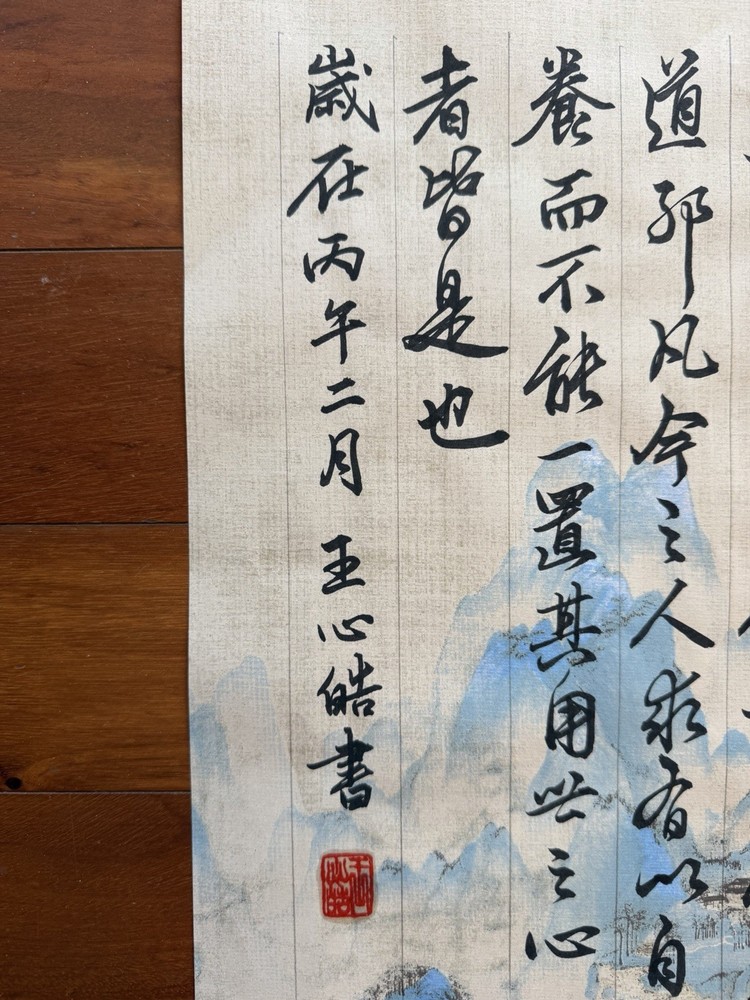
Unframed Chinese calligraphy Part Of WuYangZi Preface Wax Paper Banner悟陽子詩序2626. Gu’s family estate was situated on an island amidst the vast ocean, far removed from the bustling provincial capital. After several years of such practice, he achieved a profound realization. In this pursuit, Gu truly attained a genuine realization! Unframed Brush handwritten Chinese calligraphy written on mountain patterned wax-resist paper banner. Not Printed. An imitation of part of Wu Yang Zi Preface by Wen Cheng Ming 文徵明《悟陽子詩序》部分. 2626. Condition is New. Shipped with USPS ground advantage. What is written: 悟阳子诗叙:前秋官郎中吾苏顾公,以制科入官,官法比二十年解归,于时,年甫艾服。人咸惜其去,谓其材之用有不尽也,而不知其用于中,以自益利者甚重,而无以外为也。公家明,越在大海中,不与辅邑比。既自解免,乃遂末杀世事,息气养心,以求充其所适,盖数年而有得焉。解悟超脱若游于真静圆融之境,而有蝉蜕污浊之想。于是日“道固不外是也”,自命为悟阳子,谓能识其真性而不有所累也。於戏,公于此其真有所得哉!夫天下之理一,而用有不同,驰于外者失其中,守夫寂者遗其动。何也?道不可为限,而心之体不分,歧而贰之则病矣。广成子曰:“云气不待簇而雨,草木不待黄而落,日月之光益以荒矣”,盖病其学之不专也。而至道之妙乃在于收视反听窈冥昏嘿之间。故日无劳尔形,无摇尔精,可以长生。以秦皇汉武之为,疲神极精,而卒之无益于得者,岂其聪明志虑有不及哉!淫之以声色,蛊之以功利,而所求为长生焉者,求以充其所愿欲而已。呜乎!其所为求之之具,正其所深忌而不可犯者,而致力焉,乌在其为能求道耶。凡今之人,求有以自养,而不能一置其用世之心者皆是也。 Preface to the Poems of Wuyangzi: Gu, formerly a *Langzhong* (Bureau Director) in the Ministry of Justice during the previous autumn, entered officialdom through the civil service examinations. Having served for the customary twenty years, he retired from office; at that time, he had just reached the age of fifty. Everyone lamented his departure, believing that his talents had not yet been fully utilized; yet they failed to realize that his true utility lay within—in cultivating his inner self for his own profound benefit—and that he had no further desire for external engagement. Gu’s family estate was situated on an island amidst the vast ocean, far removed from the bustling provincial capital. Once he had successfully extricated himself from official duties, he proceeded to shed all worldly entanglements, calming his breath and nurturing his mind in pursuit of perfect spiritual contentment. After several years of such practice, he achieved a profound realization. His enlightenment and detachment were such that he seemed to dwell in a realm of true tranquility and perfect harmony—a state akin to a cicada shedding its shell to escape the mire of the mundane world. Thereupon, he declared, "The Way, indeed, lies nowhere other than in this," and adopted the *nom de plume* "Wuyangzi," signifying his ability to recognize his true nature, unburdened by any external fetters. Alas! In this pursuit, Gu truly attained a genuine realization! The principles governing the universe are fundamentally one, though their manifestations vary; those who chase after external objects lose touch with their inner center, while those who cling solely to stillness neglect the dynamic aspects of existence. Why is this so? Because the Way cannot be circumscribed by boundaries, and the essence of the mind is indivisible; to fragment it or treat it as dualistic is to invite spiritual affliction. Guangchengzi once said: "Clouds and mists need not gather densely to bring rain; grass and trees need not turn yellow before their leaves fall; and the light of the sun and moon only grows dimmer through excessive exertion." He was, in essence, critiquing a lack of single-mindedness in one's spiritual practice. The true subtlety of the Supreme Way lies in withdrawing one's gaze and turning inward to listen—delving into the realms of profound obscurity and silent darkness. Hence, the maxim: "Do not weary your physical form; do not agitate your vital essence—therein lies the path to longevity." Consider the actions of Emperor Qin Shi Huang and Emperor Wu of Han: they exhausted their spirits and depleted their vital energies, yet ultimately gained nothing from their efforts. Was it truly because their intellects and aspirations fell short? Nay; rather, they allowed themselves to be seduced by the allure of sights and sounds, and beguiled by the pursuit of fame and profit. When such men sought longevity, they were merely seeking to satiate their own insatiable desires. Alas! The very means they employed in their quest were precisely those things they should have most deeply shunned and strictly avoided; yet, they poured all their energy into these pursuits. How, then, could they ever hope to attain the Way? This critique applies to all people of the present age who seek merely to sustain their physical existence, yet remain unable to completely relinquish their attachment to worldly engagement and public service. 歲在丙午二月王心皓書 In February of year of Horse, written by Anita Wang Written style: freehand style (行書) Materials: black ink on mountain patterned wax resist paper千里江山圖蠟染紙 Size of rice paper: 13.5”x54” Others: 1. This is an unframed work. Picture 1 is virtually framed not real. 2. Shipped in a tube no folding. 3. Artist’s signed certificate is enclosed. 4. You will receive a piece of rice paper banner with Chinese calligraphy written on it. 5. Postage is automatically estimated by eBay. Final sales no returns no refunds. Thanks for watching!